welcome to political advertising in Australia
- Written by: Anika Stobart, Associate, Grattan Institute
So the federal election is on. Billboards are suddenly plastered with party slogans, campaign ads are all around us, and our social media feeds are flaring up with political spin.
Political advertising is a major feature of Australian election campaigns. But sometimes it can be difficult to separate facts from scare campaigns, or even to distinguish a government ad from a party ad.
So what are the rules that govern political advertising in the upcoming election campaign?
Read more: As federal government spending on small transport projects creeps up, marginal seats get a bigger share[1]
There are very few restrictions on political advertising
Political advertising seeks to promote a political party, candidate, or political agenda. These ads can come from political parties themselves, or from anyone else who wants to influence voters and can afford to pay for one.
We have already seen several major advertising campaigns launched for this election, including the Coalition’s “Why I love Australia[2]”, Labor’s “A better future[3]”, and a series of prominent United Australia Party ads[4].
There are no limits on how much political parties, independent candidates, or third parties can spend in a federal election. So the race is on[5] to raise more money than your opponents so that you can spread your message further and wider.
Some funding also comes from the taxpayer to help cover campaign expenses, such as advertising. The Australian Electoral Commission (AEC) reimburses parties or candidates for some of their spending according to the share of the primary vote they achieve[6] in the election. In the last federal election this amounted to A$70 million in funding[7].
Political ads need only meet some basic requirements[8], which are monitored by the AEC and the Australian Communications and Media Authority (ACMA).
These include identifying who authorised the ad – that’s the bit at the end of a TV or radio ad that sounds like someone trying to break a fast-talking record – and not misleading voters on how to cast a vote[9].
If an ad encourages voters to fill out their voting paper incorrectly, the AEC can intervene, but only to correct that specific part of the ad. ACMA also enforces a “blackout period” on TV and radio ads in the final few days before election day.
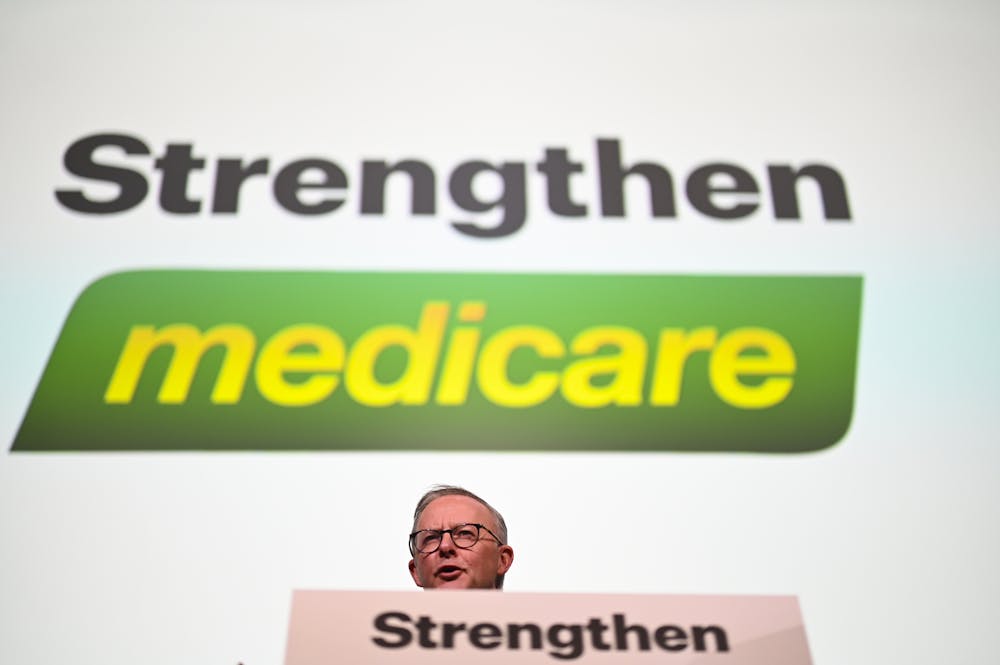
Truth is not a requirement
When it comes to the content of political ads, there is almost no oversight.
Political ads are not fact-checked. The truth or otherwise of what is said in a political ad is left up to the voter to determine for themselves[10].
It’s worth noting this hands-off approach is very different to strict rules around commercial advertising. Where a company is alleged to have misled consumers about a product or service, the matter is investigated, the ad may be pulled, and the company could face fines or further penalties. But there are no consequences for political parties if they lie to voters in their ads.
That means bad-faith characterisations of other parties’ policies – or even flatly inaccurate ones – are perfectly OK under the law.
That’s how misleading scare campaigns have been allowed to feature so prominently in recent elections.
During the 2019 election campaign, the Coalition hit Labor with false advertising about “death taxes[11]”. And Labor ran the false “Mediscare” campaign[12] against the Coalition at the 2016 election. Neither of these campaigns broke any rules.
Democratic politics, and election campaigns in particular, are naturally a contest of ideas. They involve values, promises, “blue sky” thinking, and unproveable claims.
But deliberately false and misleading advertising hurts the democratic process. It can divert voter attention from the real issues and potentially distort election outcomes.
In an attempt to tackle this problem, both South Australia and the ACT have enacted truth in political advertising laws at the state level. At the federal level, however, it’s a case of anything goes.
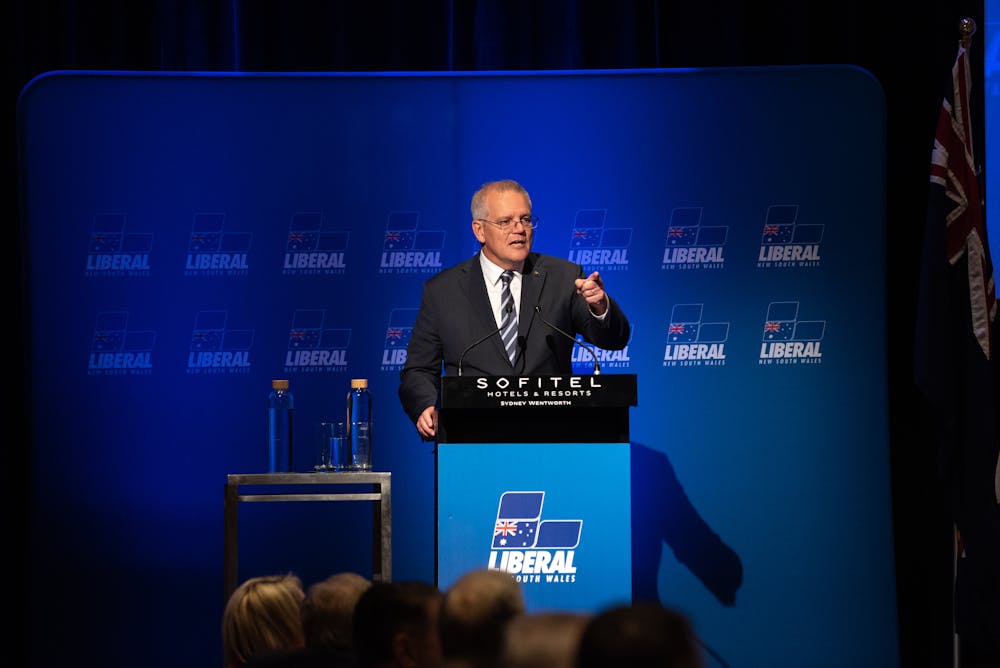 The truth or otherwise of what is said in a political ad is left up to the voter to determine for themselves.
AAP Image/Flavio Brancaleone
The truth or otherwise of what is said in a political ad is left up to the voter to determine for themselves.
AAP Image/Flavio Brancaleone
What about government advertising?
Government advertising is different – or it’s supposed to be. It’s advertising funded by the taxpayer for the legitimate purpose of enabling the government of the day to communicate important information to the public.
Government advertising includes, for example, public campaigns to remind people to get their booster shots, or information on how to access assistance in a domestic violence situation.
But sometimes government advertising can shade into political advertising, particularly when governments make ads spruiking their own performance.
Government advertising often ramps up in the pre-election period. We’ve seen some examples of this recently, in the recent blue-shaded advertisements about “Australia’s Economic Plan[13]”, or “Making Positive Energy[14]”. It’s not clear what public benefit is served by ads like these.
Government advertising is subject to guidelines[15] that require campaigns to be justified, objective, and fair, and prohibit the promotion of political party interests. But these guidelines are not enforceable.
The Independent Communications Committee[16] reviews all campaigns costing more than $250,000, but it only sees them at the proposal stage, and can only provide advice to government.
It has no power to veto a proposed ad campaign.
What can we expect during the election period?
We probably won’t be seeing much government advertising over the coming weeks.
The government is now in “caretaker” mode. Caretaker conventions[17] state the Department of Finance and the Department of Prime Minister and Cabinet must review all taxpayer-funded advertising and make recommendations on whether the campaigns should proceed or be deferred.
If a campaign gets the green light, the government still has to get the Opposition’s approval. As a result, any government advertising that looks suspiciously like government self-promotion tends to disappear during elections.
But when it comes to political advertising, the sky is the limit – at least while parties’ campaign funds hold out.
We can expect political ads to continue to ramp up over the coming weeks. The onus will be on each voter to sift through the spin for the facts and for the policies that matter to them.
Read more: The vomit principle, the dead bat, the freeze: how political spin doctors' tactics aim to shape the news[18]
References
- ^ As federal government spending on small transport projects creeps up, marginal seats get a bigger share (theconversation.com)
- ^ Why I love Australia (twitter.com)
- ^ A better future (twitter.com)
- ^ ads (www.youtube.com)
- ^ race is on (www.smh.com.au)
- ^ share of the primary vote they achieve (www.aec.gov.au)
- ^ A$70 million in funding (www.aec.gov.au)
- ^ basic requirements (www.aec.gov.au)
- ^ to cast a vote (www.aec.gov.au)
- ^ voter to determine for themselves (www.aec.gov.au)
- ^ death taxes (www.theguardian.com)
- ^ campaign (www.smh.com.au)
- ^ Australia’s Economic Plan (twitter.com)
- ^ Making Positive Energy (reneweconomy.com.au)
- ^ guidelines (www.finance.gov.au)
- ^ Independent Communications Committee (www.finance.gov.au)
- ^ Caretaker conventions (www.pmc.gov.au)
- ^ The vomit principle, the dead bat, the freeze: how political spin doctors' tactics aim to shape the news (theconversation.com)