This election is the most important in Australia's history
- Written by: Joelle Gergis, Senior Lecturer in Climate Science, Australian National University
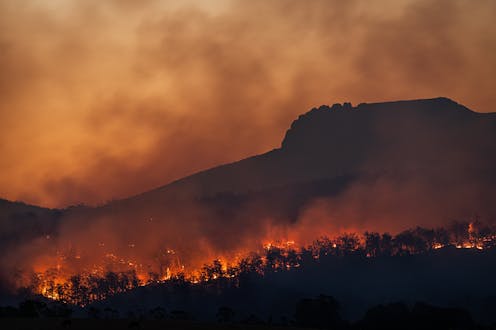
As a climate scientist, I believe this federal election is the most important in Australia’s history.
The world will be watching[1] to see whether Australians will continue to provide the social licence for one of the largest exporters of coal and gas to continue cooking the planet.
The latest climate change assessment report [2]released by the United Nations’ Intergovernmental Panel on Climate Change (IPCC) is clear: humanity has less than a decade to avert a planetary disaster. The world must cut greenhouse gas emissions in half by 2030 and reach net zero by no later than 2050 to limit warming to 1.5℃ above pre-industrial levels.
The IPCC shows that this is possible[3], but the next few years are critical[4]. Working Group III’s Summary for Policy Makers[5] clearly states:
Any further delay […] will miss a brief and rapidly closing window of opportunity to secure a liveable and sustainable future for all.
And yet, here in Australia, there are plans on both side of politics[6] to continue the expansion of the fossil fuel industry, despite what the science says[7]. As the international community[8] is desperately trying to reduce global greenhouse gas emissions, Australia currently has 69 new coal and 45 new gas projects[9] in the pipeline.
In 2021–2022, Australian federal, state and territory governments provided a total of $11.6 billion worth of subsidies to the fossil fuel industries[10]. There are also existing commitments to spend $55.3 billion[11] subsidising gas and oil extraction, coal-fired power, coal railways, ports, and carbon capture and storage.
That is ten times more than the Emergency Response Fund[12], and over 50 times the budget of the National Recovery and Resilience Agency[13].
Read more: 6 books about the climate crisis that offer hope[14]
The role of creative arts
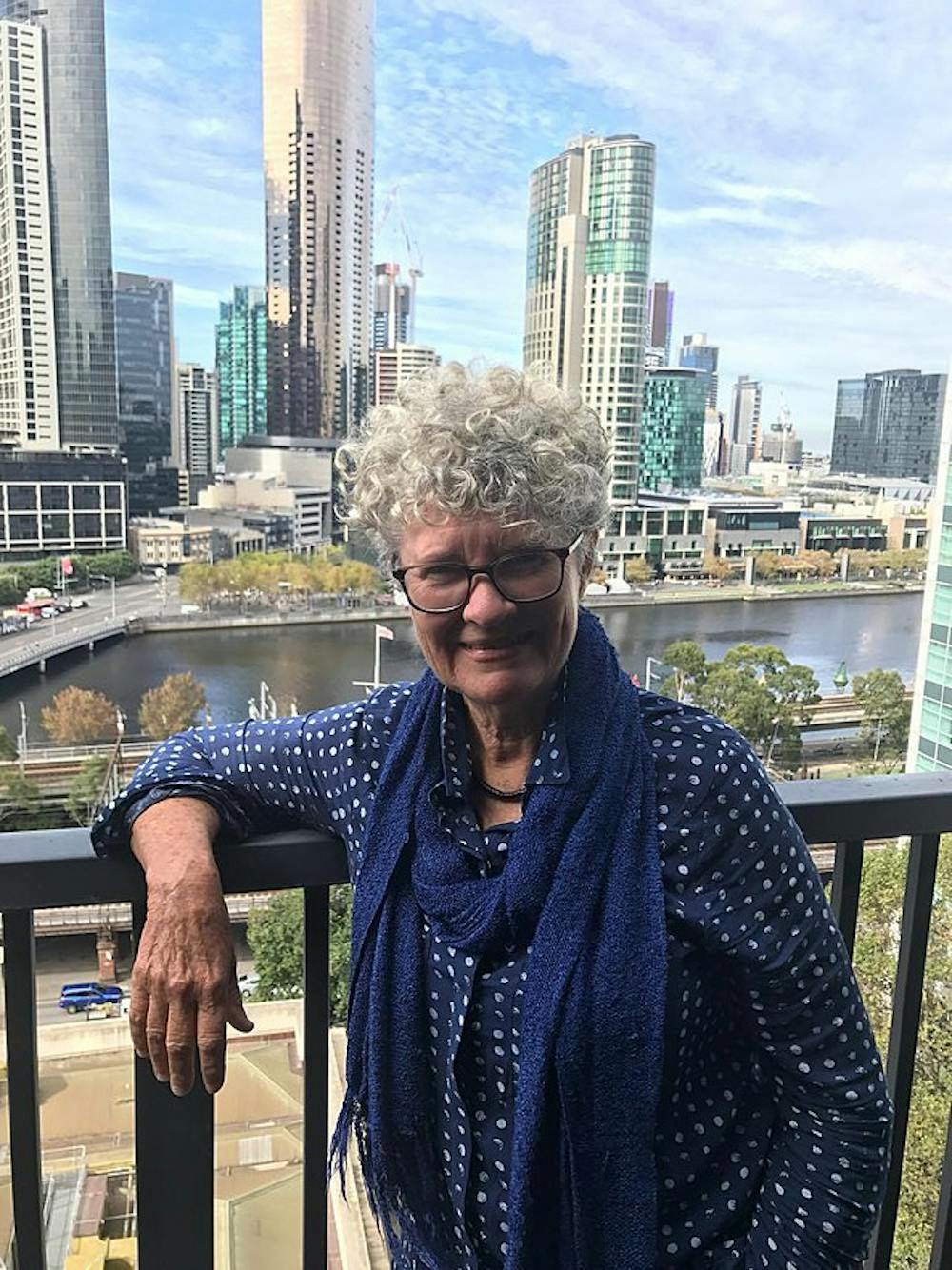
In an effort to help make climate change a central issue in the 2022 Australian Federal election, 80 Australian authors have banded together to form the Writers for Climate Action[15].
Spearheaded by Kate Grenville[16], and supported by some of Australia’s most celebrated writers – including J.M. Coetzee, Helen Garner, Mem Fox, Tony Birch and Charlotte Wood – the group aims to use its influence to persuade readers to become part of the critical mass needed to vote for candidates willing to take real and immediate action on climate change[17].
The inspiration to form the group[18] came about when Kate Grenville wanted to give people a way of addressing the helplessness they feel on an individual level to do anything about a topic like climate change that often feels so overwhelming. She says:
What writers do at the quietness of their desk is find some kind of coherence, to make meaning out of what seems chaotic […] that’s perhaps why people look to writers to make meaning.
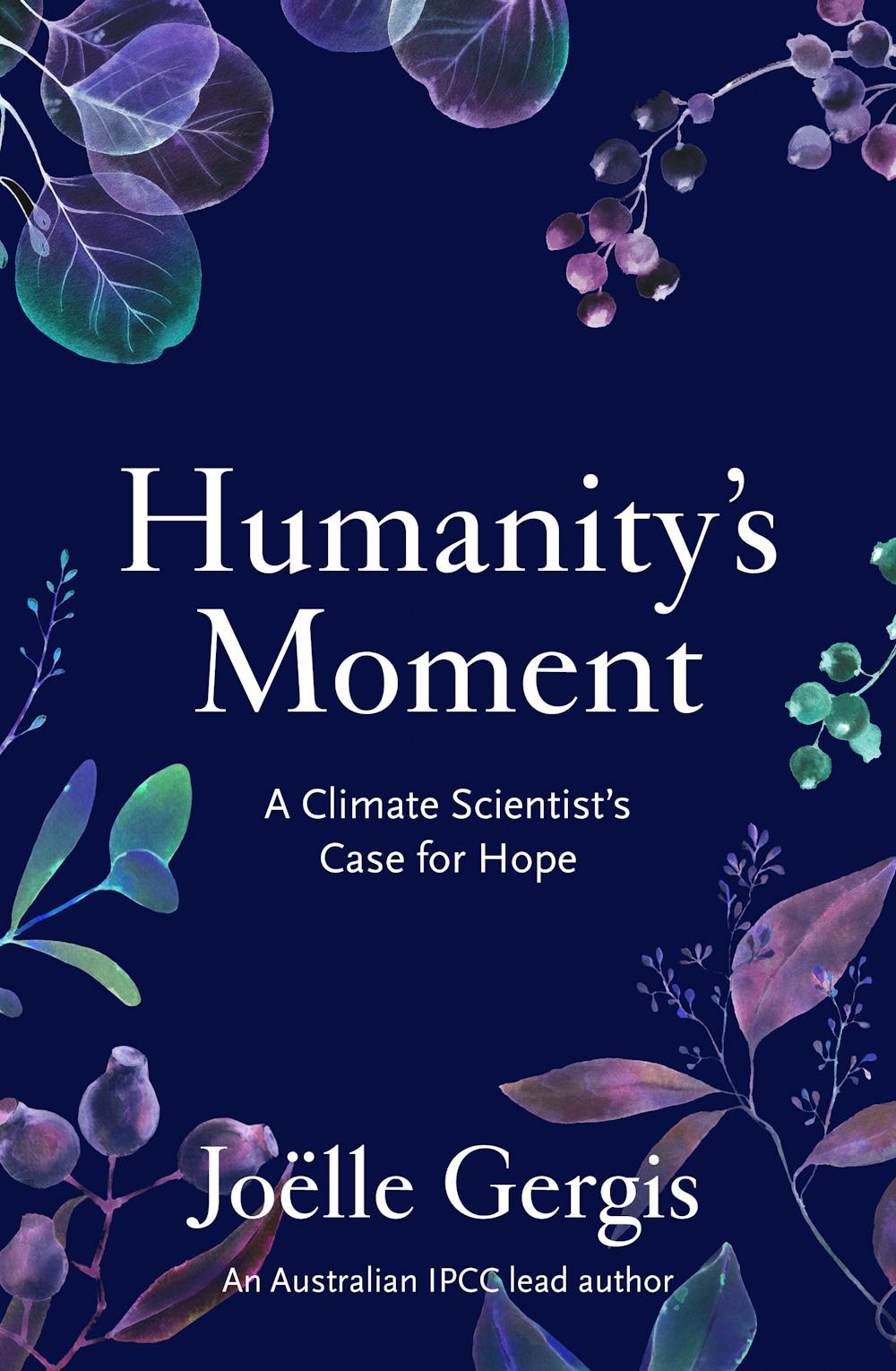 cover. Black Inc
In my forthcoming book, Humanity’s Moment: A Climate Scientist’s Case for Hope[19], I devote a lot of time to explaining the powerful role the creative arts sector can play in shaping the cultural change needed to generate the social tipping point needed to influence political change.
Because the issue has been framed by economics, energy policy and divisive politics, rather than being considered through the far more human eyes of the shared values that form our cultures, many people feel powerless in the face of climate change.
Engaging the creative arts sector in the most profound cultural moment in our species’ history is a golden opportunity to allow our most imaginative people to help us reimagine a future founded on shared cultural values.
Humans have always used art to inspire a shift in the emotional world not only of ourselves, but of others. Creative expression is a way of creating empathy, emotional engagement and the cultural understanding that is needed to help people make sense of the world around them. Unless we experience things on an emotional level, it is hard for people to care about a topic like climate change that can often feel so huge and daunting.
In his essay What the Warming World Needs Now Is Art, Sweet Art[20], American environmentalist and author Bill McKibben highlights the crucial role of creatives at this particular moment in human history:
If the scientists are right, we’re living through the biggest thing that’s happened since human civilization emerged. One species, ours, has by itself in the course of a couple of generations managed to powerfully raise the temperature of an entire planet, to knock its most basic systems out of kilter.
But oddly, though we know about it, we don’t know about it. It hasn’t registered in our gut; it isn’t part of our culture. Where are the books? The poems? The plays? The goddamn operas? Compare it to, say, the horror of AIDS in the last two decades, which has produced a staggering outpouring of art that, in turn, has had real political effect. I mean, when people someday look back on our moment, the single most significant item will doubtless be the sudden spiking temperature. But they’ll have a hell of a time figuring out what it meant to us.
Read more: Can art change minds where science can't?[21]
Enough is enough
Who better to bring about the cultural evolution we need to redefine our social values than our creatives? Who better to help articulate the things we all feel but struggle to express than our writers?
As a scientist and an author, I know that no matter how many facts and figures I give people, in the end it is probably going to be a book, an art work, a song, a photograph, a play, a performance or a film that will reawaken their sense of care for other people and the natural world.
Art has always been the most powerful portal into the world of our emotions. It helps us imagine a world we cannot see[22]. It gives us the images and language we need to ignite the emotional connection that will fuel the personal action we all need to take to turn the tide on the collective crisis we now face.
We will not see the political response we need to address climate change until we redefine the cultural and social norms that are destroying life on Earth. Individual voters can choose to maintain the status quo of burning fossil fuels to the point of planetary instability, or say enough is enough.
As we watch extreme weather ravage every corner of our country, it is crucial to remember that our politicians are the people we vote for, the people that we elect to be in charge of our society.
We are at a critical crossroads. Australians no longer have the luxury of being apolitical. The solutions we need to live sustainably[23] already exist – we just need the social movement and political will to create a better world.
References
- ^ The world will be watching (www.smh.com.au)
- ^ climate change assessment report (www.ipcc.ch)
- ^ possible (www.ipcc.ch)
- ^ critical (www.ipcc.ch)
- ^ Summary for Policy Makers (www.ipcc.ch)
- ^ both side of politics (www.carbonbrief.org)
- ^ science says (pursuit.unimelb.edu.au)
- ^ international community (ukcop26.org)
- ^ 69 new coal and 45 new gas projects (www.industry.gov.au)
- ^ $11.6 billion worth of subsidies to the fossil fuel industries (australiainstitute.org.au)
- ^ $55.3 billion (australiainstitute.org.au)
- ^ Emergency Response Fund (recovery.gov.au)
- ^ National Recovery and Resilience Agency (recovery.gov.au)
- ^ 6 books about the climate crisis that offer hope (theconversation.com)
- ^ Writers for Climate Action (www.writersforclimateaction.com)
- ^ Kate Grenville (kategrenville.com.au)
- ^ real and immediate action on climate change (theconversation.com)
- ^ The inspiration to form the group (www.theguardian.com)
- ^ Humanity’s Moment: A Climate Scientist’s Case for Hope (www.blackincbooks.com.au)
- ^ What the Warming World Needs Now Is Art, Sweet Art (grist.org)
- ^ Can art change minds where science can't? (theconversation.com)
- ^ imagine a world we cannot see (theconversation.com)
- ^ The solutions we need to live sustainably (www.ipcc.ch)