Heartstopper depicts queer joy - here's why that can bring about complicated feelings for those in the LGBTIQ community
- Written by: Liam Casey, Clinical psychologist, University of Technology Sydney

One of the most popular shows on Netflix right now is Heartstopper[1], which follows UK schoolboys Charlie (Joe Locke) and Nick (Kit Connor) as their friendship grows into something more.
Based on Alice Oseman’s graphic novel series of the same name, Heartstopper has been widely (and accurately) hailed as “a warm hug[2]”.
At the same time, social media has been flooded with posts from LGBTIQ people who have experienced something else when watching the show[3]: anger, grief, and sadness as they compared the show to their own relatively painful adolescence.
LGBTIQ people often have high school experiences marked by prejudice and discrimination, with 60% of young LGBTIQ Australians feeling unsafe or uncomfortable at school[4] due to their sexual or gender identity.
These experiences can provide a surprisingly enduring internal blueprint: during 2017’s marriage equality postal survey, for example, many LGBTIQ people said that the intense scrutiny and stigma felt like “being back in high school”[5].
Researchers call this phenomenon minority stress[6]. The cumulative negative effects of these threatening social conditions can ultimately lead to isolation, depression, and anxiety.
As a clinical psychologist working in LGBTIQ mental health, Heartstopper has come up frequently in counselling sessions. The same pain is being described by people approaching middle age and those still in their teens. The show seems to plant a seed that makes them wonder how life might have played out if their high school experience was supportive rather than frightening.
What can those of us who feel pain in the face of this heartwarming depiction of queer joy do to navigate these difficult thoughts and feelings? Psychological research has a few suggestions.

Embrace the duality
Pioneering clinical psychologist Marsha Linehan emphasised the importance of “dialectics”[7], or the ability to hold the tension between two seemingly opposing things. As humans, we tend to judge our experience as good or bad, black or white. We say things like “I never do anything right”, when the truth is that sometimes we fail and sometimes we succeed.
The experience of watching Heartstopper and feeling both joy for the characters and sadness for yourself is also a dialectic. Don’t fall into the trap of thinking the sadness cancels out the joy: notice and allow everything that you’re feeling.
Don’t run from it
As humans, we’ve evolved to avoid suffering. However, we have a habit of doing this in ways that minimise short-term pain, while maximising long-term problems[8]. This can be especially challenging for LGBTIQ people, who often had to push down or avoid their feelings[9] to navigate adolescence.
I’ve spoken to people who’ve tried to cope with the pain thrown up by Heartstopper in counterproductive ways. Trying to avoid their sadness that they don’t have a Nick to their Charlie, they’ve found themselves chasing unavailable partners, pouring an extra glass of wine, or pursuing casual sex and feeling even more alone. While there’s nothing wrong with wine or casual sex, they often mask problems rather than offering solutions.
 Heartstopper has some of the best depictions of young queer joy on television.
Netflix
Heartstopper has some of the best depictions of young queer joy on television.
Netflix
Take meaningful action
If it isn’t always helpful to run from our pain, what are we supposed to do with it? There’s useful information in painful feelings. As influential clinical psychologist Steven C Hayes puts it, “we hurt where we care”[10]. The site of our greatest pain is the site of our greatest purpose, and we can use it to guide actions that matter deeply to us.
Examine what you’ve responded to most strongly in Heartstopper. While the chance of a queer high school romance has passed for many of us, we can still make choices that move us towards the life we want today. Research consistently shows that connecting with other LGBTIQ people increases resilience[11], but there are lots of other things Heartstopper could inspire you to do: prioritise your friendships (like Tao), make new queer connections (like Elle), be honest with those closest to you (like Nick), or try new things (like Charlie).
Be kind to yourself
This stuff hurts. Life can be hard and full of disappointments. We often respond to these difficult points by pushing harder and telling ourselves to “get it together”.
Pause and be kind to yourself – be the Nick to your Charlie. Give yourself a hug, make yourself a cup of tea, speak encouragingly rather than critically to yourself. It sometimes helps to imagine what you would say to a friend or another LGBTIQ person[12] facing similar challenges. Guided meditations[13] can also be helpful here.
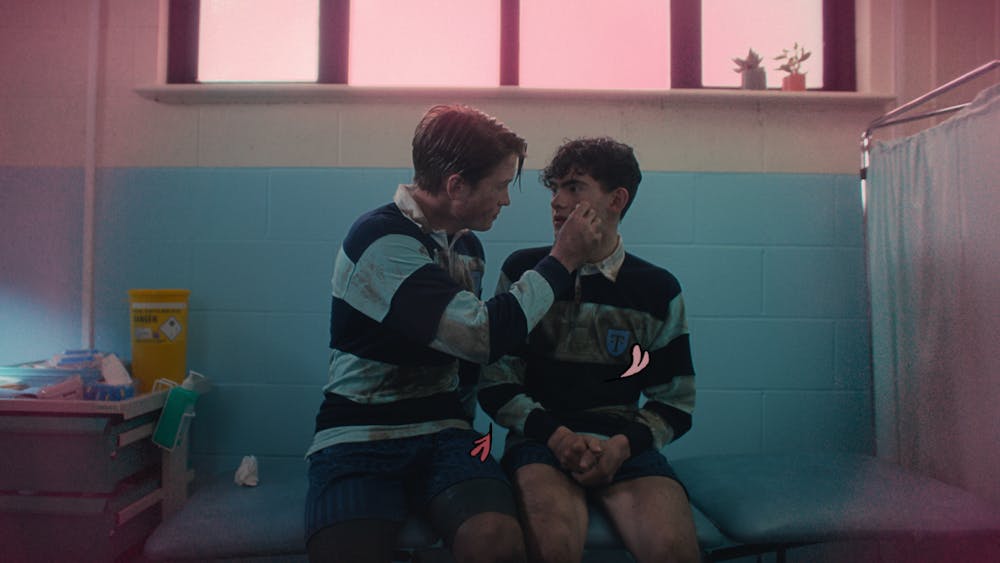 The queer joy depicted in Hearstopper can create complicated feelings of grief in LGBTIQ people.
Netflix
The queer joy depicted in Hearstopper can create complicated feelings of grief in LGBTIQ people.
Netflix
Challenge your assumptions
The human mind takes all kinds of cognitive shortcuts: a common one is “the mental filter”, in which we filter out information that doesn’t support our assumptions.
If you find yourself comparing yourself to Charlie and Nick’s picture-perfect romance, try to notice what you’re filtering out. Both characters – particularly Charlie – experience bullying and self-doubt. (Readers of the books know that Charlie has even darker days ahead of him.)
Also notice if there’s anything positive from your own experience that you’re filtering out: a good friend, a supportive teacher, a welcoming sport or hobby group.
Ultimately, Heartstopper is “fantasy fiction”[14]. Don’t use that fantasy as the metric by which you judge your reality.
References
- ^ Heartstopper (www.imdb.com)
- ^ a warm hug (www.smh.com.au)
- ^ posts from LGBTIQ people who have experienced something else when watching the show (twitter.com)
- ^ 60% of young LGBTIQ Australians feeling unsafe or uncomfortable at school (www.latrobe.edu.au)
- ^ “being back in high school” (psycnet.apa.org)
- ^ minority stress (www.ncbi.nlm.nih.gov)
- ^ “dialectics” (www.annualreviews.org)
- ^ minimise short-term pain, while maximising long-term problems (pubmed.ncbi.nlm.nih.gov)
- ^ push down or avoid their feelings (www.ncbi.nlm.nih.gov)
- ^ “we hurt where we care” (stevenchayes.com)
- ^ connecting with other LGBTIQ people increases resilience (www.ncbi.nlm.nih.gov)
- ^ imagine what you would say to a friend or another LGBTIQ person (www.tandfonline.com)
- ^ Guided meditations (self-compassion.org)
- ^ “fantasy fiction” (www.abc.net.au)