Swimming in the president’s pool – palaces and power in times of crisis
- Written by: Kristie Patricia Flannery, Research Fellow, Institute for Humanities and Social Sciences, Australian Catholic University
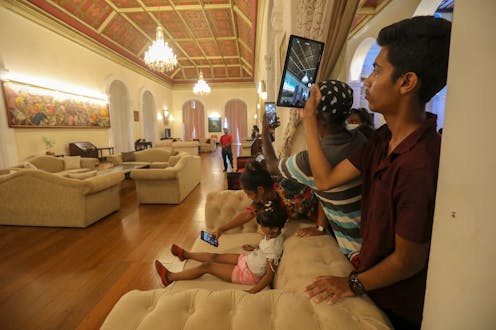
Footage flashed across television and smartphone screens this week showing rowdy crowds of Sri Lankan protesters mobbing Temple Trees, the official presidential palace in Colombo.
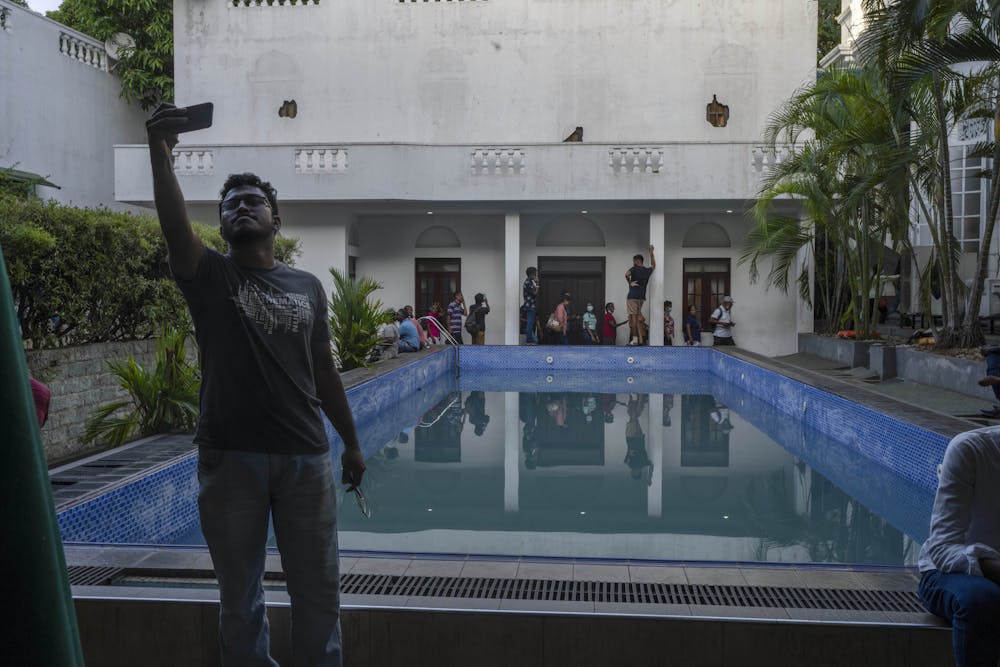
Cameras panned across the compound’s lush gardens as jubilant young men jumped into the swimming pool and splashed in its blue waters.
Men clad in sandals, shorts, and t-shirts roamed through the building’s luxurious living quarters, including the bedroom, where the besieged president Gotabaya Rajapaksahad had been sleeping until just a few days ago. This is a world turned upside down.
For the global historian, however, the Sri Lankan protesters splashing in the palace pool is a familiar scene. And one that could signal major political change is underway. Sri Lanka’s Temple Trees joins a long list of royal and presidential residences occupied by protesters during political revolts and revolutions.
Symbols of authority
The homes of monarchs and presidents are important symbols of authority in nation states.
Such buildings are opulent by design. The excessive wealth they display projects the power of the leaders who occupy them. Their perceived authority is a function of their size, their expensive furnishings, and the priceless art works that hang on their walls.
Access to the buildings are strictly controlled, in recognition of their special, almost sacred status. They represent the authority of the rulers, elected or otherwise, who live inside their walls.
Before it became a republic in 1972, Sri Lanka was a British colony. Under colonial rule, Temple Trees was known as the King’s House or the Queen’s House. It served as the residence of British governors, until they were replaced by presidents.
The president’s pool and living quarters are spaces normally only accessible to a select few. These are spaces from which most poor Sri Lankans are excluded.
Swimming in the presidential pool is thus a rebellious collective act that sends a potent message that whatever laws and policing that have kept angry citizens out of the palace no longer have teeth.
A range of factors led to the palace occupation. The national government is bankrupt, as are many of its people. Critical shortages of food and petrol have sent prices of essential goods soaring. People cannot work, and they cannot feed their children.
In response to the crisis, hundreds of thousands of people mobilised, pouring onto the streets, demanding urgent change.
The protesters vowed to stay in the palace until the president resigned. Gotabaya Rajapaksahad eventually conceded. On 13 July 2022, he announced he would be resigning, then he fled the country.
Read more: What's happening in Sri Lanka and how did the economic crisis start?[1]
Historical precedents
Global precedents underscore how palace occupations have coincided with major shifts in global history.
In colonial Mexico, Spanish viceroys lived in the opulent palace on the edge of the Mexico City’s huge central plaza, adjacent a towering cathedral. Conquistadors constructed the palace above the ruins of the Aztec Templo Mayor[2].
When the multi-ethnic working class rose up in rebellion against the government in 1692, a mob forced its way into the palace’s forbidden rooms and set the building on fire. Cristóbal de Villalpando’s 1695 painting shows the palacio’s burned-out wing.
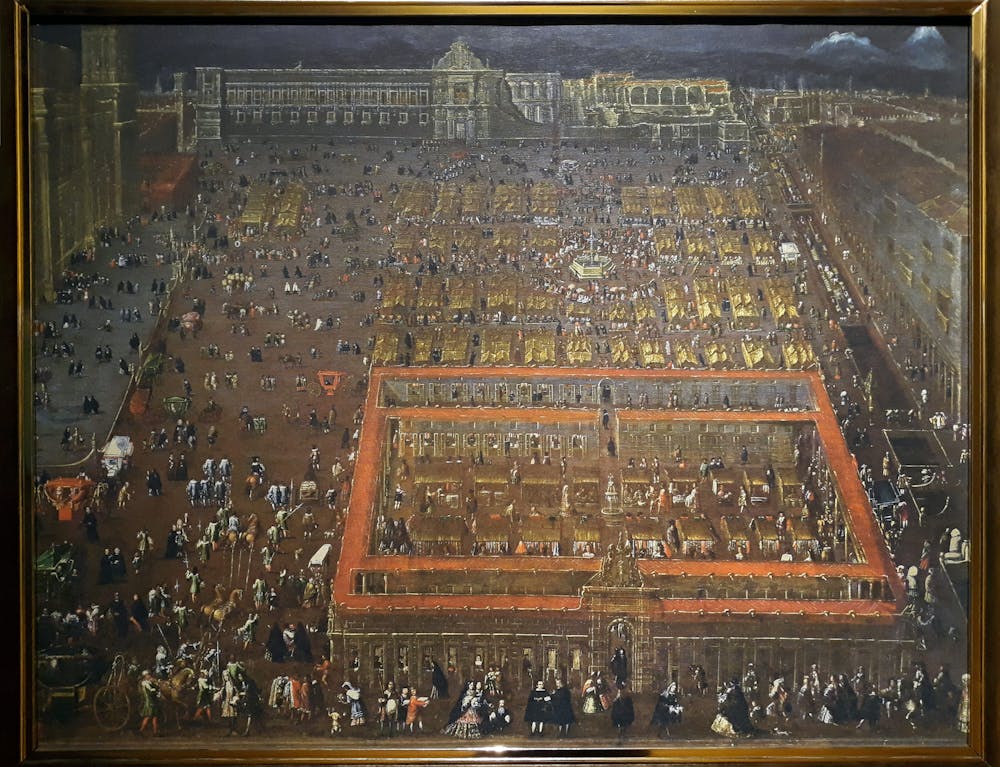 Vista de la Plaza Mayor de la Ciudad de Mexico – Cristobal de Villalpando (1695).
Wikimedia commons
Vista de la Plaza Mayor de la Ciudad de Mexico – Cristobal de Villalpando (1695).
Wikimedia commons
The Viceroy’s palace continued to play a central role in Mexican history. After Mexicans revolted against the Spanish again in a fierce war for independence in the 1810s, the new national government installed a Mexican president in the palace.
In the 1930s, the government commissioned Diego Rivera to paint a massive mural[3] in its central staircase. The mural visually narrates the long history of popular struggle against colonial rule, transforming the palace into an anti-colonial monument.
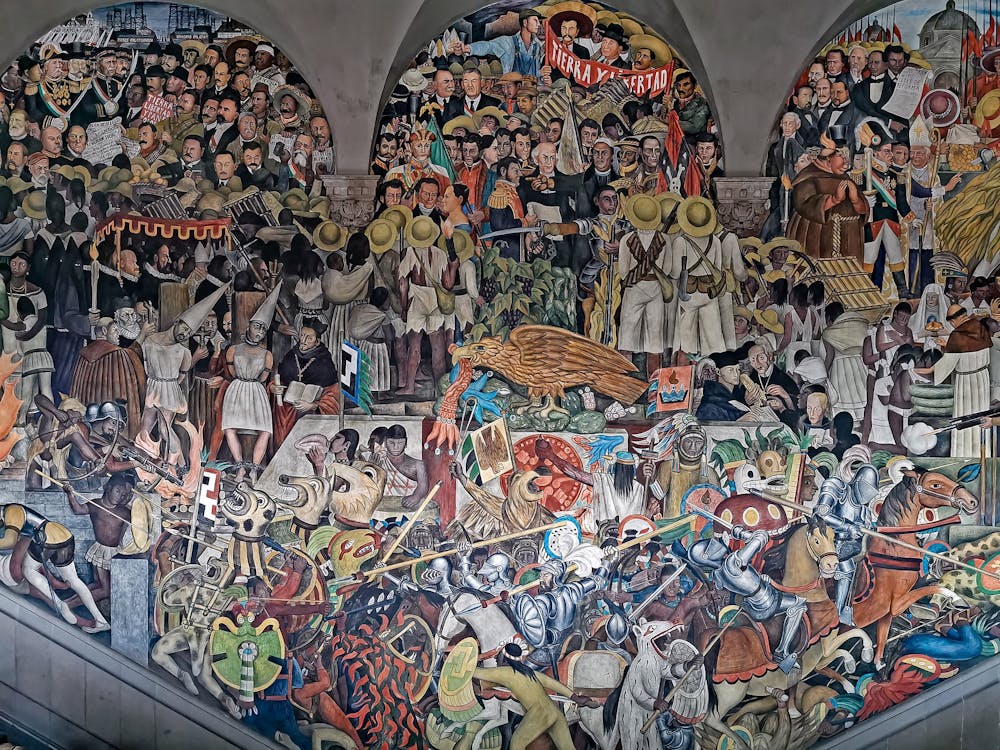 The History of Mexico – Diego Rivera (1935).
Wikimedia commons
The History of Mexico – Diego Rivera (1935).
Wikimedia commons
In Europe, the royal palace of Versailles was the stage for dramatic events in the French Revolution. When France was plunged into a financial crisis in the late 18th century, the sumptuous palace became a symbol of royal indulgence and excess at a time when much of the population was suffering from extreme poverty.
On 5 October 1789, a riot in Paris over the sky-rocketing price of bread exploded into a much bigger protest. An angry mob, in which women featured prominently, raided weapons from the city’s armories and marched to the palace, forcing their way inside and demanding an audience with King Louis XVI. They made the royal family return with them to Paris the next day.
After the King was executed in 1793, the palace’s riches were shipped to the Louvre or auctioned off.
Read more: Friday essay: what is it about Versailles?[4]
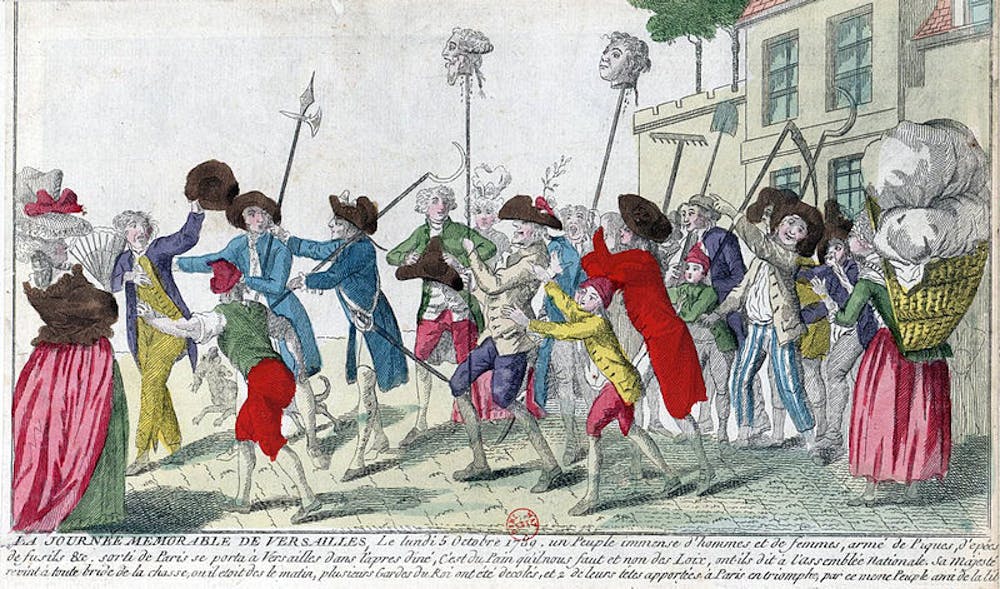 The women’s march on Versailles (1789) – artist unknown.
Public domain
The women’s march on Versailles (1789) – artist unknown.
Public domain
Palaces also featured prominently in 20th century revolutions. In 1917, the Bolsheviks’ capture of the Russian Tzar’s Winter Palace in St Petersburg marked the beginning of seven decades of communist rule.
The new communist government considered this event so important that they staged a spectacular reenactment[5] of the storming of the palace in a mass public extravaganza in 1920. Over 2,500 actors participated in this event, including the entire cast of the former Imperial Ballet. More than 100,000 spectators turned out to watch.
The palace was repurposed as the Hermitage Museum, where nationalised royal art collections were put on display for citizen visitors. The state symbolically democratised the space, signalling their communist values.
Read more: World politics explainer: the Russian revolution[6]
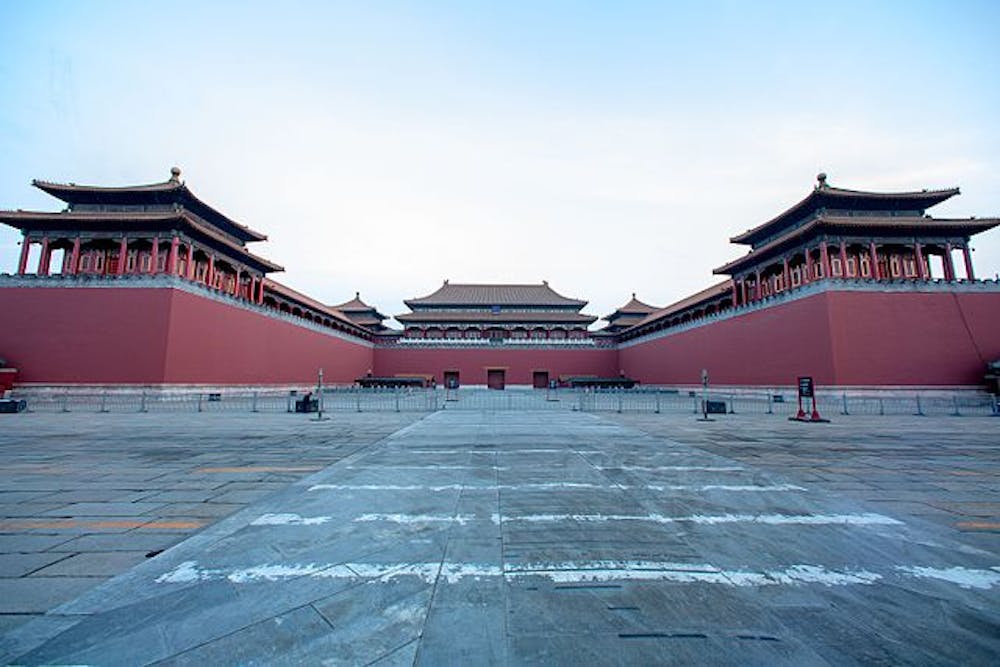 Meridian Gate, the Forbidden City, Beijing.
Wikimedia commons
Meridian Gate, the Forbidden City, Beijing.
Wikimedia commons
The Forbidden City[7] in Beijing is the world’s largest palace. Built in the 15th century, it was home to generations of Ming and Qing emperors. In 1949, Mao Zedong chose the palace as the site for the public celebration of the communist victory in the Chinese Civil War[8].
Mao’s portrait now hangs over the Gate of Heavenly Peace, where he formally declared the establishment of the People’s Republic of China. The fact the palace serves as backdrop to Tiananmen Square has made this a place where national politics have been forged and contested.
These examples from the past suggest those interested in the future path of the current Sri Lankan unrest would be wise to keep an eye on the fate of Temple Trees. The building’s creative use and remodelling in coming weeks and months could shed light on the nation’s evolving politics.
References
- ^ What's happening in Sri Lanka and how did the economic crisis start? (theconversation.com)
- ^ Templo Mayor (www.worldhistory.org)
- ^ mural (en.wikipedia.org)
- ^ Friday essay: what is it about Versailles? (theconversation.com)
- ^ spectacular reenactment (en.wikipedia.org)
- ^ World politics explainer: the Russian revolution (theconversation.com)
- ^ The Forbidden City (www.britannica.com)
- ^ Chinese Civil War (en.wikipedia.org)