RATs for flu exist – should we be self-testing for that too?
- Written by: Stavros Selemidis, Professor of Pharmacology, RMIT University
Flu season has begun uncharacteristically early this year, and so far we’ve seen[1] around 187,000 laboratory-confirmed cases, 1,323 hospitalisations, and 113 deaths.
The risk of infection from either COVID or influenza this winter will be very high. The risk of being infected with both at the same time will also be significant, and will likely put a huge strain on our already overburdened health system.
A large number of people who get the flu do not get tested, unless the symptoms are severe. Early detection of flu can improve treatment to prevent significant illness, particularly in the young, elderly and immunocompromised.
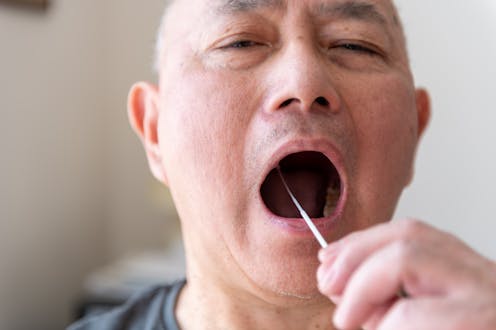
A simple RAT test, the same as the ones we’ve become accustomed to using for COVID, could potentially help in detecting the virus early, and stopping the spread of flu.
How do flu RATs work?
RATs are short for rapid antigen tests and they can quickly test whether a person has Influenza A or B – two of the most common strains of flu virus.
The test is designed to pick up the presence of specific antigens of the flu virus, which when detected produce a coloured band to indicate a positive test result, similar to the line you’ve seen on your COVID RATs.
At the moment, RAT tests for flu are not widely available, are expensive compared to the COVID tests, and most suffer problems[2] with sensitivity and/or specificity (their ability to detect positive cases) that need further work and testing. However, this could change if there was more demand for flu RATs.

Could flu RATs make a different to rates of flu and illness from flu?
Influenza and COVID cause similar symptoms, however, the drugs we have to manage these diseases require a precise identification. This is critical, as it governs what type of antiviral drug is given.
Current flu RATs are most sensitive[3] up to four days after symptom onset. A positive detection during this period can facilitate a quicker treatment strategy with antivirals, as these drugs have a narrow window of therapeutic opportunity.
If a patient tests positive for flu, they can then receive Tamiflu[4], the antiviral[5] recommended for flu cases, which reduces the risk of hospitalisation.
However this must be taken within two days of infection (when symptoms emerge) for it to be effective. Everyone can get Tamiflu but they require a prescription, which makes it difficult to get the drug within the two-day window needed to be effective.
Tamiflu would not work against COVID, which requires a different antiviral for elderly and otherwise unwell patients, such as Paxlovid.
A flu RAT would benefit people at risk of severe illness such as babies, young children, the elderly and the immunocompromised. This would increase the chance of early detection to enable treatment, and it could also give us more accurate figures of the number of people with flu each season.
Flu RATs could also help in the management of outbreaks in high-risk communities such as aged care, nursing homes, schools and day care. A quick detection of flu could assist in measures to reduce the chances of transmission by antiviral treatment and isolation, as we’ve seen with COVID.
Read more: New ad urges us to 'take on winter' by getting COVID and flu vaccines. But it misses some key things[6]
Are flu RATs available in Australia?
There are currently no flu RATs approved by the Therapeutic Goods Administration (TGA) in Australia, for public use at home. The TGA has approved eight tests that are used only in a clinical setting, and these are designed to detect both flu and COVID.
We need to lobby the government to action TGA approval of home flu RATs, as public demand will help drive this process. The TGA will require time and money to test and develop the RATs to a high standard.
Therefore we can’t expect Australian-based RATs for this flu season, but given we are now all so comfortable with at-home antigen testing, testing for flu is the logical next step.
Read more: Flu may be back, but COVID is far from over. How do they compare?[7]
References
- ^ we’ve seen (www1.health.gov.au)
- ^ suffer problems (www.cdc.gov)
- ^ most sensitive (www.cdc.gov)
- ^ Tamiflu (www.health.nsw.gov.au)
- ^ antiviral (www.cdc.gov)
- ^ New ad urges us to 'take on winter' by getting COVID and flu vaccines. But it misses some key things (theconversation.com)
- ^ Flu may be back, but COVID is far from over. How do they compare? (theconversation.com)
Read more https://theconversation.com/rats-for-flu-exist-should-we-be-self-testing-for-that-too-185602