New Zealand's plan to eliminate HIV transmission ignores deepening inequities in health outcomes for Māori women
- Written by: Clive Aspin, Associate Dean Māori, Faculty of Health; Senior Lecturer in Health, Te Herenga Waka — Victoria University of Wellington
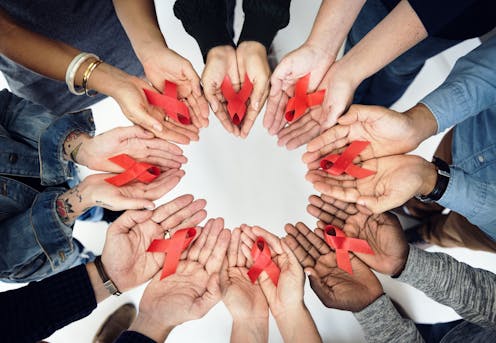
The New Zealand government plans to spend NZ$18 million on becoming the first country to eliminate transmission[1] of the human immunodeficiency virus (HIV) within a decade.
In a draft action plan[2] launched last week, associate health minister Ayesha Verrall set out key measures to increase prevention and testing, improve access to treatment and address stigma.
These are ambitious targets, but the plan fails to take account of the changing pattern of the HIV pandemic. It does not reflect the mounting evidence[3] that Māori, and Māori women in particular, have disproportionately high rates of HIV and are more likely to be diagnosed late.
If Māori women are not identified as a group at increased risk of HIV and progression to AIDS as a result of late diagnosis, the plan’s effectiveness in stemming the spread of HIV infection will be severely limited. This glaring omission could easily derail minister Verrall’s goal and instead exacerbate current HIV disparities.
Since national HIV surveillance was established in Aotearoa New Zealand in 1985, 5,430 people have been diagnosed with the virus and 757 have died of AIDS. The number of people diagnosed with HIV has declined[4] recently (from 195 in 2016 to 122 in 2021), but inequities in health outcomes are deepening.
Read more: HIV 40 years on: four action points to end AIDS as a health threat[5]
The pattern of the HIV pandemic globally has changed dramatically with the advent of antiretroviral therapy (ART[6]) more than two decades ago. With timely access to ART, people with HIV can expect to enjoy the same health outcomes as everyone else.
ART has become a key plank in preventing the spread of HIV. But to be effective, ART must be initiated soon after a person becomes infected with the virus. If New Zealand is to achieve elimination of HIV by 2032, ART must be made readily available to everyone and we must remove the barriers caused by stigma, discrimination and racism.
HIV inequities are increasing
At the recent 24th International AIDS Conference[7] in Montreal, a consistent message was that the HIV pandemic is far from over, and that HIV inequities have increased.
The world will not eliminate HIV any time soon if governments and decision makers fail to recognise the adverse impact of HIV on disadvantaged populations such as Indigenous peoples, and especially Indigenous women.
At the conference, I presented five steps for developing action plans to prevent HIV transmission among Indigenous peoples. This provides a highly relevant framework for setting realistic and achievable goals for Māori living with HIV.
Recognise the impact of colonisation and historical trauma
ensure access to culture
identify and resource protective factors such as whānau and family support
ensure health services are free from stigma and discrimination
understand and address the impacts of social determinants on health and wellbeing.
UNAIDS leads the global effort to end AIDS[8] as a public health threat by 2030. It recently set a 95-95-95 target: 95% of people living with HIV knowing their HIV status; 95% of HIV-positive people receiving treatment; and 95% of people on treatment with suppressed viral loads.
New Zealand cannot ignore the fact we are part of the global community. If the international community fails to eliminate HIV within the next eight years, this will seriously hamper efforts in our country.
Health reforms provide opportunity to enhance equity
In 1994, more than a decade after the onset of the HIV pandemic, New Zealand’s ministry of Māori development Te Puni Kōkiri produced the first report[9] into the likely impact of HIV on Māori.
It warned Māori were vulnerable to HIV and the government needed to implement measures to prevent the spread of the virus among Māori. Just as has happened with COVID-19[10], the government paid scant attention to those warnings.
Read more: Research shows Māori are more likely to die from COVID-19 than other New Zealanders[11]
As we enter the fifth decade of the HIV pandemic, Māori continue to be adversely affected by HIV, with higher rates of late diagnosis increasing the risk of poor health outcomes[12].
Māori women have been rendered invisible in the draft action plan, despite the fact they have high rates of locally acquired HIV[13].
Action plans play an important role in managing and controlling all manner of illnesses. This plan is no exception. But to be effective, plans need to be in tune with the needs of communities and based on consultation processes that engage with them respectfully.
New Zealand’s current health reforms[14] are designed to lead to long overdue improvements in equity for Māori. But this is not reflected in this draft action plan, which may well undermine efforts to address HIV disparities.
Read more: With closer ties to GPs, NZ's new central health agency could revolutionise treatment of major diseases[15]
The reforms require health services and professionals to put Te Tiriti o Waitangi and equity at the forefront of health policy and services. In its current form, the action plan fails to take advantage of the opportunities in the new health sector.
If New Zealand wants to stop the transmission of HIV among Māori, the HIV elimination action plan must set out strategies to address inequities. An overwhelming message from the AIDS conference was that affected communities, and especially people living with HIV, must be front and centre of efforts to prevent the transmission of the virus.
References
- ^ eliminate transmission (www.beehive.govt.nz)
- ^ draft action plan (www.health.govt.nz)
- ^ mounting evidence (pubmed.ncbi.nlm.nih.gov)
- ^ declined (www.otago.ac.nz)
- ^ HIV 40 years on: four action points to end AIDS as a health threat (theconversation.com)
- ^ ART (www.healthnavigator.org.nz)
- ^ 24th International AIDS Conference (aids2022.org)
- ^ global effort to end AIDS (www.unaids.org)
- ^ report (natlib-primo.hosted.exlibrisgroup.com)
- ^ happened with COVID-19 (www.bmj.com)
- ^ Research shows Māori are more likely to die from COVID-19 than other New Zealanders (theconversation.com)
- ^ risk of poor health outcomes (pubmed.ncbi.nlm.nih.gov)
- ^ high rates of locally acquired HIV (www.otago.ac.nz)
- ^ health reforms (www.rnz.co.nz)
- ^ With closer ties to GPs, NZ's new central health agency could revolutionise treatment of major diseases (theconversation.com)