What's this 'longevity' diet, and will it really make you live longer?
- Written by: Evangeline Mantzioris, Program Director of Nutrition and Food Sciences, Accredited Practising Dietitian, University of South Australia

You may have heard about the longevity diet[1], and its promise of an extended life span – but what exactly is it and is it any different to other diets promoting good health?
The longevity diet is a set of eating recommendations compiled by a biochemist called Valter Longo, director of the University of Southern California’s Longevity Institute. He is known for his research on the role of fasting, the effects of nutrients on your genes and how these may impact ageing and the risk of diseases.
While the longevity diet has been targeted to older adults, it is also recommended for younger people. Longo has said[2] he plans to live to 120 by following this diet.
So, what does the diet look like?
Foods in this diet are vegetables, including leafy greens, fruit, nuts, beans, olive oil, and seafood that’s low in mercury.
So most foods in the longevity diet are plant based. Plant-based diets are generally higher in vitamins and minerals[3], dietary fibre, antioxidants and lower in saturated fat and salt, which lead to health benefits.
Foods that are discouraged are an excess of meat and dairy, and those high in processed sugar and saturated fats.
For people who don’t want to go without dairy, the longevity diet recommends switching from cow’s milk to either goat’s or sheep’s milk, which have a slightly different nutrient profile[4]. But there is little evidence sheep’s and goat’s milk provide more health benefits.
Including fermented dairy (such as cheese and yoghurt) in your diet, as recommended in the longevity diet, is beneficial as it provides a more extensive microbiome[5] (good bacteria) than any milk.
Read more: Why you should eat a plant-based diet, but that doesn't mean being a vegetarian[6]
Have you seen this diet before?
Many of you may recognise this as a familiar dietary pattern. It is similar to the Mediterranean diet[7], especially as both feature olive oil as the oil of choice. The Mediterranean diet is promoted and backed by a considerable body of evidence[8] to be health promoting, reducing the risk of disease, and promoting longevity.
The longevity diet is also similar to many national, evidence-based dietary guidelines, including Australia’s[9].
Two-thirds of the recommended foods in the Australian dietary guidelines come from plant-based foods (cereals, grains, legumes, beans, fruits, vegetables). The guidelines also provide plant-based alternatives for protein (such as dried beans, lentils and tofu) and dairy (such as soy-based milks[10], yoghurts and cheeses, so long as they are supplemented with calcium).
Intermittent fasting
Another aspect of the longevity diet is the specified periods of fasting, known as intermittent fasting. The diet advocates eating in a 12-hour time-frame, and not eating for three to four hours before bed time.
Typically with intermittent fasting people fast for 16–20 hours with a four to eight hour window of eating. Another intermittent fasting option is the 5:2 diet, in which eating is restricted to about 2,000–3,000 kilojoules for two days of the week and for the other five days, eating normally.
The evidence[11] indicates intermittent fasting may lead to improvements in insulin resistance, which leads to better blood glucose control. This can reduce your risk of type 2 diabetes and other chronic diseases, such as heart disease and obesity.
Read more: Is intermittent fasting actually good for weight loss? Here's what the evidence says[12]
Maintain a healthy weight
The longevity diet recommends that people who are overweight eat only two meals a day – breakfast and either a midday or evening meal – plus just two low-sugar snacks. This is to try to reduce kilojoule intake for weight loss.

Another important aspect of this recommendation is to reduce snacking, particularly of foods high in saturated fat, salt or sugar. These are the foods we typically refer to as discretionary/sometimes foods, or ultra-processed foods. These offer little nutritional value, and in some cases are linked to worse health outcomes[14].
Read more: Ultra-processed foods: it's not just their low nutritional value that's a concern[15]
Eat a rainbow of colours
The longevity diet recommends eating foods rich in nutrients, which most national dietary guidelines also advocate. This means eating a diet rich in plant foods, and a variety of foods within each food group.
Each colour fruit and vegetable contains different nutrients, so eating a range of coloured fruit and vegetables is recommended. The recommendation to select a range of wholegrains over refined cereals, breads, pasta and rice also reflects the best nutritional evidence.
Read more: How to get children to eat a rainbow of fruit and vegetables[16]
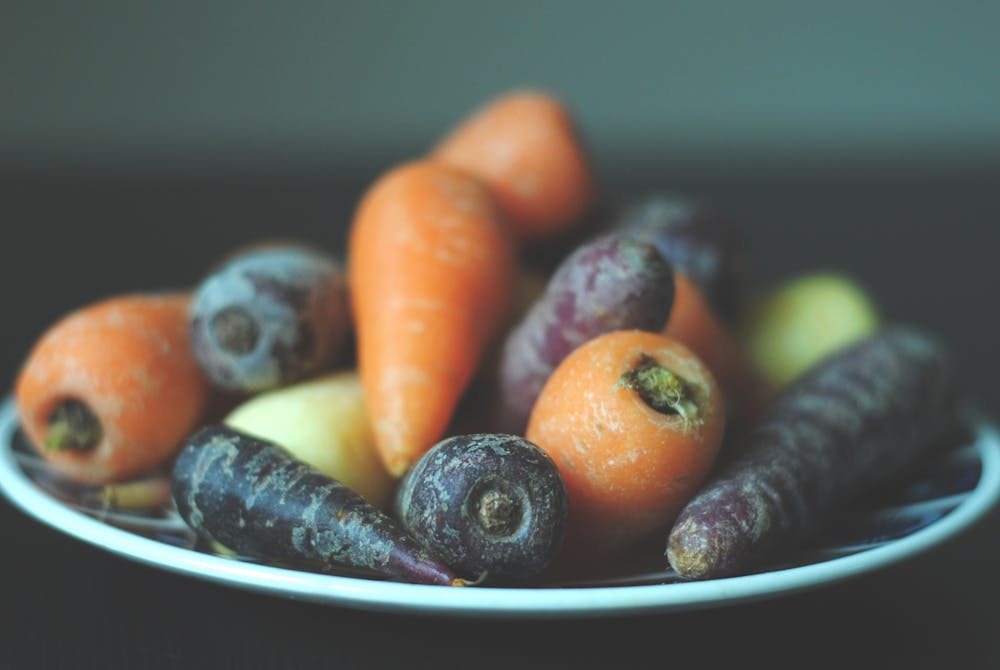 Different coloured vegetables have different nutrients.
Hello I'm Nik/Unsplash, CC BY[17]
Different coloured vegetables have different nutrients.
Hello I'm Nik/Unsplash, CC BY[17]
Restrict protein intake
This diet recommends a restricting protein intake to 0.68-0.80g per kilogram of body weight per day. This is 47-56g of protein a day for a 70kg person. For reference each of these foods contains about 10g of protein: two small eggs, 30g cheese, 40g lean chicken, 250mL dairy milk, 3/4cup lentils, 120g tofu, 60g nuts or 300mL soy milk. This is in line with government recommendations[18].
Most Australians easily consume[19] this level of protein in their diet. However it is the elderly population, to whom the longevity diet is targeted, who are less likely to meet their protein requirements.
In the longevity diet it is recommended most of the protein comes from plant sources or fish. This may require special planning to ensure a complete range of all the nutrients needed if the diet is missing red meat[20].
Read more: How to get the nutrients you need without eating as much red meat[21]
Are there any problems with this diet?
This diet recommends taking a multivitamin and mineral supplements every three to four days. Longo says[22] this prevents malnourishment and won’t cause any nutritional problems.
However, many health bodies including the World Cancer Research Fund[23], the British Heart Foundation[24] and the American Heart Association[25] do not recommend taking supplements to prevent cancer or heart disease.
Supplements should only be taken on your doctor’s advice, following a blood test showing a deficiency in a specific nutrient. This is because some vitamins and minerals may be harmful[26] in high quantities.
If you are eating a variety of foods across all food groups, you are meeting all your nutrient requirements and shouldn’t need supplements.
Read more: Vitamins and minerals aren't risk-free. Here are 6 ways they can cause harm[27]
The verdict?
This longevity diet is a compilation of many aspects of evidence-based healthy eating patterns. We already promote these as they improve our health and reduce the risk of developing chronic diseases. All of these aspects of healthy eating could lead to increased longevity.
What’s not mentioned in the longevity diet is the importance of exercise[28] for good health and a long life.
References
- ^ longevity diet (www.valterlongo.com)
- ^ said (elemental.medium.com)
- ^ generally higher in vitamins and minerals (theconversation.com)
- ^ nutrient profile (www.sciencedirect.com)
- ^ extensive microbiome (www.sciencedirect.com)
- ^ Why you should eat a plant-based diet, but that doesn't mean being a vegetarian (theconversation.com)
- ^ Mediterranean diet (oldwayspt.org)
- ^ body of evidence (onlinelibrary.wiley.com)
- ^ Australia’s (www.eatforhealth.gov.au)
- ^ soy-based milks (theconversation.com)
- ^ evidence (theconversation.com)
- ^ Is intermittent fasting actually good for weight loss? Here's what the evidence says (theconversation.com)
- ^ CC BY (creativecommons.org)
- ^ worse health outcomes (theconversation.com)
- ^ Ultra-processed foods: it's not just their low nutritional value that's a concern (theconversation.com)
- ^ How to get children to eat a rainbow of fruit and vegetables (theconversation.com)
- ^ CC BY (creativecommons.org)
- ^ government recommendations (www.nrv.gov.au)
- ^ easily consume (www.abs.gov.au)
- ^ missing red meat (theconversation.com)
- ^ How to get the nutrients you need without eating as much red meat (theconversation.com)
- ^ Longo says (elemental.medium.com)
- ^ World Cancer Research Fund (www.wcrf.org)
- ^ British Heart Foundation (www.bhf.org.uk)
- ^ American Heart Association (newsroom.heart.org)
- ^ harmful (www.abc.net.au)
- ^ Vitamins and minerals aren't risk-free. Here are 6 ways they can cause harm (theconversation.com)
- ^ importance of exercise (www.health.gov.au)
Read more https://theconversation.com/whats-this-longevity-diet-and-will-it-really-make-you-live-longer-189140