'They're making money off tragedy' – Netflix's Dahmer series shows the dangers of fictionalising real horrors
- Written by: Michele Ruyters, Associate Dean, Criminology and Justice Studies, RMIT University
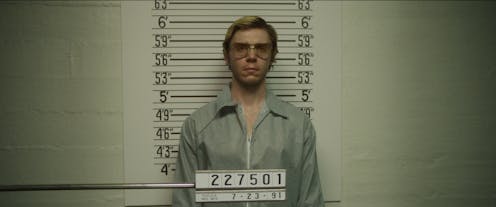
Netflix’s recent series Monster: The Jeffrey Dahmer Story has stirred controversy[1] over its apparent glamorisation of a serial killer and perceived insensitivity towards the families of Dahmer’s victims.
In contrast to more journalistic true crime entertainment (which has its own issues[2]), the dramatisation and fictionalisation of real-life crimes, such as Dahmer, has drawn a wave of criticism for re-traumatising victims and their loved ones, and glorifying criminals.
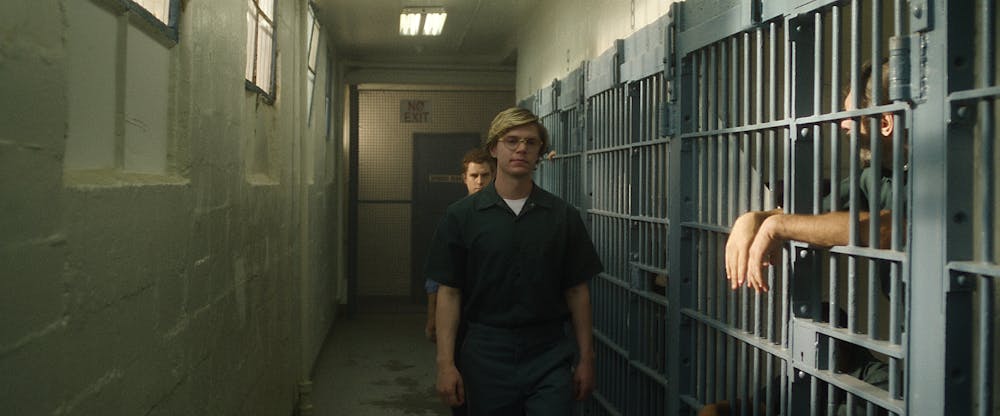
Artistic license or sensationalist schlock?
Whether presenting itself as an accurate retelling or merely “inspired by true events” – there is always going to be some artistic license when transforming a complex true crime story into a movie or TV series.
While changes from real life to screen are often relatively minor, such as having multiple police officers represented by one fictionalised detective, others can significantly misrepresent events.
Anne Schwartz, the journalist who broke the original Dahmer story, has called the recent Dahmer Netflix series “not a helpful representation”. In an interview with the Independent[3], Schwartz criticised the caricatured depiction of law enforcement in the series. She also took aim at key plot elements, such as having key witness Glenda Cleveland (played by Niecy Nash) live next door to Dahmer, rather than in the building next door (as in real life).
Other dramatisations of real-life crimes have gone much further, adding sensationalist – and even downright supernatural – elements to true events.
The Haunting of Sharon Tate[4], written and directed by Daniel Farrands and released in 2019, was universally panned by critics and audiences alike for graphically depicting the real life murder of actress Sharon Tate by the Manson family.
In the film, Tate (played by Hilary Duff) has apparent premonitions of her murder in her dreams, with the film ending with a meeting of Manson’s victims in the afterlife. Film critic Owen Gleiberman called[5] the film “pure, unadulterated cheeseball exploitation” opining that it “goes out of its way to turn the Manson murders into schlock horror”.
Re-traumatising victims and their families
Victims of crime and their loved ones are frequently angered and re-traumatised when their real-life stories become fodder for public consumption.
The families of homicide victims are particularly disadvantaged when encountering inaccurate or insulting depictions of their loved ones, given legal protections of reputation, such as claims in defamation, don’t apply if the person defamed is deceased.
Some of the families of Dahmer’s victims have expressed outrage at the Netflix series, noting that they were never approached about the show’s release. Rital Isbell, whose brother was murdered by Dahmer, had her heart-breaking victim impact statement dramatised in the series without her knowledge or consent. She called the series “harsh and careless” in a piece[6] in Insider expressing that “It’s sad that they’re just making money off of this tragedy”.
The question of who benefits from depictions of real-life crimes is an important one, with large studios and streaming platforms earning millions while victims and their families are often left to bear the consequences of increased public attention.
Australian films haven’t been immune to this tension between artistic freedom and the wishes of victim’s families. The 1997 Australian film Blackrock[7], directed by Steven Vidler and adapted from a play by Nick Enright was clearly inspired by[8] (although denied by Enright) the real-life rape and murder of 14-year-old schoolgirl Leigh Leigh[9] in 1987. Leigh’s family were highly critical upon the film’s release finding the depiction exploitative and accusing the filmmakers of “feasting on an unfortunate situation”.
Making celebrities out of serial killers
The rise of online “fandoms” surrounding real-life killers is an increasingly documented phenomena likely tied to the increased pop culturalisation of true crime.
Social media site Tumblr has a variety of dedicated fan accounts for history’s monsters, with everyone from serial killer Richard Ramirez to school shooters Eric Harris and Dylan Klebold getting special treatment.
Researcher Andrew Rico sees such fandoms as partially motivated by an urge to shock and scandalise[10] the public, but notes they also indicate the tabloid depiction of criminals such as schools shooters has led to a form of dark celebrity. This is supported by the work of doctoral student Sasha Artamonova, who views dark fandoms as a kind of “counter-culture[11]” movement rallying against moral norms.
The Dahmer Netflix series has received criticism[12] for casting Evan Peters as Jeffery Dahmer, given his status as a teen heartthrob who rose to fame in creator Ryan Murphy’s far more lighthearted horror series American Horror Story. The Gen Z populated TikTok is full of fan videos of his depiction of Dahmer.
Similar criticism was levelled at another Netflix series Extremely Wicked, Shockingly Evil and Vile which cast Highschool Musical star Zac Efron as serial rapist and murderer Ted Bundy.
Read more: True crime entertainment like The Teacher's Pet can shine a light on cold cases - but does it help or hinder justice being served?[13]
An unhealthy obsession with serial killers is, of course, nothing new – Jeffery Dahmer received many positive letters[14] and even marriage proposals while incarcerated.
However, some worry the recent trend of casting attractive celebrities as serial killers could have flow on effects. One writer in Odyssey noted[15] that “young and impressionable youth of today might find themselves empathising with and falling for people who are actually dangerous”.
Whether such concerns are prescient or a textbook example of moral panic remains to be seen.
Ultimately, there will always be an audience for stories of the murderous and macabre, with fascination in the darker side of life an incredibly common human impulse.
References
- ^ controversy (www.bbc.com)
- ^ which has its own issues (theconversation.com)
- ^ Independent (www.independent.co.uk)
- ^ The Haunting of Sharon Tate (www.imdb.com)
- ^ called (variety.com)
- ^ piece (www.insider.com)
- ^ Blackrock (www.imdb.com)
- ^ inspired by (www.textjournal.com.au)
- ^ Leigh Leigh (7news.com.au)
- ^ shock and scandalise (journal.transformativeworks.org)
- ^ counter-culture (www.academia.edu)
- ^ received criticism (uk.style.yahoo.com)
- ^ True crime entertainment like The Teacher's Pet can shine a light on cold cases - but does it help or hinder justice being served? (theconversation.com)
- ^ many positive letters (www.amazon.com)
- ^ noted (www.theodysseyonline.com)