China Conflict Postponed: Great News for Australian Businesses
- Written by: The Times
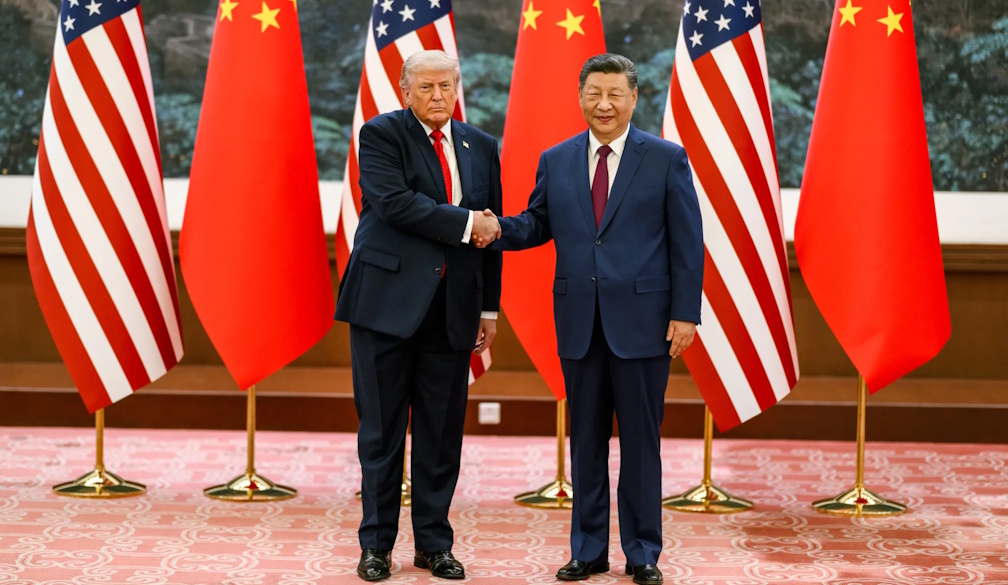
For Australian businesses, the most important outcome from Donald Trump’s visit to China may not be any trade agreement, diplomatic handshake or ceremonial banquet.
It may simply be this: conflict between China and the United States appears, at least for now, to have been postponed.
That matters enormously to Australia.
For months, businesses across Australia have watched tensions surrounding Taiwan, Iran, trade sanctions and military positioning in the Indo-Pacific with increasing concern. The fear was not merely political instability abroad. It was economic shock at home.
Australia’s economy is deeply intertwined with both China and the United States. China remains Australia’s largest trading partner, while the United States remains Australia’s closest strategic and defence ally. A major confrontation between Washington and Beijing would place Australia in one of the most difficult positions in its modern history.
Instead, the Trump-Xi summit delivered a different message: competition continues, but communication remains open.
That is precisely what Australian businesses wanted to hear.
The Australian mining sector, agricultural exporters, logistics companies, universities, tourism operators and retailers all rely heavily on stable regional trade conditions. Even the possibility of military conflict over Taiwan creates anxiety throughout financial markets and supply chains.
Taiwan is not simply a geopolitical flashpoint. It sits at the centre of the global semiconductor industry. A conflict in the Taiwan Strait would threaten computer chip supplies essential for everything from motor vehicles and mining equipment to banking systems, telecommunications and household electronics.
Australian businesses understand this clearly.
The concern is not theoretical. During the pandemic and subsequent global supply chain disruptions, Australian importers experienced severe delays, rising freight costs and inventory shortages. Many businesses fear a Taiwan crisis would dwarf those disruptions.
Instead of escalation, the Beijing summit produced a temporary easing of tensions.
Chinese President Xi Jinping reportedly warned Trump that mishandling Taiwan could lead to conflict, while Trump maintained dialogue and avoided dramatic provocations during the visit.
Markets generally prefer predictability over confrontation.
Importantly, the summit also carried a strong commercial tone. Reports highlighted the large entourage of American business leaders travelling with Trump, including executives connected to major technology, aviation and finance companies.
That symbolism matters to Australian business leaders.
If America’s largest corporations are still actively seeking engagement with China, it sends a signal that full economic decoupling between the world’s two largest economies remains unlikely in the near term.
For Australia, that is reassuring.
Australia exports iron ore, LNG, agricultural products, education services and tourism experiences into a regional economy heavily influenced by Chinese growth. Stability between Beijing and Washington increases confidence that trade routes, shipping lanes and investment flows will remain functional.
The Strait of Hormuz was another important issue discussed during the summit.
Trump reportedly sought Chinese cooperation regarding Iran and the reopening of stable energy routes through the region. China also has enormous interests in maintaining uninterrupted oil flows because it imports large quantities of Middle Eastern energy.
Why does this matter to Australians?
Because fuel prices affect almost every sector of the economy.
Transport operators, airlines, farmers, construction companies and retailers all depend heavily on fuel costs remaining manageable. When oil prices spike due to war fears, inflation spreads rapidly throughout the economy. Grocery prices rise. Freight costs increase. Consumers spend less.
Australian businesses have already endured years of inflation pressure, interest rate increases and uncertain consumer confidence. The prospect of another global shock driven by US-China conflict was deeply unwelcome.
This summit has not solved the world’s problems.
Taiwan remains unresolved. Strategic rivalry remains intense. Military competition across the Indo-Pacific continues. Trade disputes and technology sanctions still exist.
But diplomacy itself has economic value.
Simply seeing the presidents of the United States and China standing together, discussing trade and mutual interests instead of issuing threats, provides markets and businesses with breathing room.
Australian exporters in particular may benefit if US-China trade tensions ease even slightly.
Historically, Australia has often found itself caught between the economic interests of China and the strategic policies of the United States. A less hostile relationship between the two superpowers reduces pressure on Canberra and reduces uncertainty for Australian companies operating internationally.
There is also another important psychological factor.
Business confidence matters.
Companies invest, hire staff and expand operations when they believe the future is relatively stable. When global conflict appears imminent, businesses delay decisions, reduce spending and preserve cash reserves.
The Trump-Xi summit may not deliver historic peace agreements, but it has helped calm fears that the world was drifting rapidly toward direct confrontation.
For Australia’s business community, that alone is valuable.
Because while politicians debate strategy and military positioning, Australian businesses simply want stability: stable fuel prices, stable shipping routes, stable supply chains and stable consumer confidence.
Right now, a postponed conflict may be the best economic news Australia could realistically hope for.