Everything you need to know about Labor's first budget in 6 charts
- Written by: Wes Mountain, Social Media + Visual Storytelling Editor
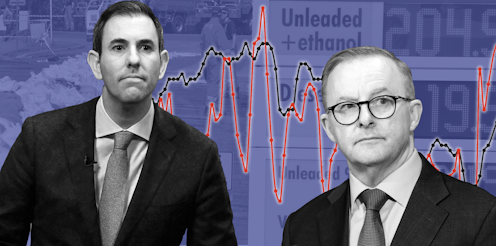
This Budget makes hard decisions for hard times.
Jim Chalmers’ first speech as treasurer outlines the enormity of the global economic situation – inflation, energy and supply chain issues, and a continuing war in Europe – and signposts that this is a budget that’s much more about what he’s taking away (or reallocating) than new announcements.
It’s not often we get two budgets in the one year, and this one is in stark contrast to the Coalition’s before the election.
On the positive side, the deficit is forecast to be just $36.9 billion this[1], compared to $78 billion predicted in March. A lot of this turnaround has to do with booming coal and iron ore export prices, but also the significant cuts Labor is making to some of the Coalition’s big promises in March.
While this is good news for a new government, the deficit will actually rise back to $49.6 billion by the end of the budget forecasts as the costs of things like the NDIS and servicing debt in an increasingly expensive global market increase.
The March budget very optimistically forecast that we’d see the end of runaway inflation effectively by the time of the election, but the government assumes the consumer price index will continue to rise to 7.75% by the of the year, and take another 18 months to cool down.
As part of this, Treasury is assuming a 20% increase in electricity bills by mid next-year, and a further 30% by July 2024. It also expects gas to increase by 20% over the next two years.
So while this budget continues to assume the wage price index will turnaround within the next four years, and slowly pass inflation, most of us are unlikely to see a massive reprieve from cost of living pressures any time soon.
The government is assuming GDP will continue to dip down over the next few years, hitting 1.5% by mid-2024, but trending up again by end of the forward estimates.
After more than a decade of low interest rates globally, interest rates are starting to bite Australians – and the Australian government.
The cost of servicing government debt interest payments is forecast to have a significant impact on the budget by the end of the decade, which means the government will likely have to factor this into how they spend for the duration of this term – or how they raise revenue.
And while payments are set to come down after the extreme costs of the COVID response, receipts are also likely to stay flat over the duration of the budget forecasts.
Many of the key spending announcements in this budget were promises Labor took to the election or have announced in the past week. The government is adding $9.7 billion in net spending over four years, but they’re simultaneously cutting significantly – so this is actually much less than it could be for the promises made.
Read more: Jim Chalmers’ 2022-23 budget mantra: whatever you do, don’t fuel inflation[2]
And many of the costs from the March budget that the Coalition took to the May election are not yet spent – or legislated. The government expects to save $3.6 billion alone over the next four years by reducing the outsourcing of labour, advertising, travel and legal expenses.
The treasurer also signalled this budget was “the beginning of something new and responsible”, and this is the first time the government has included a wellbeing statement as part of the budget papers.
As a way of defining the problem and the targets, it included a table to show where Australia sat against other countries in the OECD.
While there’s no attempt to give an overall measure, Australia is at or better than the OECD average on 21 of 37 indicators – which means there’s still some room for improvement, but at least we’re measuring the problem.
Read more: ‘The beginning of something new’: how the 2022-23 budget does things differently[3]
References
- ^ $36.9 billion this (theconversation.com)
- ^ Jim Chalmers’ 2022-23 budget mantra: whatever you do, don’t fuel inflation (theconversation.com)
- ^ ‘The beginning of something new’: how the 2022-23 budget does things differently (theconversation.com)
Read more https://theconversation.com/everything-you-need-to-know-about-labors-first-budget-in-6-charts-192851