How to talk about excellence in Indigenous education
- Written by: Marnee Shay, Senior Research Fellow, School of Education, The University of Queensland
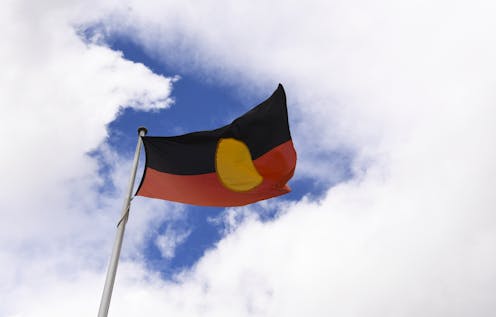
When we talk about Indigenous education in Australia, it almost always includes three words: “close the gap”. The federal government’s Indigenous education priorities[1] highlight school attendance, literacy and numeracy and year 12 attainment. This frames students and their families as a “problem” to “fix”.
In other areas[2] of education, the word “excellence” is frequently used to frame policy. But a simple Google search of “excellence” and “Indigenous education” comes up with very few meaningful results. Why aren’t starting from the same point in Indigenous education?
Our new research begins this process.
Read more: Albanese is promising 'truth-telling' in our Australian education system. Here's what needs to happen[3]
Our study
Our project started as a pilot study with three secondary schools from an urban, regional and remote setting in Queensland.
We yarned with 31 Indigenous and non-Indigenous educators, principals and teachers about their perspectives on excellence in Indigenous education.
Here we share the perspectives of 12 Indigenous educators. We do this deliberately because it is critical we elevate Indigenous voices in any re-imagining of policy that affects us.
We explored the question: “How is excellence in Indigenous education defined by Indigenous peoples?”
Three themes emerged: the young person, school culture and relationships.
‘Build young people up’
The most distinct theme to emerge was the need to nurture and affirm culture and identity in students and in doing so, “build young people up”.
Indigenous interviewees talked about identity as a protective factor in the face of navigating issues such as racism at school. As school community liaison officer Uncle Frank* explained:
In our school, once students knew their identity, they excelled. Nurturing identity and culture is very important – growing young people in an environment where being Indigenous was negative but turning that into a positive is re-imagining the story for all Indigenous students.
Aboriginal teacher, Brooke, also explained:
our white kids know where they fit in society. Many of our kids don’t, sometimes they’re not accepted in different communities. Kids who are fair like me don’t fit with white or Black. Identity is important for all kids – we are social creatures".
From a practical perspective, community education counsellor Aunty Millie said schools could provide dedicated physical spaces to enhance their identity work with students.
culture and identity play an important role in students believing in themselves and striving to be the best version of themselves […] students have to know that they [are] included and recognised as Aboriginal and Torres Strait Islander people […] space to call their own is important. They like to be there.
Building up young people is more than just affirming their identity. As Uncle Frank explained, it is also:
letting our senior students take a lead role [and] encouraging Indigenous students to give feedback to teachers. Empower them to have a say.
School culture and leadership
Research already tells us[4] the leadership of a school plays a critical role in its culture.
Our research also shows it is vital for excellence in Indigenous education.
Community liaison Katelyn told us how she was empowered by strong leadership at her school, who are open to new ideas and approaches based on Indigenous knowledge and perspectives.
We have a very great leader here […] I’m able to look outside the box […] the restraints aren’t there.
Brooke talked about the notion of “curriculum leadership” and the importance of “making sure everyone is reflected in curriculum and pedagogy [the way students are taught]”.
Relationships with students
Previous research[5] also recognises how positive relationships with students are connected to positive outcomes for students.
Aboriginal school support worker Missy talked about the quality of relationships being a priority for schools.
It really does come down to building a relationship with the students [and] with the families and showing them [they are] not just another number.
Uncle Frank pointed out Indigenous people bring a wealth of knowledge in relationships with schools.
[…] we know what’s best for our kids – include us in the conversation. If you’ve got a degree that’s good but I’ve got a degree in life – being Aboriginal.
We need new ways to talk about Indigenous education
In all our conversations with educators and support staff in school, one other thing stood out. When asked to think about “excellence” in Indigenous education, many of these experts struggled to conceptualise what it is or should be.
Read more: How can Australia support more Aboriginal and Torres Strait Islander teachers?[6]
We believe this is due to the dominance of “closing the gap”. Those three words have been so influential in shaping the minds of educators and support staff in schools.
This highlights the power and importance of language. We need new ways to speak aspirationally about Indigenous education and move on from the old deficit vocabulary.
This is a small data set from a pilot study, but it already provides some important insights about how we work towards excellence in Indigenous education.
It shows how there must be opportunities for Indigenous peoples to shape all aspects of schooling and educational policy. It is vital we include the aspirations, experiences and stories of Indigenous people working in Indigenous education.
*names have been changed.
References
- ^ Indigenous education priorities (www.niaa.gov.au)
- ^ other areas (education.nsw.gov.au)
- ^ Albanese is promising 'truth-telling' in our Australian education system. Here's what needs to happen (theconversation.com)
- ^ tells us (www.tandfonline.com)
- ^ research (www.tandfonline.com)
- ^ How can Australia support more Aboriginal and Torres Strait Islander teachers? (theconversation.com)