with NZ's hate speech laws postponed, where are the limits for comedy?
- Written by: David Jenkins, Lecturer in Political Theory, University of Otago
After a long and at times divisive public consultation process, the government has opted to make a single change to the Human Rights Act[1] and push the “wider and more complex” issues around hate speech legislation to the Law Commission for review.
While the act will be amended to include religious communities in existing protections against speech likely to “incite hostility”, any extension of the law (including to protect the rainbow and disability communities) has been postponed for now.
But the government’s main justifications for the change and review remain. As the Ministry of Justice explains it[2]:
Seeking the right balance between protecting freedom of expression, ensuring everyone’s rights and interests are protected, and every person can express themselves without fear, is important for all New Zealanders.
Balancing acts
This balancing act will create different categories of affected speech. For example, explicitly political figures like Destiny Church leader Brian Tamaki might be penalised for his views on Islam, gender roles, homosexuality and transgender rights.
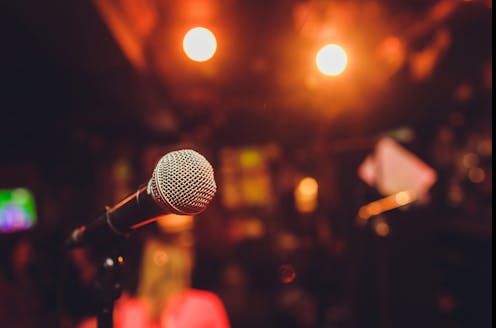
But there’s another kind of speaker who sometimes looms large in discussions of the limits of speech: the comedian. While they’re doing different things – Tamaki is trying to get us back on the path to God, comedians are telling jokes – their defences are similar.
Read more: Twitter and Elon Musk: why free speech absolutism threatens human rights[3]
Both argue that part of what it means for a society to be free is that people like themselves are given a degree of free rein. Barring a few exceptions – yelling “fire!” in a crowded theatre being the classic example – people need to be able to say what they want.
Members of robust liberal societies cannot be too fearful of consequences, it’s argued, because such fear allows the tyranny of opinion to compromise the pursuit of truth.
Of course, being free to say something is compatible with choosing not to use that freedom. A person can assess any particular occasion – or a general atmosphere – in terms of how a joke might be understood, interpreted and then used, and choose not to tell it. In other words, comedians can exercise a degree of responsibility.
The Chappelle factor
US comedian Dave Chappelle has been caught in the crossfires of these debates, and was recently lambasted for a perceived anti-transgender bias[4] in his recent Netflix specials.
But pigeonholing Chappelle is complicated by the fact that in 2005 he walked away from his own highly successful series, The Chappelle Show, because he felt it was reinforcing racial stereotypes[5] rather than sending them up.
Crucial to Chappelle’s earlier experience, then, was the idea that not all laughs are equal. And, related to that, a comedian can make mistakes in pursuit of laughs.
Comedians are not infallible, and often wander into difficult terrain. Trying to get a laugh out of race, sex, gender or even dead babies (a dark comedy trope) is already a weird business. When it goes wrong, it is going to go wrong in a weird way, too.
This isn’t to say you can’t get good material from such subjects. But comedians might also reflect on why they have been interpreted in one way rather than another. Why are some people laughing in ways that make the comedian – and others – uncomfortable? And is that discomfort caused by mistakes they might have made themselves?
Read more: Comedy should punch up, not kick down[6]
Reading the room
During more politically settled times, however we might define them, a “let it all hang out” approach might seem generally justifiable. A joke, after all, is a joke. If the culture isn’t a battleground of belligerent, reactionary or otherwise dangerous political forces that threaten the vulnerable, then freedom of speech should take precedence.
But if those reactionary forces are rampant, then comedians need to reflect on the role of comedy (especially the kind that fills arenas) within wider public ideas and conversations. Perhaps jokes can contribute to our perception of certain issues in subtler and more complex ways than political or religious diatribes.
Read more: Why ‘inciting violence’ should not be the only threshold for defining hate speech in New Zealand[7]
Having a whole sub-genre of comedy specials making fun of trans people, for example, might contribute to mobilising certain political movements. In turn this could affect trans-people’s access to gender-affirming healthcare.
None of this means hate speech laws are necessarily the solution. Legal remedies generally involve punishment. In societies that claim to be democratic, punishment can also include the censure and opprobrium of “the people”.
Given the law claims to speak for “the people”, this can turn a matter of manners and individual responsibility into an issue of the proper use of state power. Someone who was simply spewing invective can be transformed into a martyr for their cause.
Laughter and politics
Because these are unsettled times, lobbing the grenade of the law into the mix is likely to exacerbate existing divisions and generate new problems. For better or worse, free speech is perceived as a central part of what it means to be free.
In light of next year’s election and the likely culture war it will involve, it’s perhaps not surprising the government opted to avoid entangling itself in these complicated issues.
But the fact free speech is regarded as central to what it means to be part of a free society means people saying hateful things can gain political currency. And they can use that to generate political outcomes that could harm certain groups.
The law is a blunt instrument, unsuited to remedying such complex problems. All the more reason for comedians – especially popular ones with considerable reach – to exercise caution.
References
- ^ single change to the Human Rights Act (www.stuff.co.nz)
- ^ Ministry of Justice explains it (www.justice.govt.nz)
- ^ Twitter and Elon Musk: why free speech absolutism threatens human rights (theconversation.com)
- ^ perceived anti-transgender bias (www.bbc.com)
- ^ reinforcing racial stereotypes (www.looper.com)
- ^ Comedy should punch up, not kick down (theconversation.com)
- ^ Why ‘inciting violence’ should not be the only threshold for defining hate speech in New Zealand (theconversation.com)