Insects and spiders make up more than half NZ's animal biodiversity – time to celebrate these spineless creatures
- Written by: Jennifer Jandt, Senior Lecturer in Ecology, University of Otago
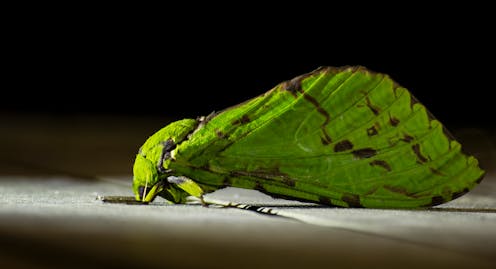
After almost two decades of championing native birds in an annual competition[1], Aotearoa is going to begin celebrating its spineless creatures this year.
New Zealand is home to more than 20,000 species of insects and spiders, representing well over half of all animal diversity[2]. Many are endemic, which means they have no other home on Earth.
Like Aotearoa’s birds, native invertebrates have evolved largely without mammals and have filled many ecological niches taken up by mammals elsewhere. The Entomological Society of New Zealand[3] has launched a Bug of the Year competition[4] to introduce their wonderful diversity.
The competition also promotes the power of citizen science through iNaturalistNZ[6] to encourage New Zealanders to contribute simply by posting images of the critters they see flying or crawling around in their own backyards or around Aotearoa, whether that’s on the beach, the farm or during an epic tramp up to a mountain peak.
Scientists can use the data from these observations to learn more about the patterns, population sizes and ecology of our unique and sometimes threatened native bugs or new arrivals that might become pests.
Read more: They might not have a spine, but invertebrates are the backbone of our ecosystems. Let's help them out[7]
Invertebrates are central to the functioning of ecosystems[8]. They are pollinators and decomposers, they aerate soils and control pests while also becoming food for other wildlife. But they remain understudied and underappreciated.
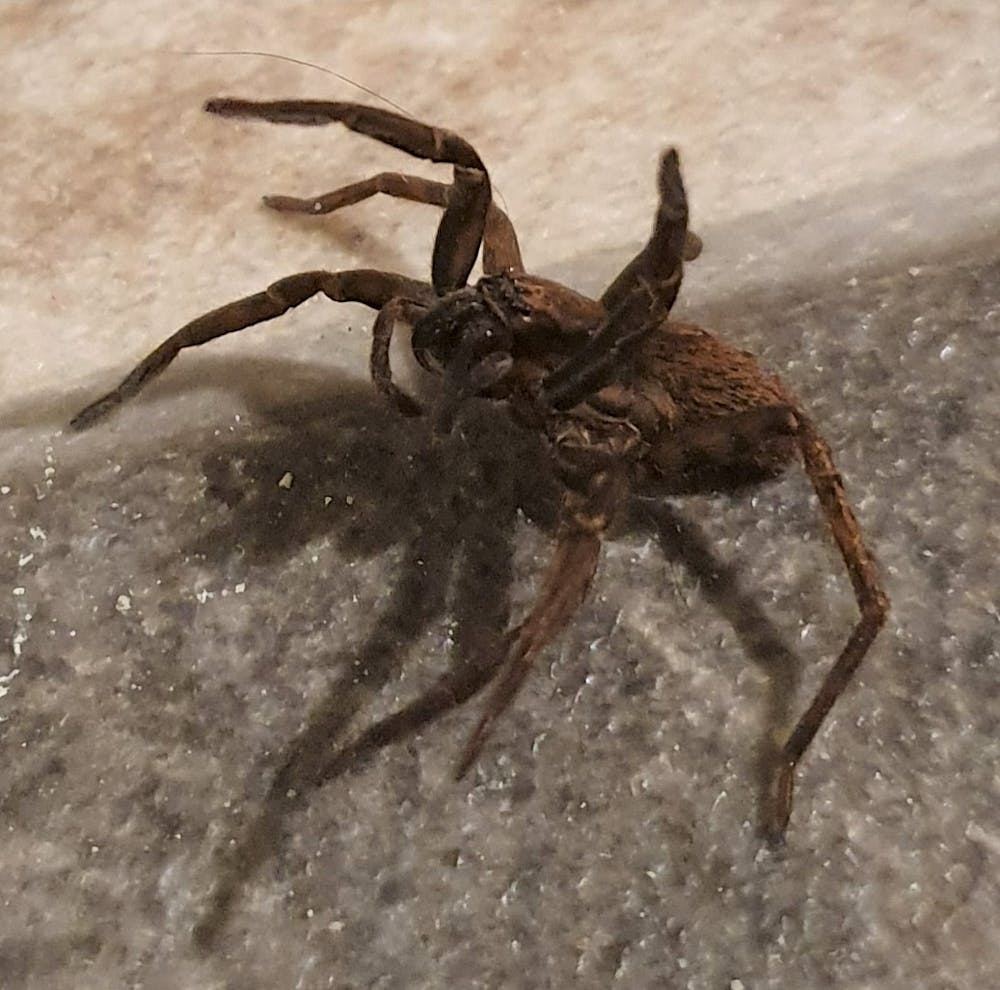
The spider in your pantry might give you a fright, but you may not realise that she’s been eating tiny flies and pantry pests. You might have swatted at her or moved her outside where you think she’d be happier. But she was doing just fine in your pantry, and she was doing you a service, too.
New Zealand is home to two species of venomus spiders: the endemic katipō spider (Latrodectus katipo)[9] and the Australian redback spider (Latrodectus hasselti)[10]. The odds of finding a venomous spider in a New Zealand home are low, but it’s always good to learn what it is before you swat or relocate.
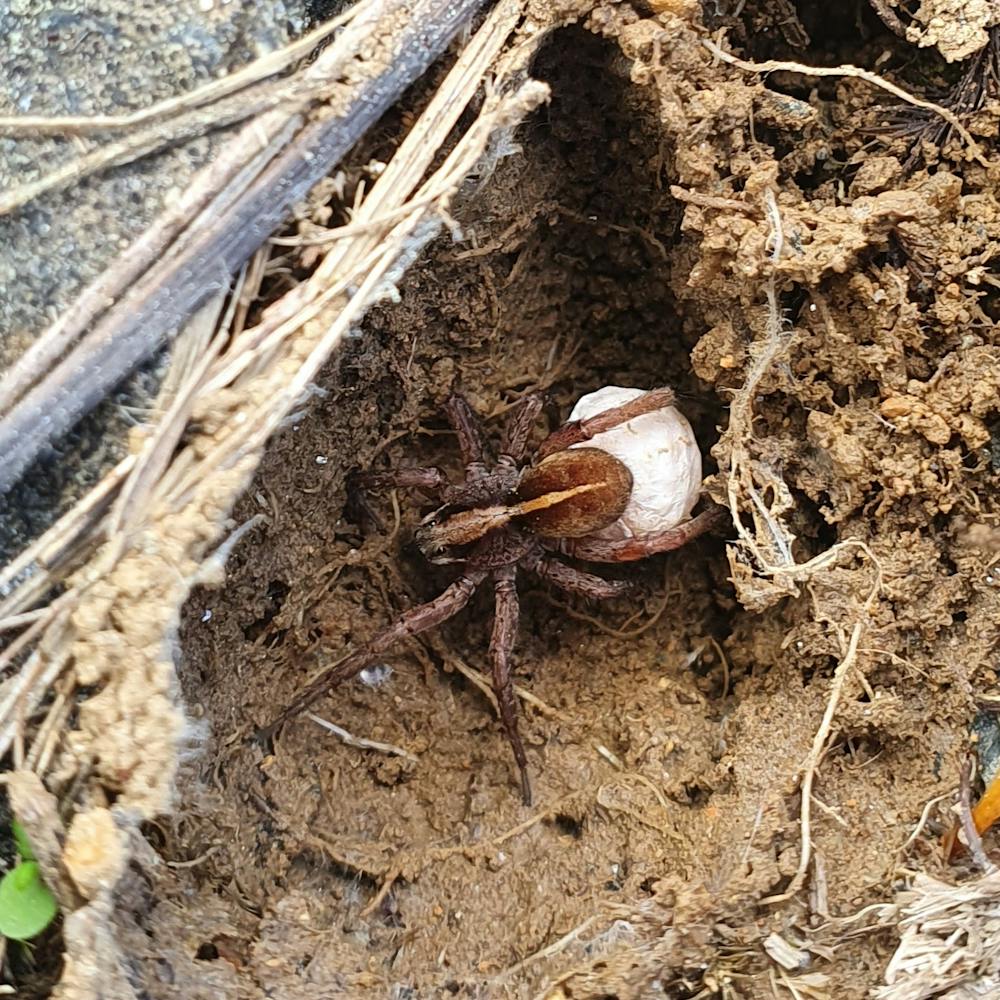 Female wolf spiders (Anoteropsis hilaris) weave their eggs in a ball of silk and keep it close to them until the young hatch.
Jenny Jandt/iNaturalist observation 66285476
Female wolf spiders (Anoteropsis hilaris) weave their eggs in a ball of silk and keep it close to them until the young hatch.
Jenny Jandt/iNaturalist observation 66285476
The invertebrates in the garden – worms, millipedes, spiders – that scuttle towards you when you dig a hole to plant some flowers might be equally scary. But these critters were perfectly happy in that spot before you came along. And they’ll settle in once more after you get your flowers in place.
The worms will dive back into the soil, fertilising and aerating it to give your plant’s roots a good habitat for growth. The spiders and ants are hunting around for the little bugs that want to eat the flowers you just planted.
If you dig in your ground and find creepy crawlies aplenty, congratulations! You have some fertile soil and your plants will appreciate these tenants that help them get established.
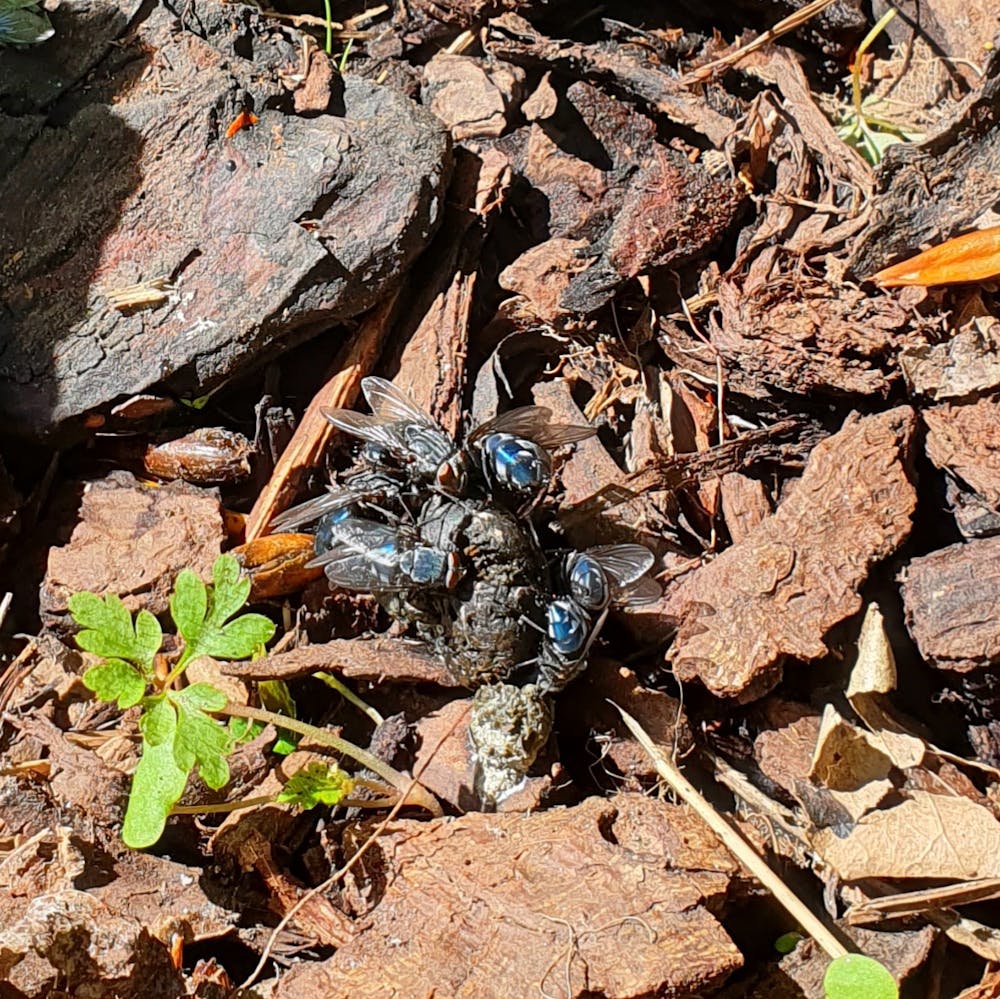 This group of Calliphoria vicina are feeding on some chicken poop.
Jenny Jandt/iNaturalist observation 97721605
This group of Calliphoria vicina are feeding on some chicken poop.
Jenny Jandt/iNaturalist observation 97721605
Flies and wasps landing on your food or drink are annoying. Always check inside the bottle before sipping, as wasps and some fruit flies are attracted to the scent of fermenting fruit. This is the cue they use to find over-ripened fruits in your garden and they’ll help you clean them up.
Some flies feed on and/or lay their eggs in chicken or cat poo. While that seems gross, those flies and the larvae that hatch from the eggs are going to clean up that mess.
Meanwhile, big wasps are hunting the pest bugs that are chewing on broccoli and cabbage leaves in your garden, while tiny wasps are looking for aphids and other critters to lay their eggs inside. A lot of these tiny wasps (parasitoid wasps) have been introduced to Aotearoa specifically to target some of our agricultural pest species[11].
Read more: Scientists need help to save nature. With a smartphone and these 8 tips, we can get our kids on the case[12]
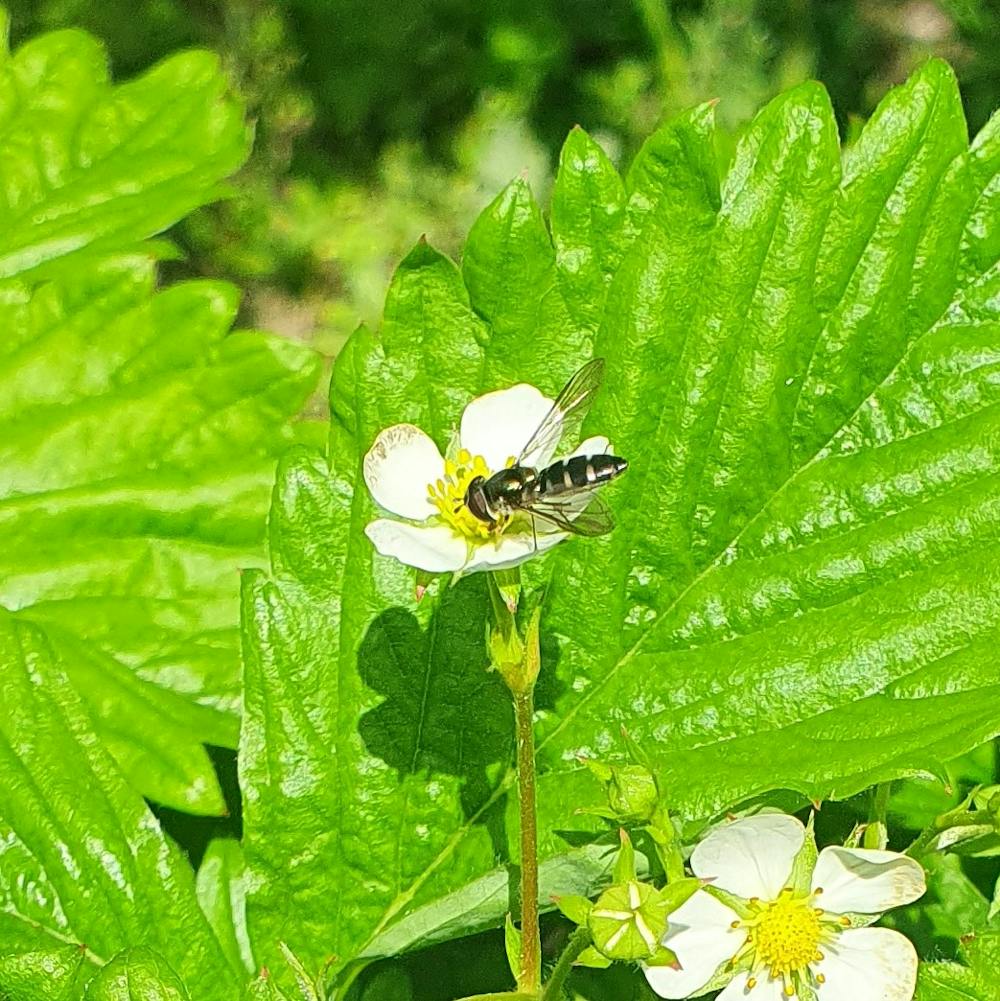 Hover flies (also called flower flies or bee flies), seen here foraging on a strawberry flower, are often mistaken for bees.
Jenny Jandt/iNaturalist observation 143389969
Hover flies (also called flower flies or bee flies), seen here foraging on a strawberry flower, are often mistaken for bees.
Jenny Jandt/iNaturalist observation 143389969
We have come to appreciate bees and butterflies for their pollination efforts. But other insects can pollinate, too. For example, there are 37 endemic species of hoverfly[13] in Aotearoa – and even more that have not been described yet. They are often mistaken for bees as they boast yellow and black stripes and are usually seen on flowers. Beetles, wasps and other flies can also be important pollinators for certain flowers and crops.
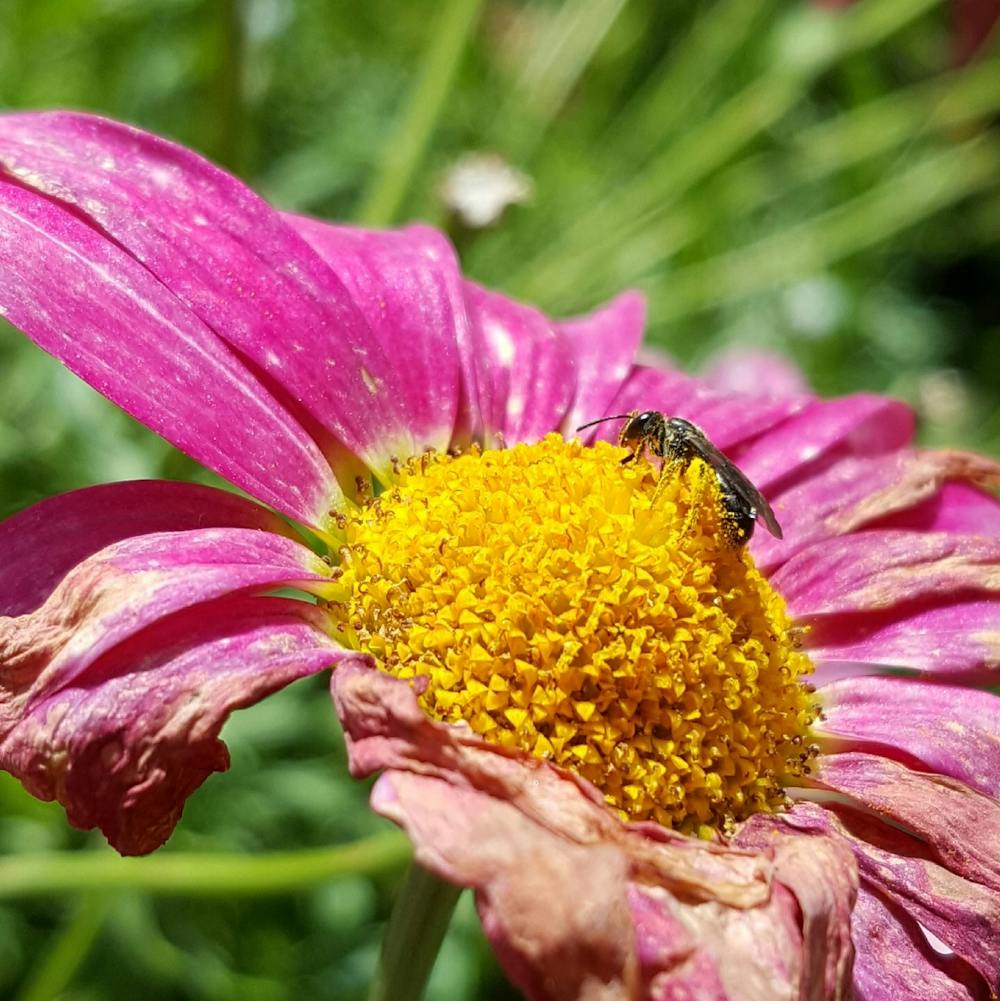 Native bees are often mistaken for small flies.
Jenny Jandt/iNaturalist observation 94890356
Native bees are often mistaken for small flies.
Jenny Jandt/iNaturalist observation 94890356
Most people recognise the introduced bumble bees and honey bees, but New Zealand’s 28 native species of bee[14] (ngaro huruhuru) are often mistaken for small flies. Ngaro huruhuru are tiny, often black or metallic green and mostly solitary. Some nest in groups where each excavates a hole in a clay bank or undisturbed patch of soil to raise their young.
Social bumble bees and honey bees can outnumber solitary bees significantly. Ngaro huruhuru prefer small, open aster-like flowers, many of which we tend to think of as weeds. Dandelions, daisies and ragwort are the most common flowers to find foraging native bees. Ragwort is also attractive to flies and butterflies.
Butterflies can look like little fluttering rainbows, adding colour and life to the garden. As adults, they can be important pollinators of flowering plants. However, their larvae (caterpillars) need a host plant. For example, the New Zealand red admiral (kahukura) relies on the native stinging tree nettle (ongaonga), but this is often considered a weed and removed from gardens. This limits opportunities for these beautiful butterflies to reproduce, leading to severe population declines in some regions of the country.
The next time you’re in your garden, take a minute to consider the insects and invertebrates occupying the spaces on, under and inside your plants. Post photos on iNaturalistNZ[15] to learn more about them and be sure to check out this year’s 24 nominees for Bug of the Year 2023[16] competition. Voting closes on February 13.
References
- ^ annual competition (www.birdoftheyear.org.nz)
- ^ over half of all animal diversity (cpb-ap-se2.wpmucdn.com)
- ^ Entomological Society of New Zealand (ento.org.nz)
- ^ Bug of the Year competition (bugoftheyear.ento.org.nz)
- ^ CC BY-SA (creativecommons.org)
- ^ iNaturalistNZ (inaturalist.nz)
- ^ They might not have a spine, but invertebrates are the backbone of our ecosystems. Let's help them out (theconversation.com)
- ^ functioning of ecosystems (www.nature.com)
- ^ (Latrodectus katipo) (inaturalist.nz)
- ^ (Latrodectus hasselti) (inaturalist.nz)
- ^ target some of our agricultural pest species (b3.net.nz)
- ^ Scientists need help to save nature. With a smartphone and these 8 tips, we can get our kids on the case (theconversation.com)
- ^ 37 endemic species of hoverfly (www.mapress.com)
- ^ 28 native species of bee (www.fortheloveofbees.co.nz)
- ^ iNaturalistNZ (inaturalist.nz)
- ^ Bug of the Year 2023 (bugoftheyear.ento.org.nz)