The A$30 billion Sun Cable crash is a setback but doesn't spell the end of Australia's renewable energy export dreams
- Written by: Bruce Mountain, Director, Victoria Energy Policy Centre, Victoria University
Sun Cable – considered to be the world’s biggest renewable energy export project – announced[1] this week it had entered voluntary administration following[2] “the absence of alignment” with shareholders.
Sun Cable is expected to cost over A$30 billion[3]. It proposes to[4] build an enormous, 12,000 hectare solar farm in the Northern Territory, add an enormous (40 gigawatt hour) battery for electricity storage, then connect Australia to Singapore via Darwin through an undersea cable over 4,000 kilometres long. This would be by far the world’s longest electricity cable if it existed today.
It would see Darwin access 800 megawatts of additional electricity and Sun Cable could supply “up to” 15% of Singapore’s electricity by 2030. To put this into context, Singapore’s annual electricity consumption is about[5] one quarter of Australia’s.
While this prominent and well funded project has gone into voluntary administration, those enthused about rapid decarbonisation and Australia’s renewable energy export potential need not despair. These events are part of the usual discovery processes.
Read more: It might sound 'batshit insane' but Australia could soon export sunshine to Asia via a 3,800km cable[6]
What Sun Cable promises
Sun Cable offers an enticing possibility of putting Australia’s land, and the rays of sunshine that fall on it, to use in displacing gas[7] for electricity production in a distant land. Singapore is keen to procure renewable electricity, and has limited ability to produce that electricity itself.
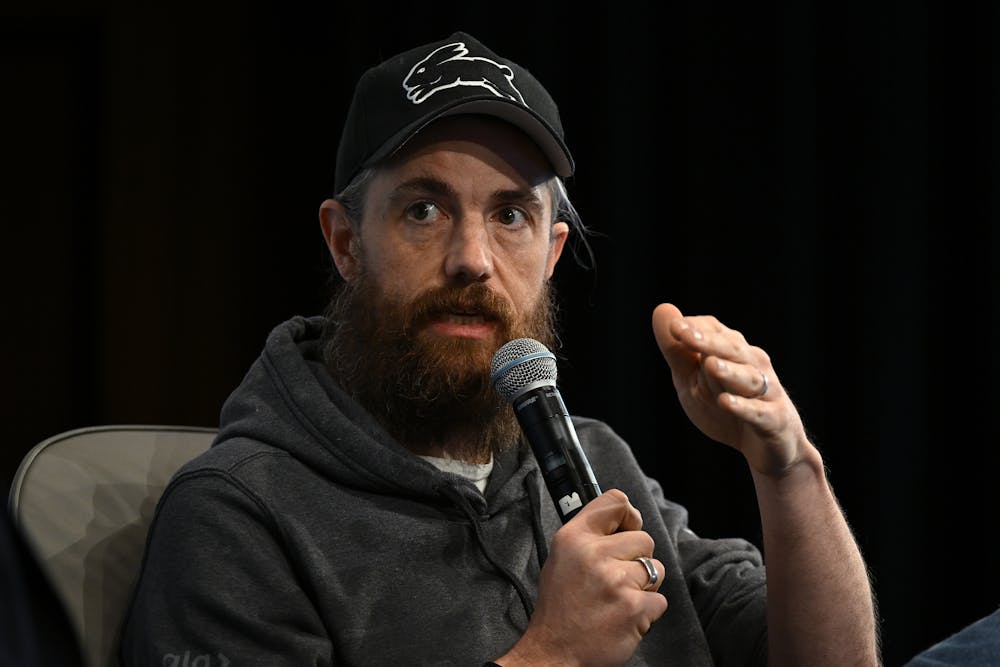
The project has attracted the enthusiastic support of Australia’s two richest men: Mike Cannon-Brookes and Andrew Forrest. Each has already committed[8] about $50 million to the project and both are experienced investors in renewable electricity in Australia.
When Cannon-Brookes first invested in the project he described[9] it as “batshit insane” but also that the “engineering all checks out”.
Sun Cable is also supported by Australia’s governments. The NT government passed laws[10] last year to facilitate its development. The federal government gave it[11] “major project” status. And Infrastructure Australia called[12] the project “investment ready” and placed it on its National Infrastructure Priority List.
Media commentary[13] since Sun Cable’s announcement has drawn attention to the differences of view of its two most prominent shareholders[14], particularly about their differing level of support for Sun Cable’s management.
Read more: Cannon-Brookes shakes up AGL: what now for Australia's biggest carbon emitter[15]
But the exact nature of their disagreement is unclear, and both men have said[16] they remain[17] interested in the project.
Commentators have suggested the apparent disagreement is a reflection on the commercial and technical viability of the project itself. Matthew Warren, former chief executive of the Australian Energy Council, went so far as to describe[18] Sun Cable as “a quiet running joke inside the electricity industry” and that it:
reflected the ignorance, egos and quest for notoriety of its proponents rather than the needs of its prospective customers.
But Federal Energy and Climate Minister Chris Bowen, commenting on conversations with Sun Cable’s management, said[19] he was assured the project would proceed. He said the latest developments reflected only a change in corporate structure and approach.
Comparable projects overseas
Sun Cable is obviously a very ambitious project. Yet much too little information is publicly available to pronounce, with any certainty, on its commercial and technical viability.
While the project will certainly break new ground, it is not totally in its own league. The similar Xlinks project[20] was proposed overseas in 2021 and is now advancing quickly. This project would connect Morocco and England with similar capacity renewable generation and storage, and has a comparably long cable to Sun Cable’s.
Read more: Australia needs much more solar and wind power, but where are the best sites? We mapped them all[21]
And at the end of last year, the European Commission committed funding to[22] a high-voltage direct current link between Tunisia in North Africa and Sicily, Italy. It would export 600 megawatts of (mainly) solar electricity produced in Tunisia.
Although a much less ambitious project than either Xlinks or Sun Cable, it is founded on the same vision of long distance inter-continental transmission of renewable electricity. And it is almost certain to proceed.
Just like fossil fuel resources, the world’s renewable resources are unevenly distributed. There are powerful incentives now, on economic and sustainability grounds, to find ways to reliably and cost effectively move renewable electricity from where those resources are abundant to where they are scarce.
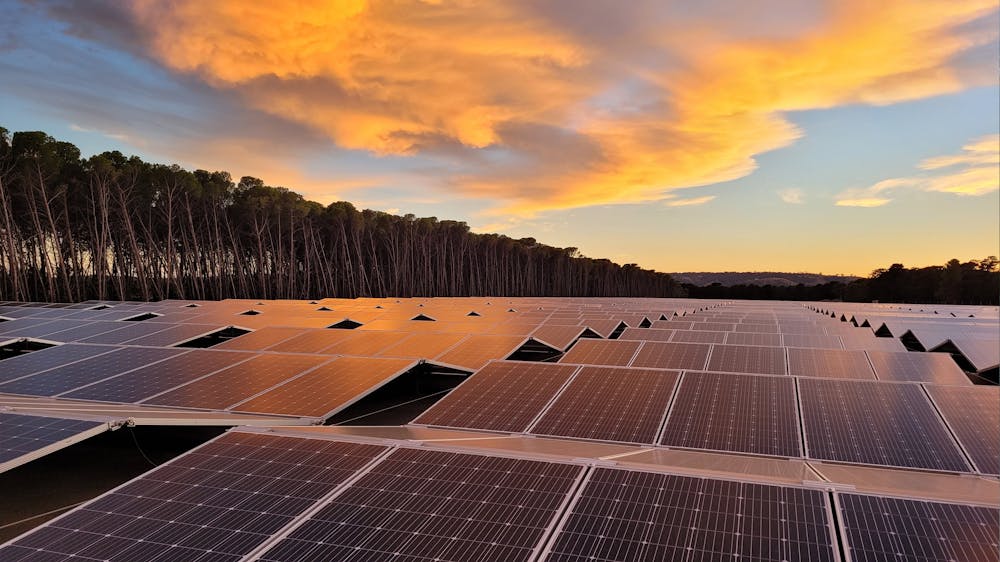 A rendered image of the solar farm to be built near Elliott, NT, for Sun Cable.
AAP Image/Supplied by Sun Cable
A rendered image of the solar farm to be built near Elliott, NT, for Sun Cable.
AAP Image/Supplied by Sun Cable
No need for hand wringing
Inevitably, the latest Sun Cable developments draw attention to the questions of how best to exploit Australia’s endowment of land, sun and wind and how to capitalise on our track record as a reliable supplier with credible government and trusted courts.
For example, instead of trying to export electricity, should we focus on exporting renewably produced hydrogen[23] or ammonia for fuel and fertilisers? Or, should we focus on using renewables to process and refine mineral resources before shipping higher-valued products (such as steel, alumina, aluminium and silicone metal) to distant shores?
These questions have attracted considerable interest from policy makers, investors and researchers – in particular, in books from economist Ross Garnaut (Superpower[24] and The Superpower Transformation[25]) and in former Australian chief scientist Alan Finkel’s forthcoming book Powering Up[26].
Both authors canvass many possibilities and neither categorically rule out direct renewable electricity export. They also suggest ore processing using renewable electricity is likely to offer great immediate value.
As best I can see, the latest Sun Cable developments provide no new publicly available information to confidently provide new insights into these issues.
Read more: Red dirt, yellow sun, green steel: how Australia could benefit from a global shift to emissions-free steel[27]
The outpouring of “I-told-you-so” commentary following Sun Cable’s voluntary administration is to be expected. But perhaps the main import of Sun Cable’s developments is to draw attention to Australia’s good fortune in attracting ambitious and enterprising developers, supported by rich Australians who have been successful swimming against the tide.
Rather than dipping their hands into the public’s pocket to fund the discovery of the best way to exploit Australia’s renewable resources, these enterprising people are risking their own money and reputations in a discovery process likely to benefit us all.
There is no need for a crisis of confidence or a bout of hand wringing about the viability of Australia’s renewable energy export prospects.
Disagreements arise between investors all the time. Administrative and legal processes should provide ways for these to be resolved quickly and amicably, as we should expect here. Viva the discovery process.
References
- ^ announced (suncable.energy)
- ^ following (www.afr.com)
- ^ over A$30 billion (www.infrastructureaustralia.gov.au)
- ^ proposes to (suncable.energy)
- ^ is about (www.ema.gov.sg)
- ^ It might sound 'batshit insane' but Australia could soon export sunshine to Asia via a 3,800km cable (theconversation.com)
- ^ displacing gas (www.eia.gov)
- ^ committed (www.smh.com.au)
- ^ described (www.afr.com)
- ^ laws (ntrebound.nt.gov.au)
- ^ gave it (territorygas.nt.gov.au)
- ^ called (www.infrastructureaustralia.gov.au)
- ^ Media commentary (www.afr.com)
- ^ shareholders (www.afr.com)
- ^ Cannon-Brookes shakes up AGL: what now for Australia's biggest carbon emitter (theconversation.com)
- ^ have said (www.afr.com)
- ^ they remain (www.smh.com.au)
- ^ to describe (www.afr.com)
- ^ said (www.afr.com)
- ^ Xlinks project (xlinks.co)
- ^ Australia needs much more solar and wind power, but where are the best sites? We mapped them all (theconversation.com)
- ^ committed funding to (www.euractiv.com)
- ^ hydrogen (theconversation.com)
- ^ Superpower (www.google.com.au)
- ^ The Superpower Transformation (www.google.com.au)
- ^ Powering Up (www.blackincbooks.com.au)
- ^ Red dirt, yellow sun, green steel: how Australia could benefit from a global shift to emissions-free steel (theconversation.com)