When is it time to stop driving? Will mandatory assessments of older drivers make our roads safer?
- Written by: Amie Hayley, Rebecca L. Cooper Al & Val Rosenstrauss Fellow and Senior Research Fellow, Swinburne University of Technology
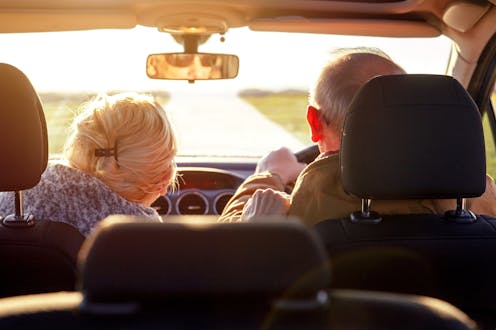
Australia is a nation of car owners with a rapidly ageing population[1]. Drivers aged over 70 have nearly doubled in number[2] in the past 20 years. The trend is the same for hospitalisations and fatalities[3] due to crashes involving older drivers.
Ageing itself is not a barrier to safe driving. Even so, our ability to drive safely can become compromised as we get older. It can be difficult to know what to do if you have concerns about someone’s driving.
So, how can we ensure ageing family members and friends are safe on the roads? And should regular assessment of drivers over a certain age be mandatory? Some states and territories require it, others don’t.
What affects our ability to drive safety?
Driving is a complex task. A driver must be alert and respond quickly to any changes, especially in an emergency.
Substance usage[4], fatigue[5] and distraction[6] all affect a person’s ability to drive safely. So, too, do many of the changes that happen with advancing age.
Declining mobility, eyesight or hearing can impact some of the more obvious skills needed for safe driving. This might include the ability to turn and check mirrors, or to hear other vehicles. Advancing age can also lead to a decline in more hidden skills of safe driving, including our ability to plan effectively, think quickly and react appropriately.
Many older people are able to keep driving safely, though, and recognising the signs of a potential problem can be tricky. However, there are practical steps individuals, families and friends can take to ensure the safety of older drivers and other road users.
What rules apply around Australia?
Licensing requirements for senior drivers vary a lot among Australian states and territories.
Broadly speaking, drivers aged 75 years and older must have a medical assessment each year to keep their licence in New South Wales[7], Queensland[8], Western Australia[9] (over 80) and the ACT[10]. In Tasmania[11] senior drivers are asked to volunteer information about any conditions that might negatively affect their driving.
People can drive freely up to any age in South Australia[12], Victoria[13] and the Northern Territory[14]. It’s up to the individual to ensure they’re medically safe to drive[15].
So, do these differences between states have a major impact on the safety of older drivers? Not really. Some early research[16] showed older drivers in jurisdictions with more stringent rules (such as NSW) were no less likely to be injured or killed in a traffic crash than people in states with voluntary reporting requirements (such as Victoria).
This finding points to the need for multi-tiered – rather than simply age-based – assessment for identifying older at-risk drivers[17]. It requires the involvement of a range of health practitioners in more elaborate types of assessment.
Despite these differences in rules and regulations, a common theme is to ensure a person can drive safely, independently and legally. Exactly what that means, and how it is evaluated, is decidedly less clear.
Read more: Busted: 5 myths about 30km/h speed limits in Australia[18]
How do you know if someone is safe to drive?
There is no standard way to test a person’s fitness to drive.
National driver medical guidelines[19] outline minimum standards that people should meet to be considered medically safe to drive. The guidelines do not outline how medical safety is assessed nor how we can help older people recognise the signs of declining driving ability. They also do not provide advice on exactly what tests can be used.
Requiring older drivers to complete an advanced driving test (such as on a closed track) would clearly show whether they are fit to drive. However, these tests are very costly, impractical and difficult.
Cognitive screening tests are a practical stand-in solution to test for a decline in many functions needed for driving, such as vision, cognition and motor abilities. The tests range in difficulty from the simpler pen-and-paper clock drawing[20] or the trail-making test[21], which can be done at home, to the more complicated Montreal Cognitive Assessment[22]. While these tests are not able to diagnose medical disorders, they reliably indicate whether a person has dementia.
A recent study in Japan[23] found a decrease in motor vehicle collisions after a cognitive screening test became mandatory during licence renewals for its relatively high proportion of drivers over 75[24]. As this test also assessed whether they were likely to have dementia, it helped identify and remove the most impaired drivers. This approach might help provide a standard way to quickly identity Australian drivers who are most at risk.
Read more: Should older people and those with dementia have their licences revoked?[25]
Not being able to drive also has impacts
For many older Australians, having a driver’s licence provides a critical link between health outcomes, mobility and social connectedness. It’s worth noting the Japanese study found cycling and pedestrian injuries increased in the age group affected by mandatory cognitive testing. This was attributed[26] to the enforced change in their options for getting around.
Read more: We all have to walk across roads — why aren't pedestrians a focus of road safety?[27]
Therefore, determining whether an older person is fit to drive should involve proactive conversation, with the goal of enabling them to keep driving for as long as it is safe.
Some easy ways[28] to help older drivers remain confident and safe include:
planning trips in advance
driving in daytime only
avoiding peak-hour traffic
getting regular check-ups that test sight, hearing and mobility.
Another thing to consider is that older drivers are more likely to drive old vehicles[29] that lack the technology that keeps us safe before, during and after a crash. Choosing a vehicle that provides the best protection[30] makes a difference – drive the safest one you can afford.
If driving has become too difficult or unsafe, it is important that family and friends help with the transition from driving. There’s a need to consider how life can best continue as normal without the use of a vehicle. This might involve conversations about how to access community services and other ways of getting around, whether public or private transport.
Advancing age does not always mean a loss of driving ability. Nonetheless, recognising warning signs will help all drivers safely use the roads. Regular health assessments that include cognitive screening tests, making proactive changes in driving practices and choosing the safest vehicle possible are all practical ways we can help ensure older drivers stay safe.
References
- ^ rapidly ageing population (www.aihw.gov.au)
- ^ doubled in number (www.tac.vic.gov.au)
- ^ hospitalisations and fatalities (www.bitre.gov.au)
- ^ Substance usage (adf.org.au)
- ^ fatigue (www.aaa.asn.au)
- ^ distraction (www.aaa.asn.au)
- ^ New South Wales (roadsafety.transport.nsw.gov.au)
- ^ Queensland (www.qld.gov.au)
- ^ Western Australia (www.wa.gov.au)
- ^ ACT (www.accesscanberra.act.gov.au)
- ^ Tasmania (www.transport.tas.gov.au)
- ^ South Australia (www.police.sa.gov.au)
- ^ Victoria (www.vicroads.vic.gov.au)
- ^ Northern Territory (roadsafety.nt.gov.au)
- ^ medically safe to drive (www.vicroads.vic.gov.au)
- ^ early research (doi.org)
- ^ identifying older at-risk drivers (doi.org)
- ^ Busted: 5 myths about 30km/h speed limits in Australia (theconversation.com)
- ^ driver medical guidelines (austroads.com.au)
- ^ pen-and-paper clock drawing (www.verywellhealth.com)
- ^ trail-making test (www.verywellhealth.com)
- ^ Montreal Cognitive Assessment (www.verywellhealth.com)
- ^ study in Japan (agsjournals.onlinelibrary.wiley.com)
- ^ high proportion of drivers over 75 (www.bbc.com)
- ^ Should older people and those with dementia have their licences revoked? (theconversation.com)
- ^ attributed (www.tsukuba.ac.jp)
- ^ We all have to walk across roads — why aren't pedestrians a focus of road safety? (theconversation.com)
- ^ easy ways (www.police.vic.gov.au)
- ^ old vehicles (www.forbes.com)
- ^ best protection (www.ancap.com.au)