Running gels and protein powders can be convenient boosts for athletes – but be sure to read the label
- Written by: Emma Beckett, Senior Lecturer (Food Science and Human Nutrition), School of Environmental and Life Sciences, University of Newcastle

Personal bests, competition wins, new challenges – athletes, and particularly endurance athletes, tend to want to push themselves hard to perform. So it makes sense that there is a big interest in sports supplements, like running gels and protein powders.
We all need macronutrients[1]: carbohydrates, proteins and fats that give us energy and build structures like muscles and other cells in our bodies.
When we are very physically active, like long-distance runners, cyclists or triathletes, our need for both energy and building blocks for muscles and other cells increases[2] because of the extra work our bodies are doing.
So supplements – such as sports gels or protein powders – that contain these macronutrients might make sense. But can they do anything that food can’t?
Read more: Stop hating on pasta – it actually has a healthy ratio of carbs, protein and fat[3]
What is in sports gels?
Sports gels (also known as energy gels) are essentially carbohydrate supplements[4]. They contain simple sugars like maltodextrin, fructose, and glucose. These sugars don’t need much digestion to be absorbed and used as energy[5]. Sugars are the easiest form of energy for our bodies to use.
During long periods of exercise our stored sources of energy get depleted[6]. Our blood sugar drops and we use the glycogen stored in our muscles. So during long bouts of exercise, athletes like long-distance cyclists and runners as well as players in extended length “stop and start” type sports, such as soccer need to replace these stores[7].
The research into the benefit of carbohydrate supplementation during exercise isn’t new. It dates back as far back as the 1924 Boston Marathon[8].
The gel forms are a bit more modern[9], taking off in the 1980s and 1990s. For some people and sports, they have replaced the sweet drinks used previously. Gels have the advantage of being a more concentrated form than a drink, which means less to carry[10] and less to ingest for the same carbohydrate kick.
What about protein powders?
Protein powders are exactly what the name suggests. They are typically casein or whey[11] (proteins found in milk) but can come in plant-based forms too.
Protein won’t give you the quick energy boost that sugars do, even though protein and carbohydrates have the same energy value[12] (meaning gram for gram they have the same amount of calories).
This is because proteins are more complicated[13] for the body to break down and use. But protein is not just important for energy. It provides important building blocks for most of our body’s structures, including our muscles. This is why protein powders are popular with weight lifters and other power-based athletes.
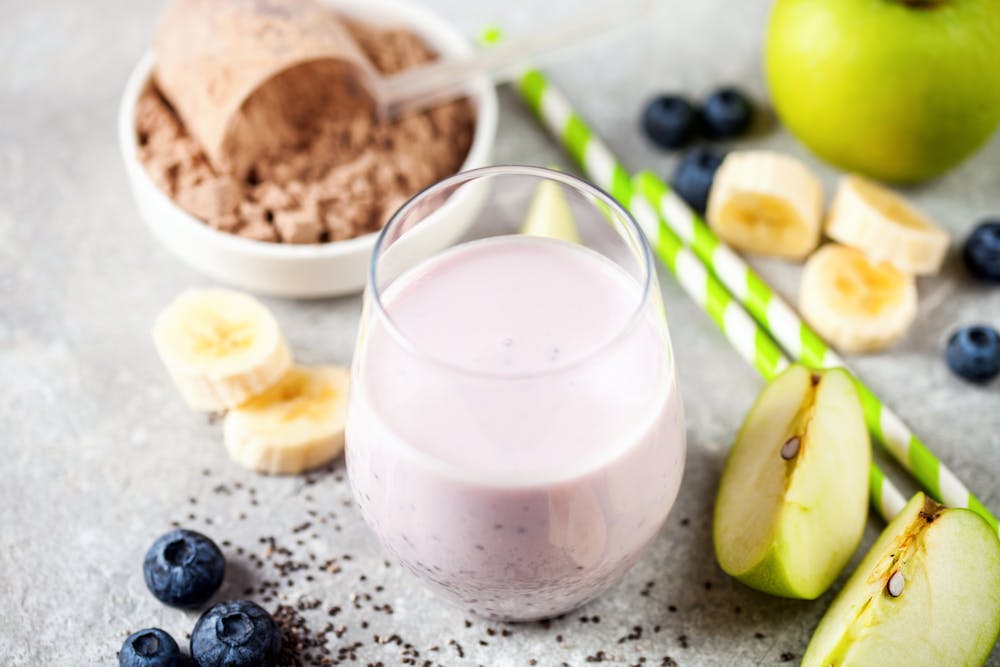
But can food do the same thing?
Plenty of foods are rich in carbohydrates and proteins. Honey, dried fruits, bananas and even those half-time orange wedges are all potential carbohydrate sources for athletes.
Consuming carbohydrates in these forms has been shown to have the same benefits[15] as gels during exercise.
For protein, milk, eggs and meats are all great sources.
Food sources also have the added benefit of being complex, which means they have other good things in them in addition to the macros, including vitamins and minerals, and bioactive compounds which promote good health.
Foods that are whole (unprocessed) or minimally processed are the most cost-effective means to obtain a mix of nutrients needed for rest and recovery after exercise, as well as during. They might taste a bit better too.
Read more: Ozempic helps weight loss by making you feel full. But certain foods can do the same thing – without the side-effects[16]
Why supplement then?
But, the supplements do have some benefits. They are highly concentrated, meaning you can get a lot in quickly, with less to carry and less chance of feeling overly full.
So they are but are generally considered by athletes as more convenient[17] and are also linked to less gut discomfort[18] (like cramps and diarrhoea).
The processed and packaged nature also means you know exactly what and how much you are getting, which might be important for some athletes to keep track of.
Any downsides of macro supplements?
Macro supplements can be expensive, and they can use a lot of packaging. The huge variety[19] of products on the market also means products could contain lots of other ingredients (for better and for worse). Some sports gels contain stimulants like caffeine or preservatives like salts. Some protein powders contain added sugar.
And like all supplements, they are not without their risks.
Highly concentrated sports gels can cause stomach upsets[20] and excessive protein supplementation can damage other organs, such as the kidneys[21].
Macro supplements can also make dehydration[22] worse because the body will need to shift water to deal with these concentrated products.
Blocks and chews and bars[23] can be even more concentrated, but have a more complex composition.
 Read the ingredients list carefully before adding gels to your kit.
Shutterstock[24]
Read the ingredients list carefully before adding gels to your kit.
Shutterstock[24]
Read more: Nope, coffee won't give you extra energy. It'll just borrow a bit that you'll pay for later[25]
The science is also a bit sexist
The vast majority of studies[26] on sports gels have used males, and the same benefits may not be seen in females. This is due to sex differences between males and females in how readily carbohydrates are used as energy, with females oxidising more fat and less carbohydrate, compared to males, during endurance exercise.
Ultimately, whether or not supplements or foods are the right choice for you during sports and exercise is going to come down to your preferences, budget, needs and the length and intensity of your exercise or sport.
For casual, short or low intensity sporting pursuits, supplements might be overkill, but for activities of high intensity or long duration, they can have benefits.
References
- ^ macronutrients (www.mdanderson.org)
- ^ increases (journals.lww.com)
- ^ Stop hating on pasta – it actually has a healthy ratio of carbs, protein and fat (theconversation.com)
- ^ carbohydrate supplements (journals.humankinetics.com)
- ^ used as energy (academic.oup.com)
- ^ sources of energy get depleted (journals.physiology.org)
- ^ need to replace these stores (pubmed.ncbi.nlm.nih.gov)
- ^ 1924 Boston Marathon (jamanetwork.com)
- ^ bit more modern (journals.humankinetics.com)
- ^ less to carry (pubmed.ncbi.nlm.nih.gov)
- ^ casein or whey (www.ncbi.nlm.nih.gov)
- ^ same energy value (nutritionaustralia.org)
- ^ complicated (www.health.harvard.edu)
- ^ Shutterstock (www.shutterstock.com)
- ^ same benefits (pubmed.ncbi.nlm.nih.gov)
- ^ Ozempic helps weight loss by making you feel full. But certain foods can do the same thing – without the side-effects (theconversation.com)
- ^ more convenient (pubmed.ncbi.nlm.nih.gov)
- ^ gut discomfort (pubmed.ncbi.nlm.nih.gov)
- ^ huge variety (pubmed.ncbi.nlm.nih.gov)
- ^ stomach upsets (pubmed.ncbi.nlm.nih.gov)
- ^ kidneys (www.ncbi.nlm.nih.gov)
- ^ dehydration (pubmed.ncbi.nlm.nih.gov)
- ^ chews and bars (shop.clifbar.com)
- ^ Shutterstock (www.shutterstock.com)
- ^ Nope, coffee won't give you extra energy. It'll just borrow a bit that you'll pay for later (theconversation.com)
- ^ vast majority of studies (pubmed.ncbi.nlm.nih.gov)