a brief history of how these buildings fold into the urban landscape
- Written by: Majdi Faleh, Academic Fellow in Cultural Heritage, Nottingham Trent University
A referee’s whistle pierces the air. A player dribbles a ball across a court; goal! Cheers erupt.
These are the familiar sounds of Australian life. Children squeal with laughter. The barbecue sizzles. The muezzin calls the faithful to prayer.
Opened in 2022, Melbourne’s Grand Mosque and the Werribee Islamic Centre offer a host of facilities that connect with the multicultural community of Tarneit, 25 kilometres west of Melbourne’s CBD.
Grand mosques mark the urban space of major historical cities such as Mecca, Medina, Cordoba and Tunis. More recently, these buildings have been built in cities like Algiers and Abu Dhabi.
The notion of a “grand mosque” has been shaped by the location of the mosque, its scale and its historical importance.
But what makes a grand mosque “grand”?
Building the grand mosques
Historically, ruling and social elites such as religious leaders, monarchs, princes and princesses financed and built mosques for their communities.
This charitable act was an important legacy, and mosques were also a reflection of the powers of dynasties[1].
There was great community involvement with the mosque, primarily through attending daily prayers. But mosques also provided civic, educational and cultural spaces to provide for extensive community involvement. These buildings were intellectual, scientific and literary centres, playing a crucial role[2] in Arab-Islamic civilisation.
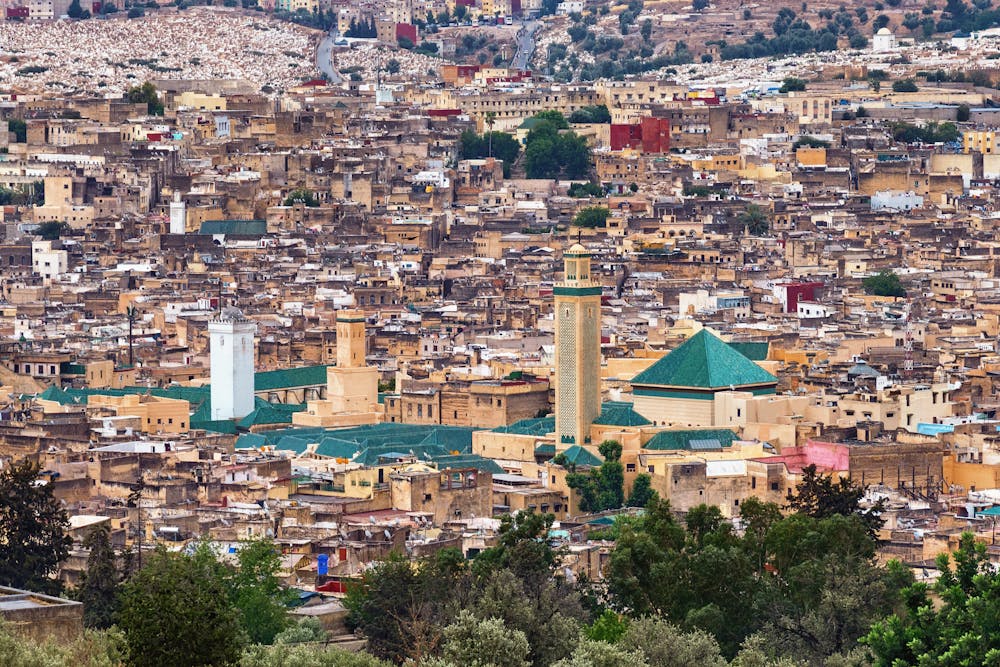
The idea of a “civic mosque” dates back to the early days of Islamic civilisation, with universities attached to mosques, such as the University of al-Qarawiyyin[3] in Fez, Morocco.
The most famous mosque in the world is the Great Mosque of Mecca, or the al-Masjid al-Ḥarām. Located in Saudi Arabia and first built in 638 AD, it can be called a grand mosque because of its historical significance, its capacity of 2.5 million and the way it intersects with the global Muslim community.
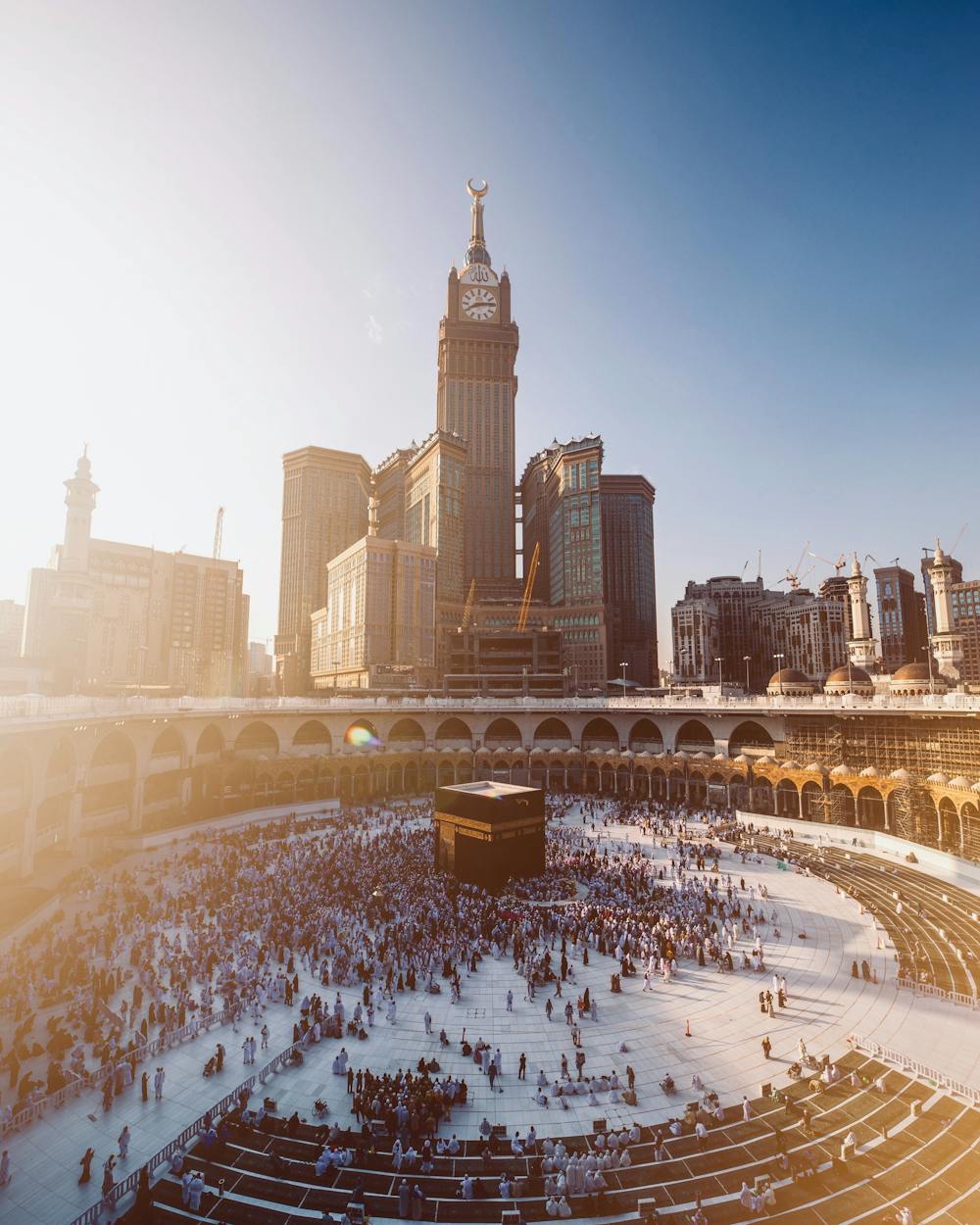 Al-Masjid Al-Haram, Mecca, Saudi Arabia has a capacity of 2.5 million.
Ishan @seefromthesky/Unsplash
Al-Masjid Al-Haram, Mecca, Saudi Arabia has a capacity of 2.5 million.
Ishan @seefromthesky/Unsplash
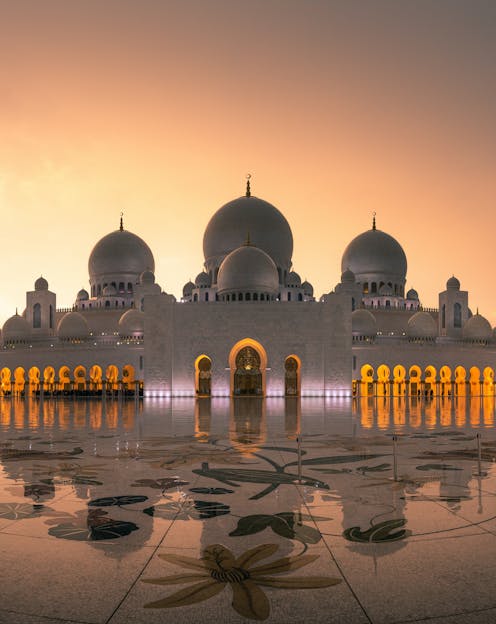
The Sheikh Zayed Grand Mosque in Abu Dhabi is a centre of science and knowledge which can accommodate 40,000 worshippers. The largest mosque in the UAE, its design includes references from Pakistani, Egyptian, Moorish, Arab and Indo-Islamic architecture.
Completed in 2019, Djamaa El Djazair in Algiers, Algeria, is the third-largest mosque in the world, with a capacity of 120,000 worshippers.
A “grand mosque” doesn’t need to have a capacity in the tens of thousands. With a capacity of 1,000 worshippers, the Grande Mosquee de Paris is the largest in France[4] and the third-largest in Europe.
Constructed in the 1920s, the mosque’s unique architecture and the provision of social and communal spaces all testify to the important role Islam plays in the diversity of Paris.
Through a combination of scale and architectural design, these grand mosques make their mark in the urban landscape.
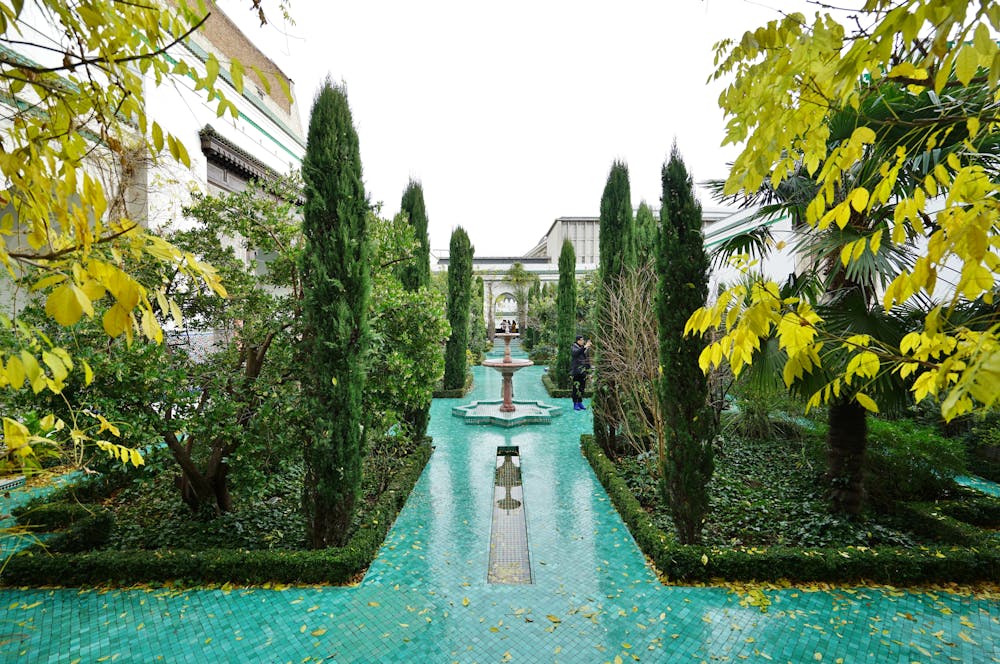 Grande Mosquee de Paris in the 5th arrondissement of Paris is the third-largest mosque in Europe.
Shutterstock
Grande Mosquee de Paris in the 5th arrondissement of Paris is the third-largest mosque in Europe.
Shutterstock
Read more: French row over mosque isn't simply about state financing – it runs deep into Islamophobia and French secularism[5]
An Australian grand mosque
The first contact of Muslims with Australia dates back to the 18th century[6], when Macassan fishermen travelled to the Kimberley region and Arnhem Land to collect sea cucumbers.
Muslims began to settle in Australia from the 1860s, largely working as cameleers and pearlers. The first mosque in Australia was completed in 1882 in Maree, 600 kilometres north of Adelaide. Since then, mosques have been built in cities, towns and suburbs throughout Australia.
Now, Australia has its own grand mosque.
Melbourne’s Grand Mosque opened its doors last year[7].
Planning, fundraising and building by the community are pillars of the new design processes and identity of mosques in Australia. The prayer hall can fit 2,000 worshippers. The building also includes a sporting centre, a community hall and a childcare centre.
Built for A$8.5 million, the community raised the funds to realise their vision over a period of ten years. The community wanted to make a grand architectural statement which would meet the spiritual and social needs of Australia’s Muslim community.
Eventually the complex will incorporate a library, sports facilities, childcare, educational spaces and hospitality.
Architecturally, the mosque respects traditions of a central dome above the prayer hall, bringing light into the most sacred space. However, the dome is smaller than in traditional mosques and is set back into the building, allowing it to not dominate the streetscape.
This allows the building to play a social role in a suburb where there are multiple religious groups of similar size.
A mosque for the community
The “grand mosque” is not just about the scale of architectural features – the minarets, arches and calligraphy.
The grand mosque of today is about community: their involvement in the design processes and its openness as a hub for diverse communities of the 21st century.
Grand mosques have long punctuated the urban space in major cities. Today, the realisation of a grand mosque such as the one in Melbourne transforms the idea of “grand” to a level of social interaction and community aspirations.
Read more: Graffiti, arson, death threats: new research finds widespread violence against Australian mosques[8]
References
- ^ powers of dynasties (books.google.com.au)
- ^ crucial role (www.sciencedirect.com)
- ^ University of al-Qarawiyyin (en.wikipedia.org)
- ^ largest in France (www.islamicity.org)
- ^ French row over mosque isn't simply about state financing – it runs deep into Islamophobia and French secularism (theconversation.com)
- ^ 18th century (www.tandfonline.com)
- ^ last year (www.abc.net.au)
- ^ Graffiti, arson, death threats: new research finds widespread violence against Australian mosques (theconversation.com)