When someone living with dementia is distressed or violent, 'de-escalation' is vital
- Written by: Steve Macfarlane, Head of Clinical Services, dementia Support Australia, & Associate Professor of Psychiatry, Monash University
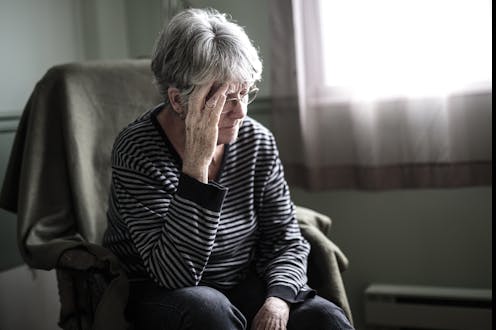
Today’s reporting[1] about the alleged tasering of a 95-year-old woman living at the Yallambee Lodge aged care home in New South Wales has brought the issue of behaviours and psychological symptoms of dementia into sharp focus[2].
Over half of those living in residential care have a dementia diagnosis[3] and up to 95% of those living with dementia will experience such behaviours[4] at some point during their passage through the illness. Common behaviours that might be shown by those living with advanced dementia include agitation, anxiety, attempts to leave care, aggression, apathy, sleep disturbance, aimless pacing, psychosis and aggression.
The full circumstances surrounding Wednesday’s events are unclear and they are subject to an investigation[5] by police. That may take some time. What is clear, however, is that there is much room for improvement in the way behaviours and psychological symptoms of dementia are managed in residential care. Situations that end with police involvement should be avoided.
Read more: Needless treatments: antipsychotic drugs are rarely effective in 'calming' dementia patients[6]
Calling for help
In its final report in March 2021, the Royal Commission into Aged Care Quality and Safety[7] recommended[8] “all workers engaged by providers who are involved in direct contact with people seeking or receiving services in the aged care system undertake regular training about dementia care and palliative care”.
Currently, it is not infrequent for police to be called to respond to incidents in care homes. While programs have been implemented to better equip police to respond to the specific need of those living with dementia[9] this work is still in its infancy.
Aggression and agitation are two of the most common behavioural symptoms that lead to referral to specialist support services.
Dementia Support Australia is a Commonwealth-funded service that has supported aged care homes and home-based carers in managing behaviours and psychological symptoms of dementia since 2016. There were 8,702 referrals[10] to the service between January and June 2022. The number of referrals has increased in recent years.
As an organisation at the frontline of dementia support, we extend our deepest sympathies to the 95-year-old aged care resident, her family, Yallambee Lodge staff and everyone else touched by this devastating incident.
One of the advantages of having a national service such as this is that it has enabled the development of a national database that documents not only the nature and severity of the behaviours prompting the referral, but those factors that are most commonly identified as triggers for these behaviours.
Read more: Why is my loved one with dementia sometimes 'there' and sometimes not?[12]
3 leading causes
Aggression and agitation are not diagnoses in themselves, but symptoms. Symptoms have causes, and these must be identified in order to adequately address behaviour.
The leading contributing factors we have identified in relation to behaviours are:
1. Unidentified or under-treated pain
This is relevant in over 50% of the cases we see. Earlier research on pain management in the setting of advanced dementia has shown those with a dementia diagnosis who are admitted to hospital with hip fractures tend to be prescribed only a fraction of the analgesia given to those without dementia[13].
2. Carer approach
Care staff receive only minimal levels of training in dementia care as part of their basic qualification and are often unfamiliar with communication strategies tailored towards those with cognitive impairment.
Currently, the minimum qualification for a personal care worker involves no compulsory units in dementia competency[14]. While we do not know the full circumstances from the events this week, the Royal Commission has made recommendations to improve care for those living with dementia. Carer approach is an issue in about a third of the cases we see.
3. Over- and under-stimulation
In about one quarter of Dementia Support Australia cases boredom and loneliness and/or an environment that does not take into account the specific needs of those living with dementia are an issue.
Other common causes of changed behaviour include mood and anxiety disorders, communication difficulties, delirium[15], sleep problems and poor carer knowledge of the specific likes/dislikes of the individuals they are caring for.
People with dementia may react to uncertainty in unexpected ways.Read more: Should we move our loved one with dementia into a nursing home? 6 things to consider when making this tough decision[16]
Prevention and calming things down
The best way to manage most behavioural changes is to prevent the circumstances that lead to their development in the first place. Prevention is always better than cure.
Once behaviours are occurring, there is no single correct way to de-escalate[17] them. The appropriate de-escalation strategies will always be specific to what has caused the altered behaviour in the first place.
Unfortunately, when behaviours have escalated to the point where police attendance is required, the responding officers are unlikely to be equipped with the necessary information about the person and their circumstances. That means they won’t be equipped to respond with effective and specific de-escalation strategies.
One case in the United States from 2020 involved the arrest of a 73-year-old woman living with dementia, who had left a local store without paying for items worth a small amount[18]. A lawsuit[19] filed following the arrest alleged it resulted in a fractured arm and a dislocated shoulder, and raised national concerns about the way first responders interact with those experiencing cognitive disabilities.
Australia needs to learn from yesterday’s events and respond.
If you are caring for someone with dementia there is help available. Dementia Support Australia[20] is a free service, fully funded by the Australian government. Referrals can be made 24-hours a day by calling 1800 699 799.
References
- ^ reporting (www.abc.net.au)
- ^ sharp focus (www.abc.net.au)
- ^ have a dementia diagnosis (www.aihw.gov.au)
- ^ experience such behaviours (www.ncbi.nlm.nih.gov)
- ^ investigation (www.abc.net.au)
- ^ Needless treatments: antipsychotic drugs are rarely effective in 'calming' dementia patients (theconversation.com)
- ^ Royal Commission into Aged Care Quality and Safety (agedcare.royalcommission.gov.au)
- ^ recommended (agedcare.royalcommission.gov.au)
- ^ living with dementia (www.nationaltribune.com.au)
- ^ 8,702 referrals (www.aihw.gov.au)
- ^ Shutterstock (www.shutterstock.com)
- ^ Why is my loved one with dementia sometimes 'there' and sometimes not? (theconversation.com)
- ^ those without dementia (pubmed.ncbi.nlm.nih.gov)
- ^ dementia competency (www.dementia.org.au)
- ^ delirium (theconversation.com)
- ^ Should we move our loved one with dementia into a nursing home? 6 things to consider when making this tough decision (theconversation.com)
- ^ de-escalate (www.dementia.org.au)
- ^ worth a small amount (edition.cnn.com)
- ^ lawsuit (edition.cnn.com)
- ^ Dementia Support Australia (www.dementia.com.au)