how Jewish Indigenous women are navigating their dual identities
- Written by: Zac Roberts, Associate lecturer, Macquarie University
In 1965, James Spigelman joined Charlie Perkins and 30 other students on a bus ride around New South Wales to bring attention to the extent of racial discrimination in Australia. This would go on to be known as the Freedom Ride[1].
Spigelman, who later became the Chief Justice of the NSW Supreme Court, was an arts student at the time. He later stated his “involvement was obviously determined by personal background as the child of Holocaust survivors”.
Spigelman’s involvement in the Freedom Ride is captured in the 2010 book Hand in Hand[2]. Alongside Spigelman and the Freedom Ride, Hand in Hand covers dozens of other stories of Jews and Indigenous people coming together in good relations and solidarity.
Missing from these stories are the experiences of people who are both Indigenous and Jewish. My newly published[3] research set out to explore some of these stories.
Negotiating identity
When asked about how she fits into the story of Indigenous and Jewish relations, Leah*, a Wiradjuri woman, told me “I don’t know if I fit into the story”.
Leah was raised in a nonreligious household, and was disconnected from her Indigenous community.
After leaving home as a teenager, she found comfort in religious rituals.
As a runaway kid, the people who showed a lot of kindness to me were either the Catholic nuns or Jews. And I always felt […] very fondly towards these weird people who did weird rituals. And I love the rituals of the Catholic Church and I love the rituals of the Jewish cultural and religious people, and … I went on a search for God, you know?
Leah converted to Judaism after meeting her husband, a non-practising cultural Jew. Her conversion was motivated by both a desire to marry and by a deep connection to the cultural and religious aspects of Judaism.
The shared experiences of “connection and heritage and history and spirit” were seen as being very appealing to someone who grew up disconnected from community and culture. Judaism is now an important aspect of her life and identity.
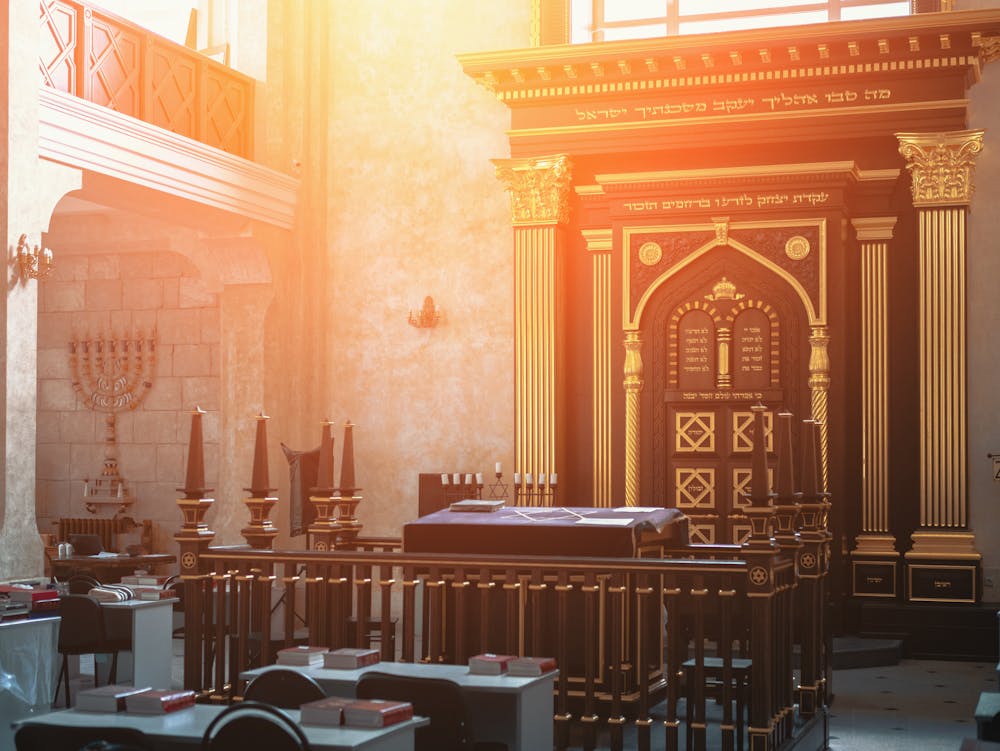
It wasn’t always easy going.
After her synagogue had a change of leadership, Leah experienced a breakdown in community acceptance and belonging and ended up leaving that community.
When the next rabbi came along, he had removed the plate at the front of the door that said, ‘This synagogue stands proudly on the land of Gadigal’. Removed because we’re Jews and we only recognise, really, our land Israel […] I fought and fought and fought and eventually just got so harassed and harangued.
Leah has now found a new synagogue with “a nice big plaque on their door” acknowledging traditional owners , but her experiences demonstrate the complexities of being both Aboriginal and Jewish.
There are a lot of similarities in Jewish and Indigenous experiences and values, but there are just as many differences.
‘How can you be Aboriginal and Jewish?’
Rebecca* is a Koori woman who converted to Judaism 12 years ago. While she is a regular at temple services, she says doesn’t share her Jewish identity with many of her Aboriginal family and community. Her Jewishness and Aboriginality “don’t always act in conversation with each other”.
While her overall experience with both her mob and her Jewish community have been positive, she says people would still ask questions.
People would sort of question me and kind of go, how can you be Aboriginal and Jewish? I’ll be like, ‘Well, why can’t I? How can you be Aboriginal and Muslim[4]? Like, there’s a lot of them too.’ But it’s funny that this is sort of the automatic thing […] people find it hard to digest.
Judaism’s positioning as a world religion as well as a cultural – and sometimes racial[5] – identity poses as a barrier for some people who are both Indigenous and Jewish.
The boundaries between these categories are sometimes blurred. Not all Jews consider themselves Zionist[6], the nationalist movement in favour of upholding a Jewish state in Palestine. However, there is a dominant belief[7] globally among both Jews and non-Jews alike that all Jewish people are Zionist – or should be[8].
This belief that all Jews associate themselves with a separate Jewish people causes conflict with some Indigenous communities. In some cases there is an interpretation of this sense of belonging as a rejection of Country and community.
Read more: Long history with Islam gives Indigenous Australians pride[9]
Zionism and Palestinian solidarity
The relationship between Zionism and settler colonialism in Palestine is a point of increasing tension between Jewish and Indigenous people.
There is a long history of solidarity between Indigenous people and Palestinians[10]. In many cases, this has led to accusations[11] of antisemitism[12] and racist statements directed at Indigenous people.
These tensions are an added layer of complexity for those who are both Indigenous and Jewish.
Caitlin* is Aboriginal on her fathers side; her mother’s family are Holocaust survivors. She says she can see shared values between her Jewish and Aboriginal families, particularly around family and community: a “blood is thicker than water value”.
 Caitlin* is can see shared values between her Jewish and Aboriginal families.
Shutterstock
Caitlin* is can see shared values between her Jewish and Aboriginal families.
Shutterstock
When I asked Caitlin where she would like to see inter-community relations develop in the future, she seemed conflicted.
From a personal perspective […] it would be nice to see that sort of compassion and acceptance. I’m not super educated in like I’m by no means an expert on what’s going on in like Palestine and Israel and stuff but like, it would be nice to see I guess […] empathy and compassion
The challenges presented in relation to Indigeneity, Jewishness and Zionism are considerable. Relations are complex across and between minority groups.
How individuals navigate these complexities vary but, as Leah reminds me, “you can’t not bring your whole self to something”.
*Names have been changed.
Read more: Stan Grant stands up to racist abuse. Our research shows many diverse journalists have copped it too[13]
References
- ^ Freedom Ride (aiatsis.gov.au)
- ^ Hand in Hand (www.nswjbd.org)
- ^ newly published (www.tandfonline.com)
- ^ Aboriginal and Muslim (theconversation.com)
- ^ sometimes racial (www.washingtonpost.com)
- ^ consider themselves Zionist (www.jpost.com)
- ^ dominant belief (jewishcurrents.org)
- ^ should be (www.degruyter.com)
- ^ Long history with Islam gives Indigenous Australians pride (theconversation.com)
- ^ Indigenous people and Palestinians (indigenousx.com.au)
- ^ accusations (www.australianjewishnews.com)
- ^ antisemitism (twitter.com)
- ^ Stan Grant stands up to racist abuse. Our research shows many diverse journalists have copped it too (theconversation.com)