Hulu's The Great depicts her as humorous and vulgar – the real Catherine the Great is perhaps even more interesting
- Written by: Darius von Guttner Sporzynski, Historian, Australian Catholic University
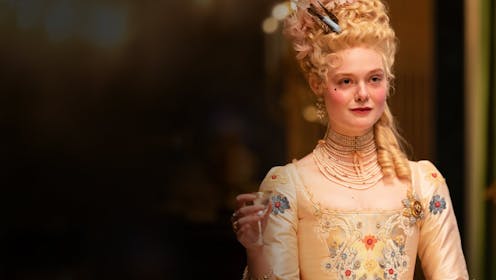
Shows like The Great on Stan are changing how we look at history. Instead of being all about getting the facts straight, they’re shaking things up and telling the story their own way. These shows are rewriting the rulebook.
In The Great, the narrative deviates significantly from historical reality. This fast-and-loose approach, humorously labelled as “an occasionally true story”, represents a trend of irreverence that has been evolving over the years.
A German-born usurper, Catherine II, holds a significant place in Russian history, second only to Peter the Great[1].
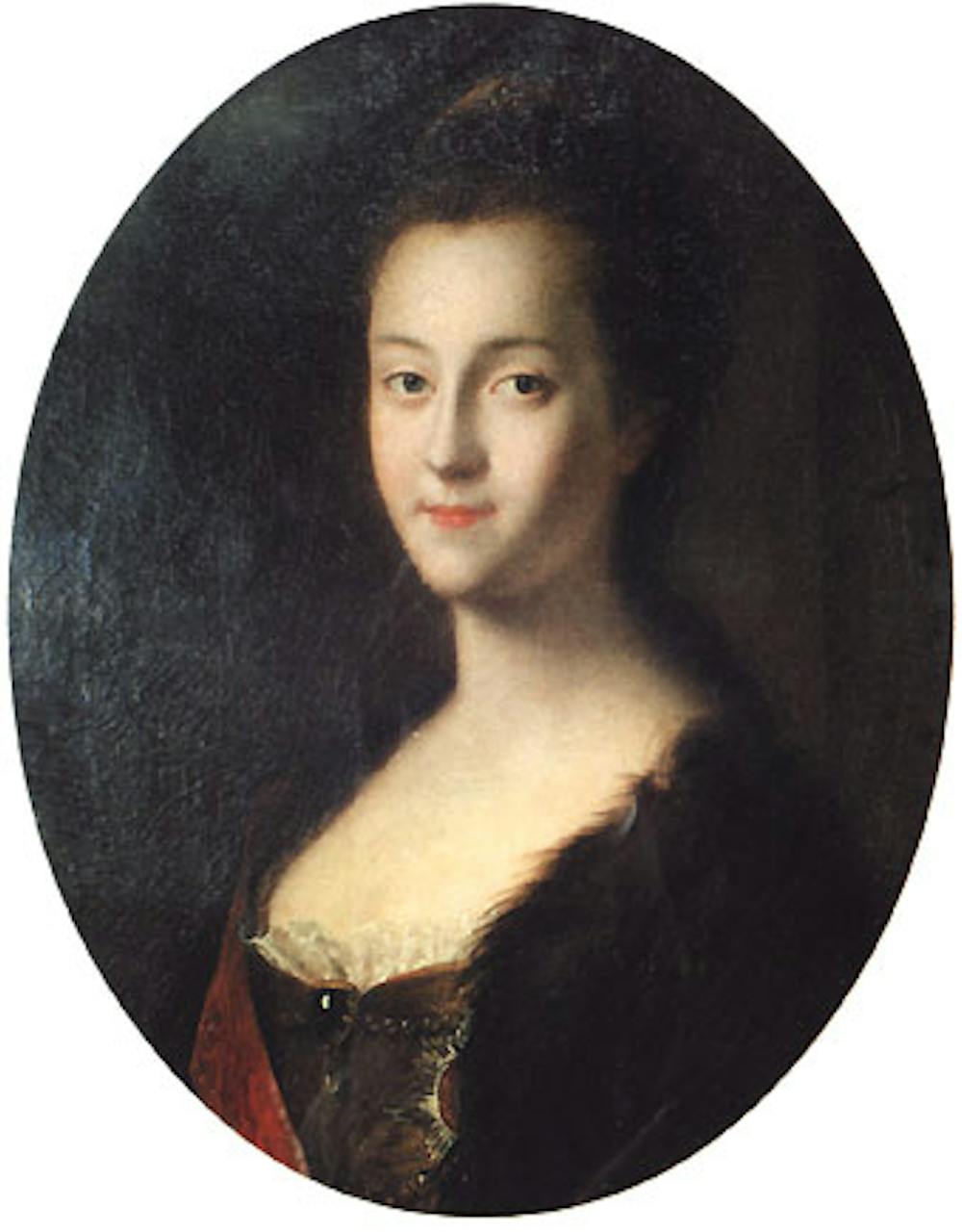
She played a pivotal role in transforming Russia into a great empire, defying gender norms and expectations of her time. Catherine made Russia a European superpower and established foundations on which Joseph Stalin and Vladimir Putin based their ideologies[2] of “Mother Russia” – she was the Mother Russia.
The Hulu series The Great takes a bold approach by re-imagining the life of Catherine II as a coarse period comedy. It utilises stunning historical settings to enhance the vivid absurdity of this romp through Russian history in the mid-18th century.
The Great doesn’t pretend to adhere closely to the historical record. Instead, it presents an extravagantly vulgar yet brilliantly humorous portrayal of Catherine II and her era. The series is fast-paced, fiercely witty and tailored for modern audiences, embracing the art of historicising filmmaking.
Taking liberties with history
The Great takes significant liberties with historical facts, distorting the timeline and altering the lineage of its characters.
In The Great, Peter is already emperor when Catherine arrives, whereas in reality, they were married for 17 years before he ascended the throne. In the series, Peter is the son of Peter the Great[3], whereas the true Peter was his German-born grandson. These creative deviations highlight the show’s inclination towards reimagining historical events for dramatic effect.
While The Great may not align with historical events, it provides an entertaining and irreverent perspective on Catherine the Great’s legacy as a powerful female ruler who shaped Russia’s destiny. Yet, it is not easy to separate fact from fiction, especially with the show’s warped timeline.
Catherine took the power as empress in 1762 and held the supreme authority of Russia until her death in 1796. In her usurpation of the crown, just six months after her husband, Peter III, took the throne[4], she was assisted by her lover Grigory Orlov[5].
 Tsar Peter III and his wife Catherine by Georg Cristoph Grooth. He reigned only six months, and died on July 17, 1762.
Wikimedia
Tsar Peter III and his wife Catherine by Georg Cristoph Grooth. He reigned only six months, and died on July 17, 1762.
Wikimedia
With his help, she staged a coup and dethroned Peter III “like a child being sent to bed[6]”, drawing admiration from the Machiavellian Frederick the Great of Prussia[7].
Who was Catherine the Great?
Catherine was born Sophie Friederike Auguste von Anhalt-Zerbst in 1729 in Stettin, Prussia (now known as Szczecin in Poland).
Her father, a minor German prince, was a Prussian governor of Stettin. Her mother’s royal connections and political machinations brought Sophie to the attention of the reigning Russian empress, Elizabeth[8]. The empress decided to make Sophie the wife of her nephew and heir, Peter.
In 1744, the young German princess arrived in Russia, converted to Russian Orthodoxy, adopted the name Catherine and at the age of 16 was married to Peter.
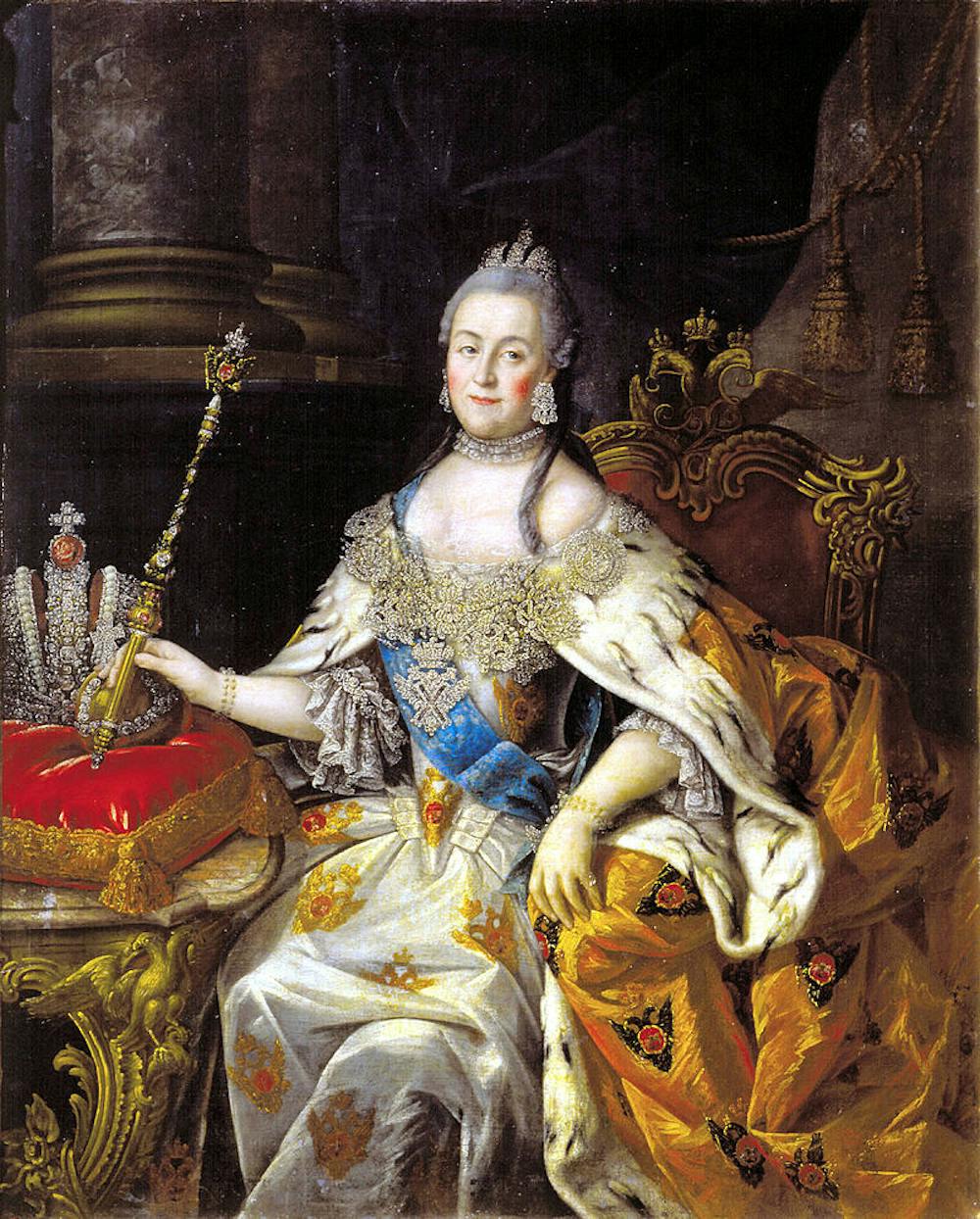 Catherine II by Alexey Antropov.
Tver Gallery
Catherine II by Alexey Antropov.
Tver Gallery
Initially, Catherine struggled to navigate the complex and intricate dynamics of the Russian court, where Empress Elizabeth held absolute power. However, she was determined to learn and adapt to her new surroundings.
Catherine later reflected that she made a conscious decision to do whatever was necessary and to publicly embrace the beliefs and ideals required of her to be qualified for the crown of the tsars.
A disastrous marriage
Catherine and Peter’s marriage was a disastrous mismatch. They were completely incompatible in terms of intellect and interests.
While Catherine was an erudite lover of European culture, Peter was boorish and immature. He lacked ambition and did not understand his role as the future emperor. Their differences led them to seek intimacy elsewhere, raising questions about the paternity of their son, Paul I, who later believed that his father was Stanisław August Poniatowski[9], the last king of Poland-Lithuania[10].
With Peter’s ascension to the Russian throne upon his aunt Elizabeth’s death in 1762, Catherine recognised the threats to her position and life. Her decision to act and overthrow her husband was accelerated by Peter antagonising the key factions at court and behaving dangerously irrationally, as she wrote in her memoirs.
Within first six months of Peter’s reign, Catherine, supported by her followers, staged a coup, arrested Peter and coerced his abdication. He conveniently died eight days later under uncertain circumstances, possibly murder or an accidental result of a drunken brawl. The official cause of death was stated as “hemorrhoidal colic”, a euphemism for assassination.
Catherine claimed the throne in her own right rather that under the pretence of ruling as regent for her son Paul.
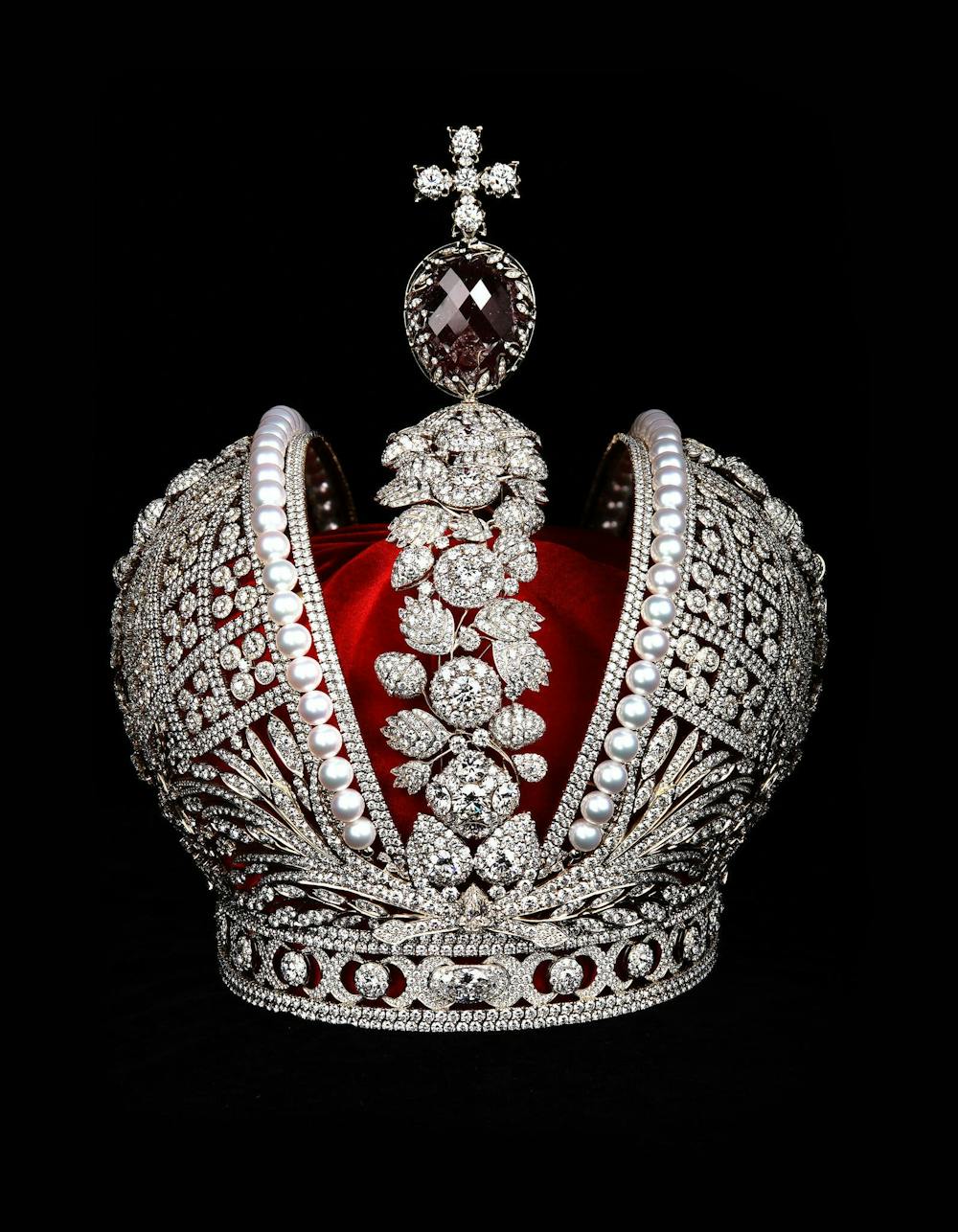 A replica of Catherine the Great’s 5,000-diamond-encrusted crown (the original cannot leave Russia) is part of the Hermitage Amsterdam’s new exhibition on the life of the empress.
Hermitage Amsterdam
A replica of Catherine the Great’s 5,000-diamond-encrusted crown (the original cannot leave Russia) is part of the Hermitage Amsterdam’s new exhibition on the life of the empress.
Hermitage Amsterdam
Her coronation highlighted her status as the God-anointed ruler of “All the Russias”, bringing us roughly to where the story is up to in season three of The Great – it is hard to tell.
The Great shocks and entertains by revealing that history can be retold to reflect on contemporary society. People, for all the celebrated progress and “giant leaps forward” are as vulnerable today as they were in the past.
Catherine in The Great whispers “Destiny didn’t do it. I did it.” The historical Catherine would most likely have agreed.
References
- ^ Peter the Great (www.britannica.com)
- ^ based their ideologies (www.theguardian.com)
- ^ Peter the Great (www.britannica.com)
- ^ took the throne (www.britannica.com)
- ^ Grigory Orlov (www.britannica.com)
- ^ like a child being sent to bed (books.google.com)
- ^ Frederick the Great of Prussia (www.britannica.com)
- ^ Russian empress, Elizabeth (www.britannica.com)
- ^ Stanisław August Poniatowski (www.google.com.au)
- ^ Poland-Lithuania (www.britannica.com)