the history of the martini cocktail
- Written by: Ursula Kennedy, Lecturer of Wine Science, University of Southern Queensland
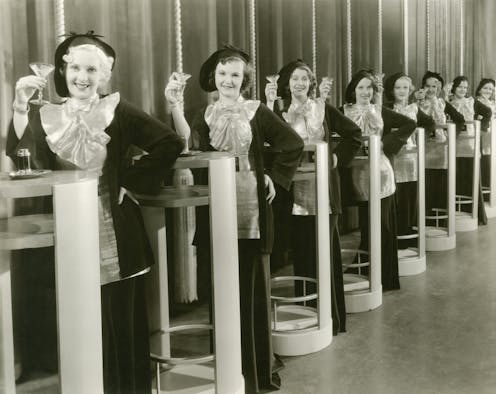
The martini cocktail has existed in a range of guises throughout its ice-cold, crisp life.
Several stories exist as to its origins. The “classic” martini is made with gin and vermouth (a fortified wine infused with spices) and garnished with an olive or a twist of lemon. It is quintessentially American.
The contested origins of the martini
Many believe[1] the martini was invented in the 1860s at the Occidental Hotel in San Francisco by bartender Jerry Thomas.
Thomas evolved a one part sloe gin, two parts sweet vermouth, maraschino and a dash of bitters with a lemon concoction into a drink he called the Martinez, which he made for passengers departing on the ferry to the town of the same name. It was said to also be prepared for miners celebrating striking gold.
Others believe it was invented in 1911 at the Knickerbocker Hotel in New York by bartender Martini di Taggia, served to billionaire John D. Rockerfeller with equal parts London dry gin and dry vermouth. However, recipes for the drink were published as early as 1862, in Jerry Thomas’s Bartenders’ Guide.
Stronger versions of the martini include two parts gin, and even up to five parts gin, to one part vermouth, garnished with olive or lemon.
A “dry” martini has little to no vermouth at all – the focus being gin. Author T.S. Eliot once said:
There is nothing quite so stimulating as a strong dry martini cocktail.
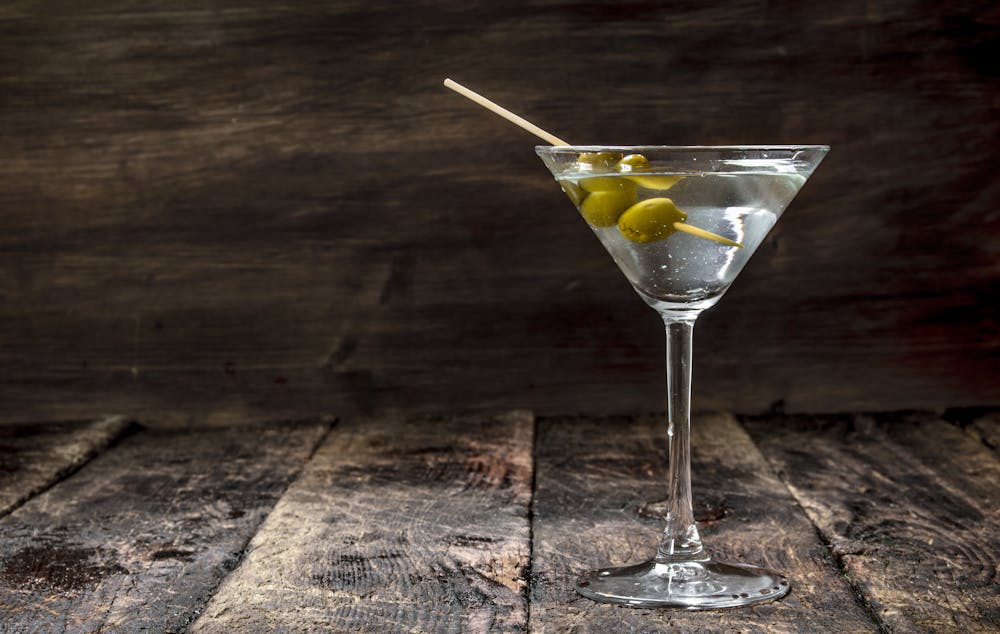
The martini’s rise, fall and rise again
During the Gilded Age[2] (1880-1900), the martini rose in popularity and remained so through to the mid-20th century.
Prohibition in America during 1920 to 1933 did little to harm the martini’s popularity, as backyard gin production was reasonably easy.
In the 1960s the drink’s popularity started to wane due to the burgeoning quality and availability of other beverages such as wines and beers. There were also concerns about alcohol consumption and health.
With the increasing popularity of “retro” style and culture in recent years the martini has made a comeback, with reports of increased demand[3] for the drink among young people.
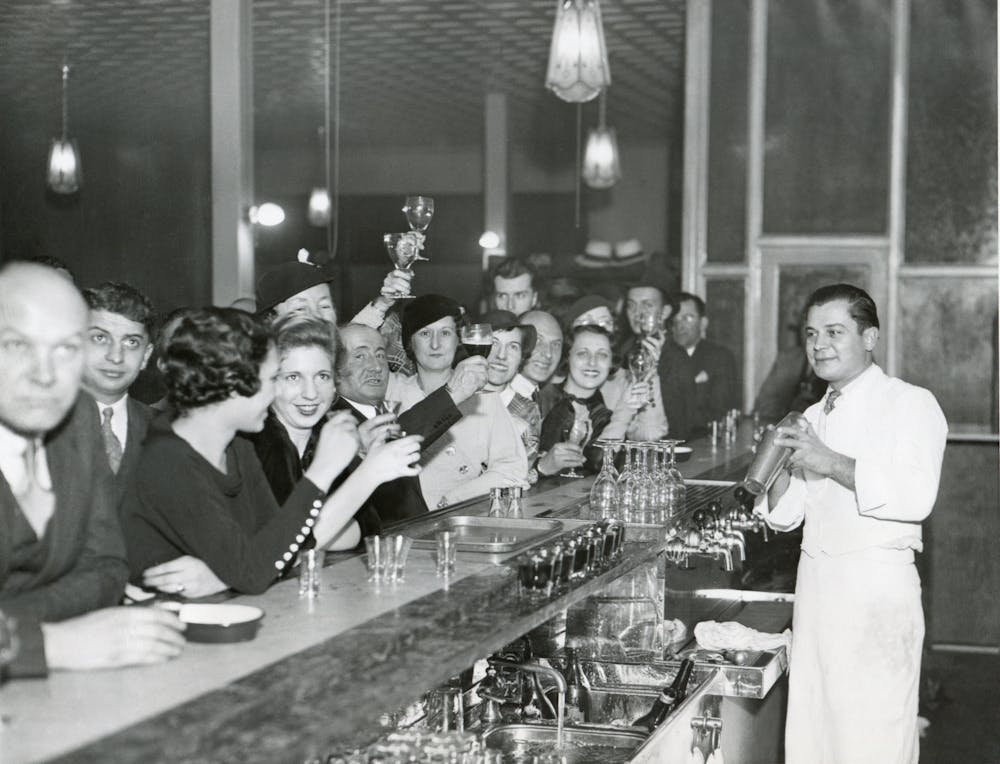 Customers at a Philadelphia bar after Prohibition’s end, Dec. 1933.
Shutterstock
Customers at a Philadelphia bar after Prohibition’s end, Dec. 1933.
Shutterstock
Martini and its variations
Today, the martini (or a common variation of it) is best known for its identity in popular culture, most famously as the drink of fictional British Secret Service agent, James Bond. The famous phrase “shaken, not stirred” was first uttered on screen by actor Sean Connery playing Bond in the 1964 movie Goldfinger. Bond’s tipple of choice is prepared with vodka rather than gin.
While most purists believe the gin martini is the classic form of the drink, there are myriad variations that use the martini name or are closely related to the original drink, such as the Gibson[4], a classic martini garnished with cocktail onions instead of olives.
 Sean Connory as James Bond, making his signature vodka martini.
Wikimedia
Sean Connory as James Bond, making his signature vodka martini.
Wikimedia
The “dirty” martini [5] is currently popular, which is gin soiled with a generous dash of brine from the olive jar. According to the Oxford Companion to Spirits & Cocktails, the practice of adding brine to a martini has been around since at least 1901. The term “dirty martini” seemingly wasn’t coined until the 1980s, however.
US president Franklin Delano Roosevelt may have been an early proponent of using olive brine in cocktails. Allegedly, the president “would shake up a drink at the drop of a hat … and was reported to have splashed a bite of brine in his drinks at the White House,” writes Robert Simonson in The Martini Cocktail: A Meditation on the World’s Greatest Drink, with Recipes.
The story goes[6] that London bartender Dick Bradsell first made the espresso martini, a fusion of espresso, sweet coffee liqueur and vodka, in the late 1980s when supermodel Kate Moss (or sometimes Naomi Campbell) asked for a drink that would “wake me up and fuck me up”.
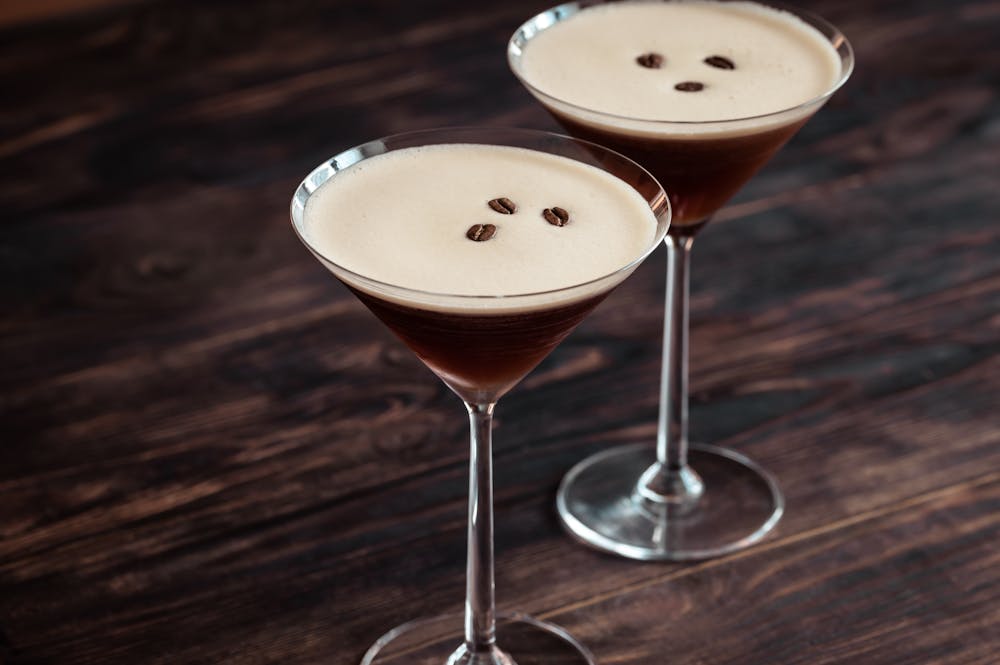 The espresso martini.
Shutterstock
The espresso martini.
Shutterstock
There are many modern drinks that use the iconic martini glass to justify using martini in their name – however, they bear little resemblance to the original cocktail. An appletini is vodka blended with apple juice, apple cider or apple brandy, while the “French martini” consists of vodka, pineapple juice and raspberry liqueur. The TV show Sex and the City popularised the “flirtini”, containing vodka, champagne and pineapple juice.
Keeping cool
A martini glass – a classic conical bowl on a long straight stem – is one aspect of the drink that does not change.
The glass was formally unveiled at the 1925 Paris Exhibition[7] as an alternative to the classic champagne glass.
The long stem allows the glass to be held while the drink remains cool, not warmed by the drinker’s hands. The wide rim allows the drinker’s nose to be close to the liquid when sipping, so the aromatics can be easily appreciated.
Read more: The name's Bond, James Bond ... and I'm an alcoholic[8]
Never out of style
While Bond embodied the glamorous side of the martini, studies of writer Ian Fleming’s famous spy indicate that Bond had a severe problem with alcohol[9] consumption. On occasion he may have had a blood alcohol concentration of .36% – almost fatal.
The martini should be consumed with deference … and in moderation.
References
- ^ Many believe (historynewsnetwork.org)
- ^ Gilded Age (www.history.com)
- ^ reports of increased demand (vinepair.com)
- ^ the Gibson (www.liquor.com)
- ^ The “dirty” martini (www.spiritshunters.com)
- ^ The story goes (www.gq-magazine.co.uk)
- ^ formally unveiled at the 1925 Paris Exhibition (www.irishtimes.com)
- ^ The name's Bond, James Bond ... and I'm an alcoholic (theconversation.com)
- ^ severe problem with alcohol (theconversation.com)
Read more https://theconversation.com/alluring-classic-glamorous-the-history-of-the-martini-cocktail-195913