Free public transport is a great start – but young people won’t give NZ governments a free ride on climate change
- Written by: Kate Prendergast, Post-Doctoral Fellow in Political Science, University of Canterbury
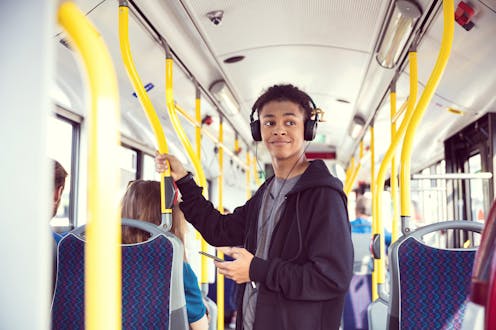
It isn’t often people get a free ride, but last week’s budget offered just that: free public transport fares for children aged five to 12 and permanent half-price fares for people under 25.
The free public transport, along with other initiatives outlined in New Zealand’s latest budget, are part of a growing effort to join the dots between financial decision making, community wellbeing and climate resiliency. It is a good start – but young people want more.
As part of a global study[1] into the lives of young urban citizens, we had heard from local Christchurch children who “hoped” buses could be free but “never imagined it could happen”. This budget makes that hope a reality.
Christchurch was one of seven cities in the study exploring the lives of young urban citizens aged between 12 and 24. The aim was to identify and share their experiences and ideas for living well within environmental limits.
This is about more than just curiosity. Urban areas cover just 2% of the world’s land area, but they account for up to 72% of global carbon emissions[2]. Given that by 2050, seven out of ten young people will live in an urbanising area, it’s vital we understand and anticipate how that might play out in reality.
Climate positives in Budget 2023
Investment in young people’s use of public transport is a transformative step. But the impact of free public transport for children is less about an immediate increase in bus patronage and more about the far-reaching effect such policies have on family budgets and long-term behaviour change.
Read more: Would you ditch your car if public transport was free? Here's what researchers have found[3]
There was more good news for climate in what was a deceptively simple budget. It signals a long-term shift towards thinking that connects wellbeing, equity and climate policy. The budget allocated a sizeable NZ$1.9 billion to the climate, alongside the $1 billion pledged for cyclone recovery.
This funding, as well as the support for warmer homes and for school lunches, contributes to the social infrastructure that young people and their communities badly need when facing ongoing climate risk.
Public transport investment makes a difference
Policy initiatives that support free bus and train travel can make a big difference. Some 72% of the Christchurch youth we surveyed[4] were worried about money. Participants spoke of wanting more affordable, accessible and independent ways to move around their city.
They expressed frustration with an “unaffordable” and “unreliable” bus service that left most “relying on parents” to chauffeur them around the city in private cars. Not only does car dependence “lock in” high carbon travel but many participants also viewed this dependence as “quite isolating”.
Read more: City-by-city analysis shows our capitals aren’t liveable for many residents[5]
Overseas research[6] shows scrapping youth bus fares increases social connections and independence, helping youth access the people and places that support their wellbeing.
Free fares also enable youth the freedom to shape their own travel, facilitating the development of new skills, increasing confidence and providing friends a way to travel together.
In the longer term, shifting dependence away from car travel helps reduce carbon emissions and improves air quality, leading to improved health and wellbeing. But moving away from cars will also require ongoing central and local government investment in public transport, safe footpaths and protected cycleways.
Decent housing matters
Initiatives that increase access to decent housing matter for our collective wellbeing, and Budget 2023 sets aside funding for improved housing.
But during our focus groups it was disheartening to hear young people talk about the serious housing problems they face. Some told us their homes had been “flooded more than once”, while others said their houses were “still earthquake damaged”.
Read more: Free public transport is great news for the environment but it's no silver bullet[7]
Interviewees also described the struggles of their families to heat their homes. Unaffordable heating left some families relying on “blankets and stuff”, wearing “puffer jackets inside”, and using “hot water bottles” to keep warm.
These housing challenges, especially when combined with climate-related events, have the potential to disrupt home life and risk affecting the relationships young people value for their wellbeing.
Youth want greater climate action
Investing in transport and housing is an important step, but critics will argue Budget 2023 fell short of delivering climate-resilient futures. The reality is that the wellbeing of youth now and in the future also depends on bolder, wide-reaching investment in climate mitigation and adaptation.
Research[8] shows young people around the world are increasingly anxious about climate change. For many, failure by governments to respond to the climate crisis increases that distress.
In Christchurch, an earlier survey[9] of youth indicated a third of all respondents had joined School Strike 4 Climate[10] protests calling for more action from the government on climate change.
So, while this year’s budget made steps towards addressing our climate future there are many more steps required before young people are satisfied. What is needed is a long-term plan that really addresses the impact of our agricultural industry and the need for wider reductions in urban-related carbon emissions.
Until then, budgets – and the governments that deliver them – will continue to disappoint.
References
- ^ global study (cusp.ac.uk)
- ^ 72% of global carbon emissions (www.ipcc.ch)
- ^ Would you ditch your car if public transport was free? Here's what researchers have found (theconversation.com)
- ^ surveyed (cusp.ac.uk)
- ^ City-by-city analysis shows our capitals aren’t liveable for many residents (theconversation.com)
- ^ Overseas research (www.tandfonline.com)
- ^ Free public transport is great news for the environment but it's no silver bullet (theconversation.com)
- ^ Research (www.thelancet.com)
- ^ survey (www.frontiersin.org)
- ^ School Strike 4 Climate (www.schoolstrike4climate.nz)