before Disney’s Little Mermaid, these creatures existed in mythologies from around the world
- Written by: Louise Pryke, Honorary Research Associate, University of Sydney
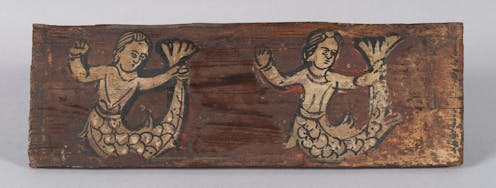
Mermaids are multicultural mythical figures, reflecting the continuing human fascination with the sea in stories echoing thousands of years into the past[1]. Mermaids are found in cultures across the globe.
In Australia, special water spirits[2] appear in the rock and bark art of First Nations people in Arnhem Land.
Across the continent of Africa, mermaid-like water deities such as Yemaya[3] and Mami Wata[4] reflect the powerful connection between human communities and their environment.
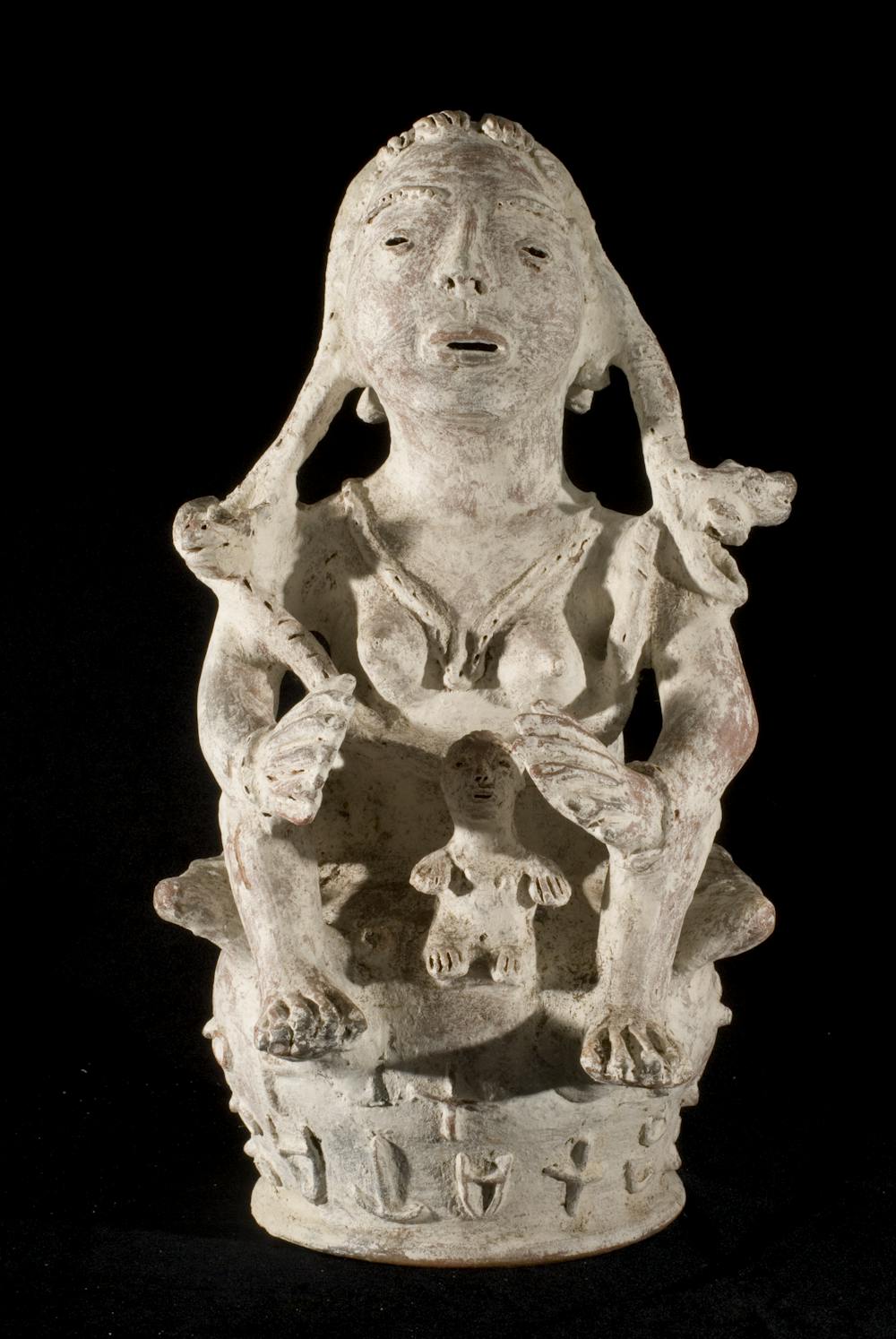
Among the most well-known mermaid narratives is Hans Christian Anderson’s fairy tale, The Little Mermaid[6], now a live-action film from Disney.
By the time of its publication in 1837, The Little Mermaid was already a relative latecomer to the genre. Indeed, Hans Christian Anderson himself was raised with much earlier stories involving mermaids.
His childhood bedtime reading included the works of Shakespeare and the Tales of the Arabian Nights.
Shakespeare’s mermaids from A Midsummer Night’s Dream[7] are noted for their song. Oberon observes beautiful mermaid melodies could calm the sea and draw down the stars:
Since once I sat upon a promontory,And heard a mermaid on a dolphin’s backUttering such dulcet and harmonious breathThat the rude sea grew civil at her songAnd certain stars shot madly from their spheres,To hear the sea-maid’s music.
Anderson’s other bedtime book, the Arabian Nights[8], is a collection of Indian and Persian stories assembled over many centuries. Among these are narratives about merfolk, some of whom live in wonderful undersea palaces.
In one story, a human fisherman visits his merman friend[9] under the sea. There he finds communities of Jewish, Christian and Muslim merfolk, before their friendship ends over religious differences.
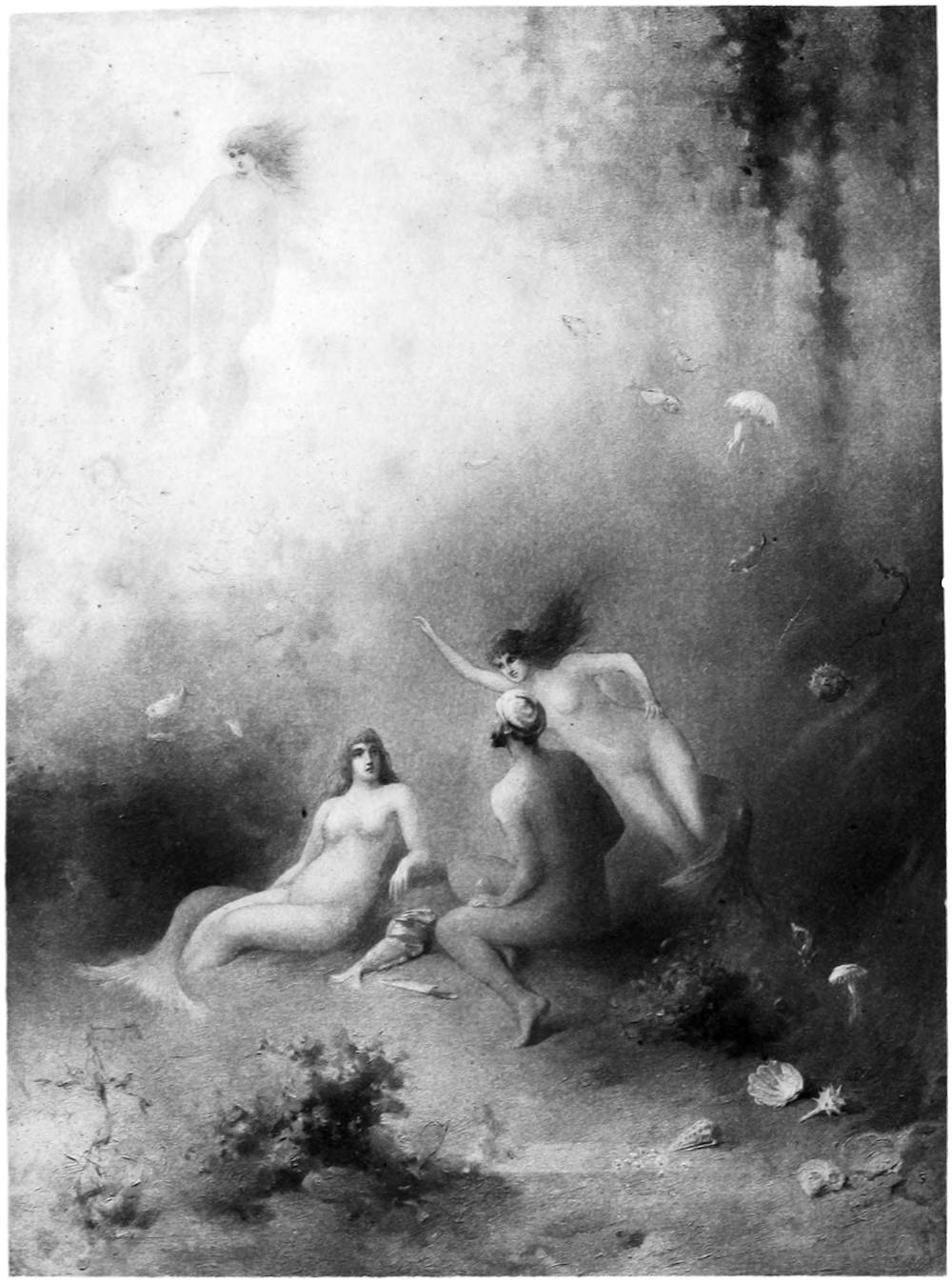 Abdullah the Fisherman and Abdullah the Merman illustrated by Albert Letchford, 1897.
Wikimedia Commons
Abdullah the Fisherman and Abdullah the Merman illustrated by Albert Letchford, 1897.
Wikimedia Commons
Read more: The Little Mermaid has always been a story about exclusion – and its author was an outsider[10]
Ancient wisdom from the deep
Images of human-fish hybrid creatures can be found from the third millennium BCE in ancient Mesopotamia, a geographical area relating roughly to modern day Iraq.
The Apkallu, or the seven divine sages of Mesopotamian myth, can take the shape of human-fish hybrids. This is particularly interesting due to their connection to ancient wisdom traditions predating the great flood[11]. In Mesopotamian literature, as in the Bible, a great flood event[12] destroys most of humanity.
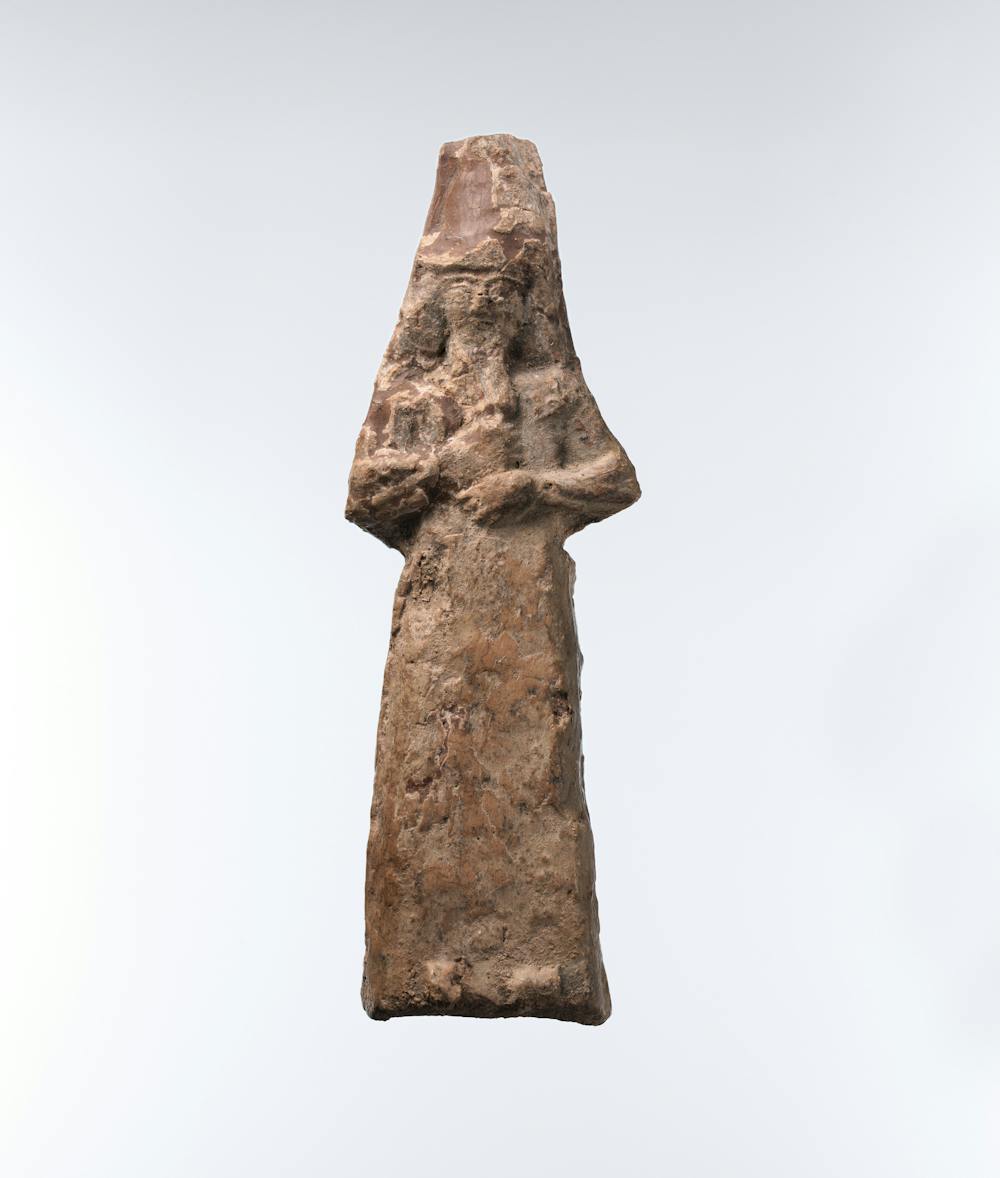 Apkallu figure: male with a fish-skin hood, Assyrian, c. 9th–8th century BCE.
The Metropolitan Museum of Art
Apkallu figure: male with a fish-skin hood, Assyrian, c. 9th–8th century BCE.
The Metropolitan Museum of Art
As human-fish hybrids, the Apkallu were well-equipped to survive the flood and carry forward their wisdom traditions. According to Mesopotamian literature, the useful information given to humanity by the Apkallu included knowledge of medicine and building cities.
The connection of mermaids to wisdom and medicine extends to other ancient traditions. In Southern Africa, mermaids play a complex role in ages-old healing rituals[13].
The ancient Near Eastern connection between mermaids and Flood traditions can be seen in the illustrated Nuremberg Bible of 1483, where merfolk are depicted swimming around the ark with their merdog[14].
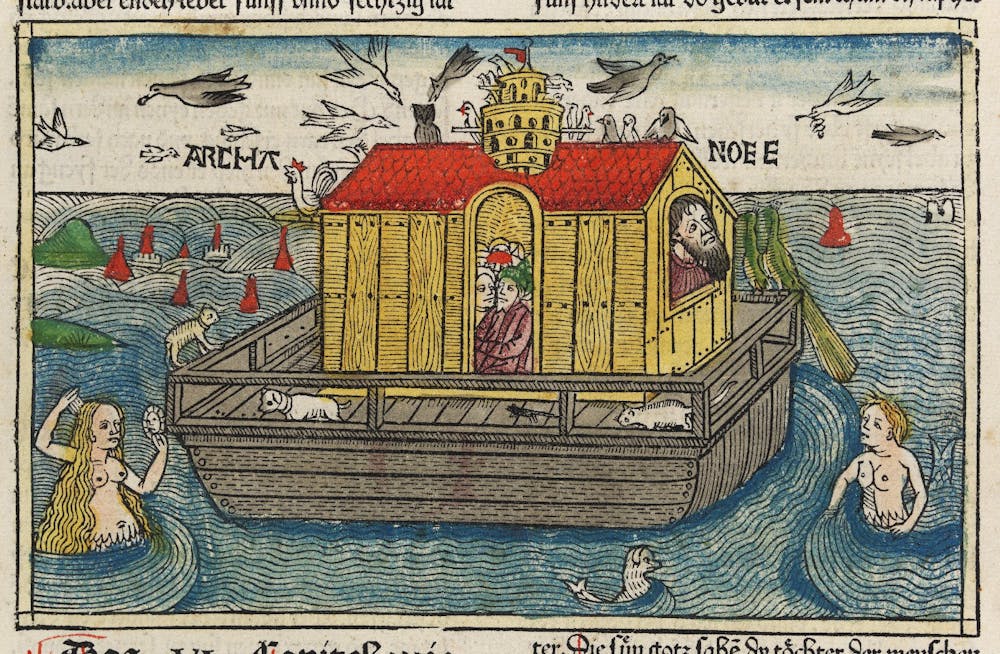 Woodcut of Noah’s Ark from Anton Koberger’s Nuremberg Bible of 1483.
University of Edinburgh, CC BY[15]
Woodcut of Noah’s Ark from Anton Koberger’s Nuremberg Bible of 1483.
University of Edinburgh, CC BY[15]
Seafaring friends
Across the world and across traditions, mermaids have been accompanied by many different creatures. Their close connection to the sea extends to animals who share their home.
As in the Nuremberg Bible, mermaids and seadogs are said to swim together in Inuit mythology[16] from North America.
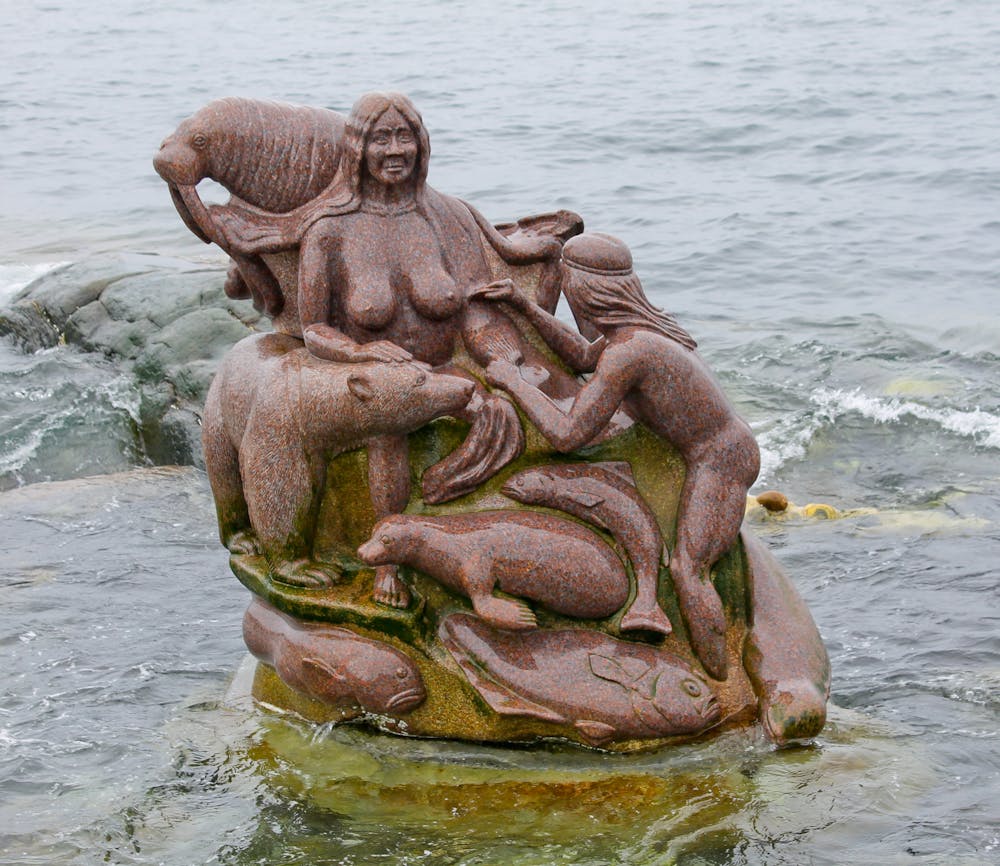 Havets Moder (‘Mother of the Sea’), granite sculpture by Greenlandic artist Aka Høegh, on the Nuuk coast, Greenland.
Gray Geezer/Wikimedia Commons, CC BY-SA[17]
Havets Moder (‘Mother of the Sea’), granite sculpture by Greenlandic artist Aka Høegh, on the Nuuk coast, Greenland.
Gray Geezer/Wikimedia Commons, CC BY-SA[17]
In folklore from the Orkney Islands in Scotland merfolk are instead accompanied by seals, and are described milking whales[18].
In A Midsummer Night’s Dream, mermaids are accompanied by dolphins. In myths from East Asia and South America, they are friendly with turtles.
Similarities with the Danish fairy tale can be found in a famous story from South Korean folklore, dating to the 13th century CE.
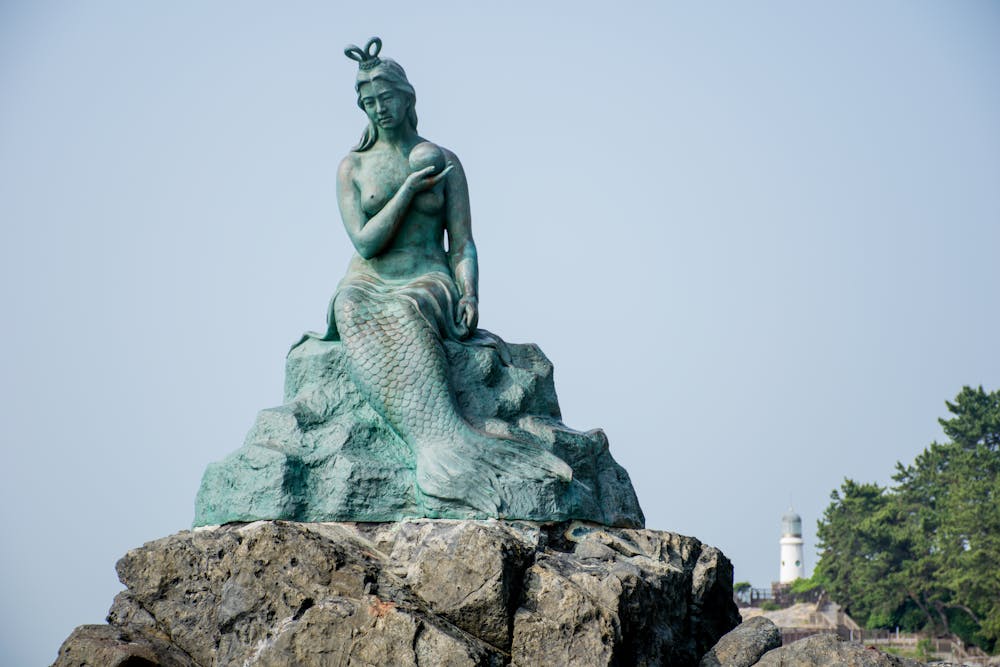 Hwang Ok Princess mermaid statue on the rocks by the sea at Dongbaek Island, Haeundae, South Korea.
Shutterstock
Hwang Ok Princess mermaid statue on the rocks by the sea at Dongbaek Island, Haeundae, South Korea.
Shutterstock
In the story, the mermaid Princess Hwang-Ok (also known as Topaz) marries a prince and becomes more human[19].
The princess is homesick for her underwater life, so her turtle companion helps her to use the moon to turn back into a mermaid and regain her wellbeing.
Turtles and whales appear with mermaids as helpers to the Mesoamerican storm deity Tezcatlipoca[20]. The myth is an aetiological tale about the creation of music in the world.
Read more: Mermaids in Japan – from hideous harbingers of violence to beautiful enchantresses[21]
Captivating creatures of song
Another theme shared by many mermaid myths is that of music. Powerful and persuasive song is a feature of numerous folkloric tales containing mermaids, including varieties of the Little Mermaid tale and Shakespeare.
In his fairy tale, Anderson’s mermaid uses her special abilities with music to win a contest in the royal court. In a disturbing scene, the voiceless mermaid participates in a song and dance contest against decoratively attired enslaved women, all competing for the prince’s attention.
In 1989, the animated Disney film’s soundtrack won both a Grammy award and two Oscars.
In Shakespeare, mermaids are sometimes conflated with the Sirens of Greek myth[22] by the poet. The two mythical figures were commonly viewed as interchangeable from the medieval times.
Sirens in ancient epics such as Homer’s Odyssey were known for their ability to lure people to their death with their sweet-sounding songs – and their promise to share secret wisdom with their listeners. Sirens, like merfolk, are known as hybrid creatures with powerful voices, but are usually depicted with bird-like, rather than fish-like[23], qualities.
The power of merfolk to seduce with their charms may reflect the ability of the sea to capture the hearts of seafarers, and keep them away from their homes on land – by accident or design.
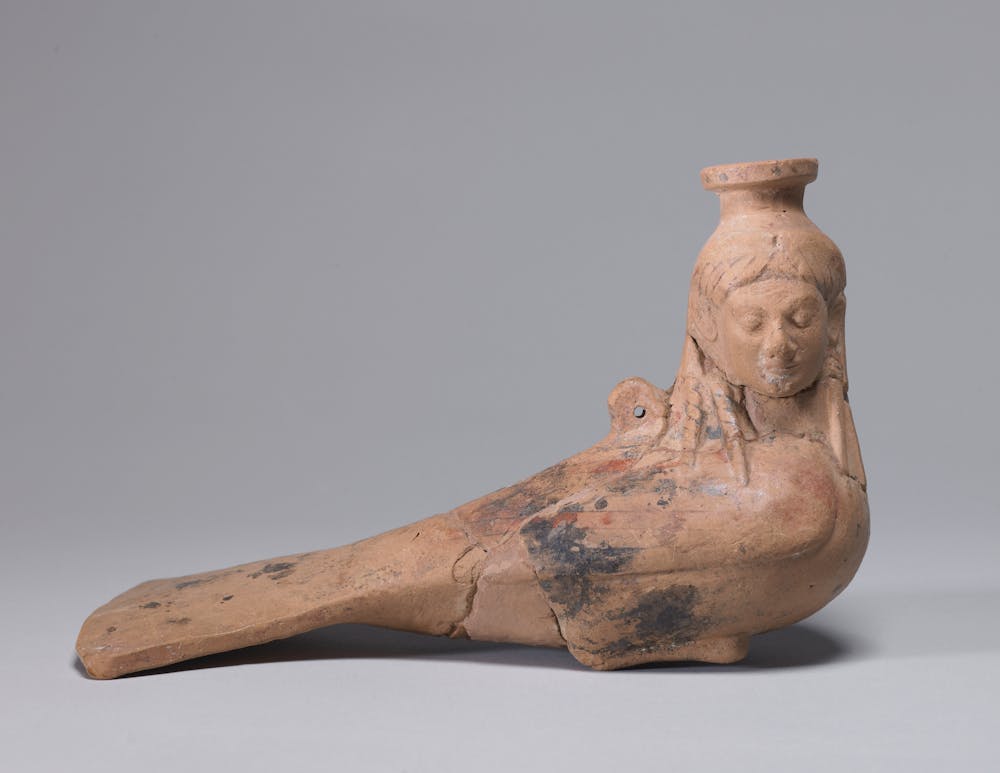 Greek Vase in the Form of a Siren, c. 540 BCE.
Walters Art Museum
Greek Vase in the Form of a Siren, c. 540 BCE.
Walters Art Museum
Mysterious depths
The dynamic nature of mermaid mythology contributes to their continuing popularity in the 21st century.
Mermaids build bridges between land and water (at times in Southeast Asian[24] and South American myths, quite literally), between human and animal, and between wilderness and civilisation, giving a human face to the mysteries of the deep.
Read more: Disney's Black mermaid is no breakthrough – just look at the literary subgenre of Black mermaid fiction[25]
References
- ^ thousands of years into the past (theconversation.com)
- ^ special water spirits (www.abc.net.au)
- ^ Yemaya (www.teenvogue.com)
- ^ Mami Wata (africa.si.edu)
- ^ CC BY-SA (creativecommons.org)
- ^ The Little Mermaid (www.gutenberg.org)
- ^ A Midsummer Night’s Dream (www.shakespeare.org.uk)
- ^ Arabian Nights (www.britannica.com)
- ^ a human fisherman visits his merman friend (en.wikisource.org)
- ^ The Little Mermaid has always been a story about exclusion – and its author was an outsider (theconversation.com)
- ^ wisdom traditions predating the great flood (www.metmuseum.org)
- ^ great flood event (www.penn.museum)
- ^ ages-old healing rituals (www.jstor.org)
- ^ merfolk are depicted swimming around the ark with their merdog (www.washingtonpost.com)
- ^ CC BY (creativecommons.org)
- ^ Inuit mythology (www.academia.edu)
- ^ CC BY-SA (creativecommons.org)
- ^ milking whales (www.jstor.org)
- ^ marries a prince and becomes more human (www.researchgate.net)
- ^ Tezcatlipoca (www.worldhistory.org)
- ^ Mermaids in Japan – from hideous harbingers of violence to beautiful enchantresses (theconversation.com)
- ^ the Sirens of Greek myth (www.worldhistory.org)
- ^ depicted with bird-like, rather than fish-like (www.audubon.org)
- ^ Southeast Asian (en.wikipedia.org)
- ^ Disney's Black mermaid is no breakthrough – just look at the literary subgenre of Black mermaid fiction (theconversation.com)