Huge Cadia gold mine ordered to reduce polluting dust. Is it safe to live near a mine like this?
- Written by: Ian A Wright, Associate Professor in Environmental Science, Western Sydney University
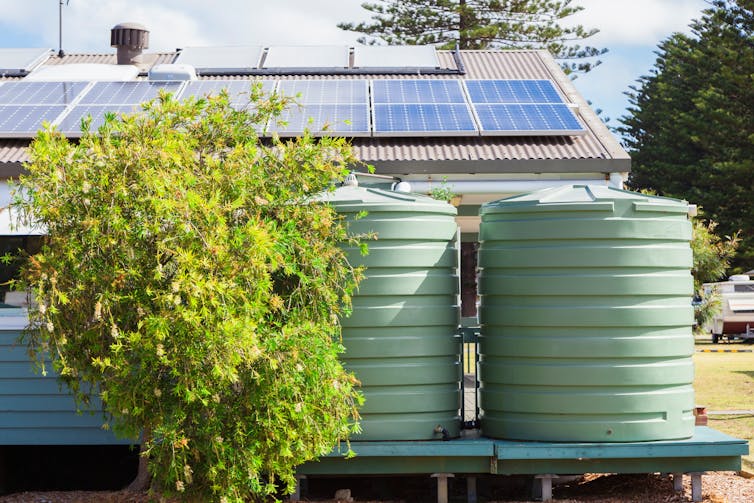
For the past 15 months, I have been helping residents living near the massive Cadia gold and copper mine in NSW to verify their concerns about pollution from the mine. The findings of alarming levels of heavy metals in their water tanks, as well as in blood and hair samples, prompted the NSW Environmental Protection Agency to investigate. Yesterday it ordered the mine[1] to stop releasing an “unacceptable level” of dust that carries these metals through the air.
The EPA is advising[2] that the water from tanks in the area is safe to drink. This advice is based on the results of NSW Health tests of residents’ kitchen tap water in March 2023. The EPA is also helping to organise water testing for locals, many of whom rely on rainwater tanks for their drinking water.
I remain unconvinced the water is always safe to drink. Metals accumulate in the bottom layers of tanks, so when water levels fall, people could be drinking water with a higher metal content.
These developments also do little to reassure residents who have similar concerns about other recently approved metal mines in NSW.
What forced the EPA to act?
I first heard of complaints of dust blowing from the mine, particularly from its tailings disposal area, in 2021. Locals expressed concerns[3] about the impacts on their health of inhaling the dust.
Over the past year, many people in the area have sent me water samples from their home water tanks. These are fed by roof runoff, which they were concerned could carry metal-rich dust into the tanks.
I sent the water samples to a commercial testing laboratory. The results have been very confronting. Many samples failed to meet Australian Drinking Water Guidelines[4].
This prompted a community group to run their own citizen science survey of local drinking water quality. They systematically collected water samples from the bottom of household rainwater tanks on dozens of properties surrounding the mine. They sent the samples to a commercial testing laboratory.
I reviewed the results of their study, conducted in February and March this year. Coupled with a previous study, we had results for 47 water samples, and 32 (68%) exceeded the drinking water guidelines for lead (less than 10 micrograms per litre). Alarmingly, 13 samples (27.6%) recorded concentrations of more than ten times (100µg/L of lead) the recommended limit.
Read more: Not all of us have access to safe drinking water. This clever rainwater collector can change that[5]
Many community members also reported[6] elevated levels of metals in blood and hair samples[7].
Lead is a major health issue in water supplies across the United States[8]. It’s a neurotoxin that builds up in the body and can cause lifelong brain impairment[9].
Yet the community was struggling to be heard – by the EPA in particular. On May 12 this year, I was invited to meet with NSW EPA CEO Tony Chappel. I brought two members of the Cadia community.
They talked about their concerns about drinking water. They also broke the news about excessive metals in local residents’ blood results. That meeting changed everything.
In the following weeks the EPA has acted swiftly to stop this pollution and help the community. The agency is focusing on a major potential source of the contamination from the mine: dust.
The EPA has now ordered the mine[10] to take all necessary steps to immediately stop releasing excessive amounts of dust, which may include reducing production[11].
Read more: Children continue to be exposed to contaminated air in Port Pirie[12]
Why is dust such a critical problem?
The Cadia gold and copper mine[13] has been operating for more than 25 years. It includes an open-cut mine and more recently an underground mine, the largest in Australia[14]. It is the underground mining that now seems central to the contamination.
The EPA issued a “prevention notice” on May 29 this year. The agency pointed to[15] a ventilation vent (vent rise 8) that was releasing more than seven times the permitted dust content. Also known as the “crusher vent”, it has caused other serious air quality concerns, with emissions of cancer-causing crystalline silica[16] recorded at 18 times the legal limit.
In August 2022[17] and July 2020[18], the EPA had fined the mine the maximum $15,000 for dust pollution and is clearly frustrated by its unacceptable impacts[19]. It has just issued the mine with revised environmental regulations.
The EPA press release[20] yesterday said: “Additional reports will also be required on lead dust fingerprinting research.” This “fingerprinting” analysis[21] of lead helps trace its transport pathways and geological origins.
In a statement in response to the EPA’s latest action, the mine operator, Cadia Valley Operations, said: “We take our environmental obligations and the concerns raised by the EPA seriously and will take action to comply with the licence variation notice.”
Read more: Mount Isa contamination 'within guidelines' but residents told to clean their homes[22]
What does this mean for residents near other mines?
This case might not be isolated. Gold and silver mining in NSW is booming.
Approved in March[23], McPhillamys gold mine near the town of Blayney is about 20 kilometres from Cadia mine. And the Bowdens silver mine near Mudgee was approved[24] the following month, despite many submissions expressing concern about the impacts of lead dust on human health.
Read more: Gold mining is one of the world’s most destructive and unnecessary industries – here's how to end it[25]
Can people be safe and healthy living near a large metal mining operation? Based on Cadia, I’m not sure.
Mines and regulators might need to work more closely together with communities. The public needs to be able to make sure government agencies are doing their job and every mine operates in an environmentally clean and safe manner. The mining industry has to do better to earn the trust of the community and its “social licence[26]” to operate.
References
- ^ ordered the mine (www.epa.nsw.gov.au)
- ^ advising (www.epa.nsw.gov.au)
- ^ expressed concerns (www.abc.net.au)
- ^ Australian Drinking Water Guidelines (www.nhmrc.gov.au)
- ^ Not all of us have access to safe drinking water. This clever rainwater collector can change that (theconversation.com)
- ^ reported (www.theguardian.com)
- ^ blood and hair samples (www.abc.net.au)
- ^ water supplies across the United States (abcnews.go.com)
- ^ lifelong brain impairment (www.cdc.gov)
- ^ ordered the mine (www.epa.nsw.gov.au)
- ^ reducing production (www.epa.nsw.gov.au)
- ^ Children continue to be exposed to contaminated air in Port Pirie (theconversation.com)
- ^ gold and copper mine (www.cadiavalley.com.au)
- ^ largest in Australia (www.mining-technology.com)
- ^ pointed to (www.epa.nsw.gov.au)
- ^ emissions of cancer-causing crystalline silica (www.abc.net.au)
- ^ August 2022 (www.abc.net.au)
- ^ July 2020 (www.abc.net.au)
- ^ unacceptable impacts (www.abc.net.au)
- ^ press release (www.epa.nsw.gov.au)
- ^ analysis (pubmed.ncbi.nlm.nih.gov)
- ^ Mount Isa contamination 'within guidelines' but residents told to clean their homes (theconversation.com)
- ^ Approved in March (www.ipcn.nsw.gov.au)
- ^ approved (www.ipcn.nsw.gov.au)
- ^ Gold mining is one of the world’s most destructive and unnecessary industries – here's how to end it (theconversation.com)
- ^ social licence (www.australianmining.com.au)