How far to the next electric vehicle charging station – and will I be able to use it? Here's how to create a reliable network
- Written by: Kai Li Lim, St Baker Fellow in E-Mobility, The University of Queensland
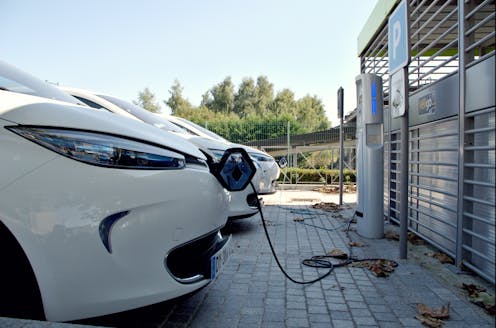
You’re ready for your first long road trip with your new electric vehicle. But there are nagging questions in your mind. “What if I can’t find an available charging station when I need it?” “What if the charger doesn’t work?”
A new concern is overtaking the once-dominant “range anxiety”, the fear of your vehicle running out of charge before reaching a charging station. “Charging anxiety” now arises from the uncertainty of finding an available and functional charging station when needed.
With electric vehicle sales[1] surging, the reliability of the network of chargers is no longer a potential problem on the horizon. It’s now an urgent matter.
In the United States, the world’s second-largest electric vehicle market, up to 20% of charging attempts fail[2]. The most common cause is charging equipment malfunctions.
But what if we told you we already have a blueprint for reliable charging stations? It’s right before our eyes, in our trusty petrol stations. We can draw on the lessons of the petrol network to develop a charging network that’s ready for mass adoption of electric vehicles.
Read more: Australia's electric vehicle numbers doubled last year. What's the impact of charging them on a power grid under strain?[3]
How did petrol stations become so reliable?
For decades, the petrol industry has maintained a 99.9% availability and reliability rate[4] for its fuel pumps. How was this remarkable feat achieved?
The secret lies in factors such as stringent quality control, standardised equipment, comprehensive technician training, robust network design and a mature industry. All these elements work together to ensure widespread reliability. Whenever you need to fill up your car you can.
The contrast between the petrol industry and today’s electric vehicle charging infrastructure is striking. Petrol bowser manufacturing and service station operations have been largely consolidated under a few industry giants. The charging industry is fragmented and lacks standardisation.
Electric vehicle users must deal with variations in plug types, payment options, communication protocols between chargers, and charging speeds offered by different manufacturers.
The influx of new manufacturers and operators makes the situation worse. In their eagerness to seize opportunities in this fast-growing market, these newcomers may struggle to maintain consistent service quality. Early market instability may mean companies are taken over or go out of business, possibly leaving stranded assets.
Another issue is charger ownership and maintenance responsibilities. If a business pays for an electric vehicle charging company to install a charger, it’s not always clear who’s responsible when it breaks. Clear terms of ownership and maintenance, including who bears the cost of repairs or replacements, are needed.
Read more: Australia’s adoption of electric vehicles has been maddeningly slow, but we’re well placed to catch up fast[5]
What can governments do to help?
Overcoming “charging anxiety” calls for a two-pronged strategy to increase consumer confidence in electric vehicle charging: rigorous efforts by the industry itself, and effective government policy frameworks. Priorities include standardisation, quality control and ongoing skills development, as well as warranty, service and reliability requirements, and monitoring of chargers.
Governments can actively promote standardised charging infrastructure. This will make it more user-friendly and intuitive.
Australia, for instance, doesn’t have an official charging standard. The Type-2[6] charger is merely the de facto default option. The government must rectify this.
Governments can also impose warranty and service requirements. Enforcing robust reliability standards will ensure problems with charging stations are fixed quickly. In the United States, federally funded chargers must maintain an up-time of 97%.
Governments also have a role to play in developing specialised training programs. These will equip workers with the skills and knowledge needed to handle charger manufacturing, installation and maintenance.
Governments must also ensure co-funding grants to develop charging infrastructure are put to the best possible use. These grants should be distributed on merit, giving priority to organisations with proven expertise. This will help pave the way for more robust, reliable charging stations.
Importantly, charger specifications should be rooted in the reality of current customer usage data and foreseeable developments in electric vehicle technology. The focus should be on meeting immediate practical needs, rather than chasing over-ambitious future-proofing.
Read more: Thinking of buying an electric vehicle for your next car? Here's the market outlook and what to consider[7]
Electric vehicle industry has a digital advantage
Developing a highly reliable charging network is undeniably a challenge. However, the industry has the advantage of being able to harness digital technology.
Integrating Internet of Things technology into these chargers, coupled with data analytics, enables real-time monitoring and diagnostics to enhance charger performance. Operators can then identify and resolve issues before they lead to charger failure, or quickly identify failures and fix the charger. It also enables tracking of communication issues between the charger and the vehicle, ensuring a smoother charging process.
However, reliability isn’t just a matter of technology. Other factors might hinder charging, including physical obstacles such as other vehicles blocking access to chargers. Smart design of charging station locations and efficient management systems can help ensure unimpeded access.
Continuous data collection and analysis enable operators to identify patterns and trends. They can then anticipate faults and perform preventive maintenance. This can minimise downtime and maximise charger availability.
This preventive approach not only ensures more reliable charging for electric vehicle users but also reduces operators’ costs.
So, what’s the takeaway? A cohesive approach will pave the way to a reliable charging network. We must learn from the past successes and limitations of the petrol industry, embrace the transformative power of digital technologies, and adopt policies to steer the industry in the right direction.
Australia needs charging infrastructure that is robust, reliable and ready for electric mobility. It’s a collective responsibility of industry stakeholders and government bodies. As we speed up our efforts to get this right, we can finally put an end to range anxiety and its successor, charging anxiety.
References
- ^ electric vehicle sales (www.smh.com.au)
- ^ 20% of charging attempts fail (www.jdpower.com)
- ^ Australia's electric vehicle numbers doubled last year. What's the impact of charging them on a power grid under strain? (theconversation.com)
- ^ 99.9% availability and reliability rate (www.trilliumenergy.com)
- ^ Australia’s adoption of electric vehicles has been maddeningly slow, but we’re well placed to catch up fast (theconversation.com)
- ^ Type-2 (www.evolutionaustralia.com.au)
- ^ Thinking of buying an electric vehicle for your next car? Here's the market outlook and what to consider (theconversation.com)