We asked former prisoners what happens when support services fail
- Written by: Lise Lafferty, Senior research fellow, UNSW Sydney

When Geoff* left prison after his sentence ended, he was told he would be provided with help to return to the community and get on with this new chapter in life.
They promised a lot. Like you know transitioning to housing, even help with you know finding work and that, but […] none of those promises were met.
The result was sadly predictable. Geoff was unable to access public housing due to a lengthy wait list and he soon found himself rotating between staying with friends or at hostels and living on the street.
Geoff’s story is not uncommon, as we discovered when we interviewed[1] 48 people formerly incarcerated in Victoria (33 men, 15 women) for a study[2] on post-release pathways among people who inject drugs. All had a history of drug use.
We wanted to know more about how they were supported to find housing and work, obtain medical care or, for those wanting to do so, access help to get off drugs. Getting this kind of pre- and post-release support can drastically reduce the risk of the person re-offending.
Our analysis[3], published in the International Journal of Drug Policy, reveals how services can play a crucial role in post-release success for people leaving prison.
Systemic failures can ultimately perpetuate the “revolving door[4]” of incarceration.
System failure
In 2019‑20, 46%[5] of prisoners released in 2017-18 had returned to prison within two years.
People who inject drugs are disproportionately more likely to return to prison. This suggests a systemic failure; something is going wrong in the way we provide services to this group of people.
For this analysis, “service providers” include actors such as:
-
the state correctional authority (specifically, prison programs staff such as those responsible for pre-release planning and identifying support needs following release)
-
prison health staff
-
community service providers (such as housing providers and Centrelink)
-
mental health, alcohol and other drug services, as well as pharmacies; and
-
non-government organisations.
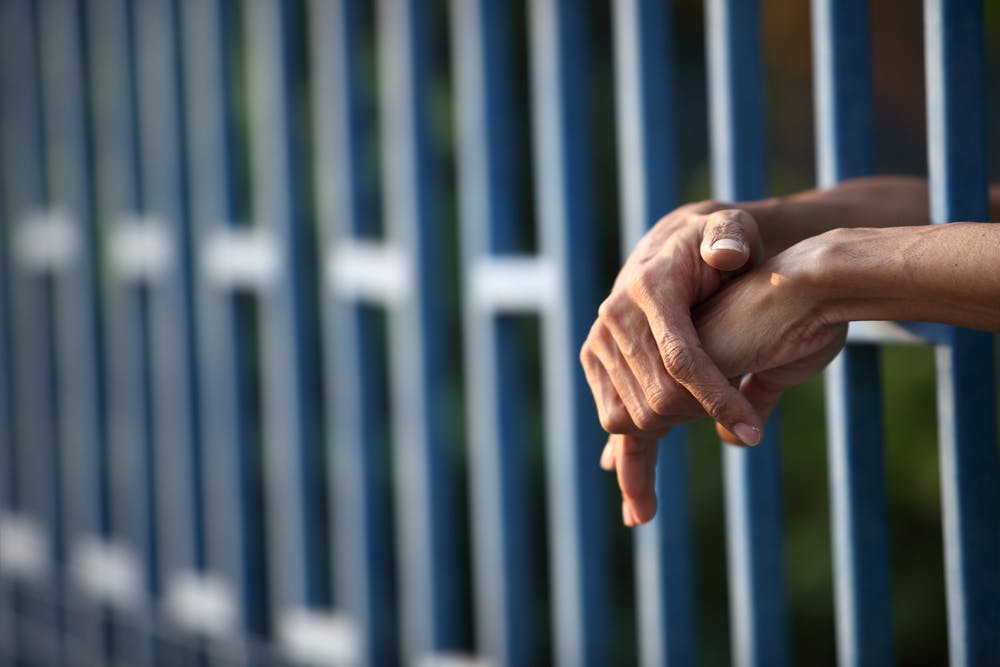
We found experiences within the first day or two of release can dramatically shape a person’s post-release pathway.
For example, when Jidah got out of prison, he needed crucial medication for his opioid dependence. Unfortunately, his prescription was not transferred to his community pharmacy:
When I got released, I was on the Suboxone and I thought everything was going to be fine in regards to me going straight to my chemist and picking up my dose. And I’ve gone there and nothing was sent through. And I was that frustrated that it caused me to relapse and get back on the heroin.
I felt like I was just left to fend for myself and to be in a vulnerable place, especially when you get out of jail, ‘cause you are relying on these organisations. […] I done what was asked of me, but they weren’t there when I needed it, so it caused me to be in a bad position, in a bad place.
Khish told us he was given some support in getting set up for post-prison life but the help was limited.
Well, they [prison-based staff] made sure that I would be getting Centrelink payments, so they organised for that, for me to talk to people from Centrelink, so that the day of release I would have some money to get a place to stay and stuff like that. That was the only thing that they actually did, yeah.
Trust is key
Being able to trust a service provider is crucial and can enable a smoother transition to community.
However, being honest with a service provider could be a lucky dip for many of our interviewees; in some cases it could lead to necessary support, while others felt it risked reincarceration.
Parole officers can play a crucial role but people’s experiences varied. Dan had a positive experience, saying:
they just try to coach you through it and try to keep you out of jail, which is good, because that’s not helping anyone anyway.
Ben, however, didn’t find his parole officer “useful”, saying:
They’re not really there to help you. They’re just there to discipline you and make sure you do it properly, I suppose. They’re there to watch over you, but they say they can help.
Getting the right support can be ‘life-changing’
We did hear some success stories. Anthony told us:
I’ve always re-offended, relapsed quite hard and everything, but the difference this time was […] even the staff, the corrections staff, down to the magistrate, I can’t explain the level of empathy and effort they put into me is just huge. Yeah, it has been life-changing.
Overseas examples also show what’s possible. A recently adopted philosophy in the US state of Maine (referred to as Maine Model of Corrections[6]) has involved overhauling the way the system supports people during incarceration and preparing for release. The primary goal of the new philosophy is to “rebuild and transform lives”.
Under this new philosophy, Maine’s prisons focus on rehabilitation and growing respect between correctional officers and people who are incarcerated. In these prisons, the words “prisoners” and “inmates” are replaced with “residents[7]”. Drug dependence is treated as a matter of health priority[8], with all clinically eligible residents given access to medicines for substance use disorder, regardless of their release date.
In contrast to Jidah’s experiences above, the Department of Corrections in Maine has a multi-disciplinary team[9] to ensure continuity of care for residents receiving medicines for substance use disorder prior to release.
Most people leaving prison face an uphill battle of service navigation that is too often deficit-focused, intentionally seeking out the failures of the individual and centred on punitive responses.
Communities of justice-involved people and people who use drugs have been clear about what they need when exiting prison: help with the exhaustion[10] associated with re-entering the community, help to build and retain trust[11], and help from a competent workforce[12] that can improve people’s post-release chances.
Identifying factors that improve the health of prisoners who inject drugs – Exhaustion. UNSW Community.A culture of respect and prioritising health needs associated with opioid dependence will help many ex-prisoners transition back into community and break the “incarceration treadmill”.
It can help reduce the chances the prison system is simply reproducing disadvantage and replicating the problems it is ostensibly supposed to solve.
Names have been changed to protect identities. If you or someone you know needs help with exiting prison, you can find a list of resources here[13]. The NSW Users and AIDS Association (NUAA) PeerLine on 1800 644 413 may also be helpful.
References
- ^ interviewed (www.sciencedirect.com)
- ^ study (www.unsw.edu.au)
- ^ analysis (www.sciencedirect.com)
- ^ revolving door (theconversation.com)
- ^ 46% (www.pc.gov.au)
- ^ Maine Model of Corrections (www.maine.gov)
- ^ residents (www.maine.gov)
- ^ health priority (www.maine.gov)
- ^ multi-disciplinary team (www.maine.gov)
- ^ exhaustion (www.youtube.com)
- ^ build and retain trust (www.youtube.com)
- ^ competent workforce (www.youtube.com)
- ^ here (www.crcnsw.org.au)