Ken’s rights? Our research shows Barbie is surprisingly accurate on how ‘men’s rights activists’ are radicalised
- Written by: Lucy Nicholas, Associate professor Sexualities and Genders / Sociology, Western Sydney University
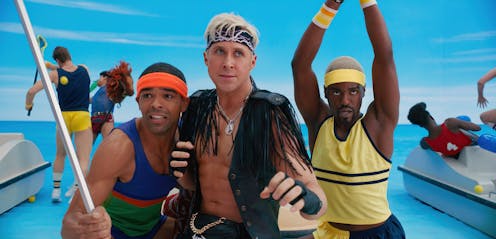
In the Barbie movie, we open with a picture of a perfect Barbieland where (almost) everyone is happy, diversity and sisterhood are embraced, and Barbies hold all positions of power.
The Kens however, reflecting the popularity of the dolls in the real world, play a mainly decorative role.
Spoilers for Barbie follow.
In the film, we see a disgruntled Ken (played hilariously by Ryan Gosling) follow “Stereotypical” Barbie (Margot Robbie) to the real world where she has to find her human owner. This is all to fix an error that is allowing the real world to seep into Barbie land, with symptoms such as Barbie having an existential crisis.
In the real world, Ken discovers the concept of the patriarchy. This sees him take a journey that is clearly influenced by, and pokes fun at, many aspects of contemporary anti-feminist men’s rights culture.
Barbieland and the matriarchy
It has been proposed that Barbieland is a matriarchy[1], but I would argue that their attitude to Kens is instead indifference.
Ken was aggrieved that Barbie didn’t notice him and reciprocate his affections. This is not dissimilar to the grievances of some real-life men under contemporary feminism. Why don’t women’s lives revolve around them? And what can they do to address this perceived injustice?
The movie cleverly parallels the emotions, narratives and logics that lead men to extreme antifeminist and misogynistic thinking, and in doing so exposes the flimsiness of their foundations.
Having undertaken research[2] on online antifeminist discourses, Ken’s journey from aggrievement to masculine “enlightenment” parallels themes we found in Men’s Rights Activist spaces.
Radicalisation into this world is often motivated by a feeling among boys and men of being left behind by a feminist world or system that doesn’t value them. This then leads them to long for an imagined natural order of patriarchy where women are back in their place and men regain their entitlements.
These logics underpin incel[3] culture, a movement that is increasingly understood as a terror threat, and has been associated with various acts of terror, such as the 2022 Aotearoa New Zealand Epsom crash case[4].
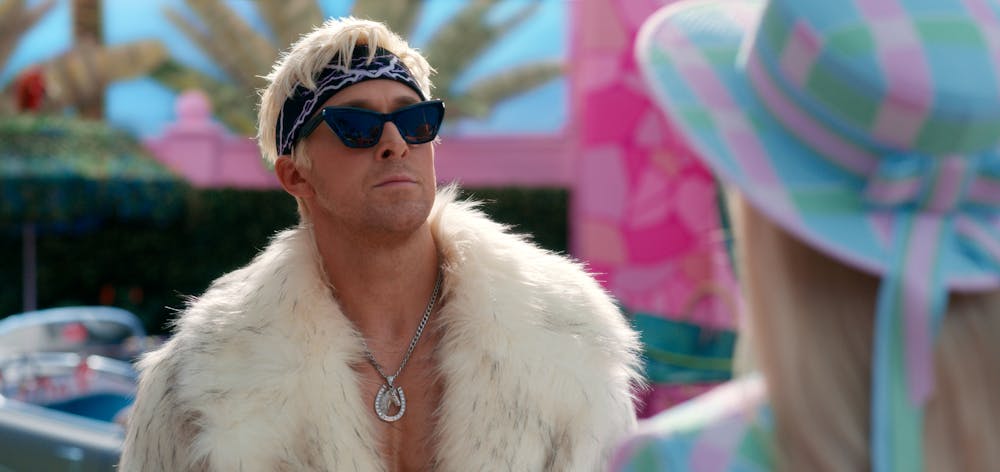
The manosphere and MRAS
The “manosphere[5]” can be understood as a loose coalition of antifeminist online subcultures.
This includes MRAs (Men’s Rights Activists[6]) who claim reverse discrimination and that feminism has gone too far, and Redpillers[7] who claim to have swallowed the “red pill” to see the truth about feminism’s dominance. PUAs (Pick up Artists[8]) teach men how to manipulate the women they feel they are entitled to, to give them sex; and MGTOWs (Men Going Their Own Way[9]), who are antifeminist separatists (from women).
Some of the most well known members of the manosphere are incels (involuntary celibates) a misogynistic community of self identified “beta-males” who want an end to women’s rights which prevent them from getting sex.
Read more: Life in plastic, it's fantastic? How Barbie reimagines a childhood icon through a feminist lens[10]
Ken’s grievances
Like many MRAs, Ken struggles with a sense of entitlement romantically (rather than sexually in genital-free Barbieland), and in attitudes to power and respect.
Ken was being “friend-zoned[11]” by Barbie, who despite being “boyfriend and girlfriend” wouldn’t let him stay over at the Dream House, because “every night is girl’s night”.
This is coupled with a feeling of not being special, as Ken is essentially interchangeable with any other Ken. He is also “alpha’d” by other Kens: in the language of the manosphere, Barbie is a “Stacy” and the other Ken is an alpha “Chad”[12] preventing him from getting what he wants.
In our data[13] we found women are often described as “overlords”, man-haters, misandrists and “feminazis”. Among other concerns, men perceive economic loss due to women’s participation in the workplace, and crucially a lack of men’s sexual access to women brought about by the gains of feminism such as the awareness raised around consent by the #metoo movement.
These men all share a starting point of grievance at women and their perceived indifference towards them.
When Ken goes to the real world, he discovers patriarchy and he LOVES it. He has been “redpilled”. Patriarchy explains his aggrievement, and affirms his feelings. He takes patriarchy back to Barbieland and transforms it to Kendom, where the men change it to a society oriented around men and their power (and horses…).
Redpilled ken
This redpilled Ken is a hilarious parody of the “neomasculinity” of the pick up artist (PUA) movement, that seeks to restore a masculine-centred world.
Neomasculinity is about a belief in biological difference, traditional masculinity and heteronormative gender roles.
The amusing depiction of the Kens trying to perform traditional hypermasculinity[14] and needing their egos stroked – such as in a hilarious scene where the Kens are serenading the Barbies on the beach with an acoustic rendition of Matchbox Twenty’s Push[15] (“I wanna push you around … I wanna take you for granted”) – brilliantly shows the extent to which toxic masculinity is learned.
Additionally, the competition among the Kens (that the Barbies ultimately stoke to overturn the Kentriarchy) is the perfect illustration of the damage toxic models of masculinity does to men. As Australian sociologist Raewyn Connell has long argued, almost no men can live up to masculine ideals[16], resulting in negative outcomes not just for women but also for men themselves.
Finding the real Ken
The movie ends with Barbie, her human (America Ferrera), “Weird Barbie” (Kate McKinnon) and Allan (Michael Cera) deprogramming the brainwashed Barbies and turning the Kens against each other.
But what of Just Beach Ken? And what can we learn from this for preventing or managing radicalisation of this feeling of aggrievement in real men or boys?
Well, Barbie and Ken reach a middle ground. Barbie encourages Ken to work out who he is outside of his relation to Barbie, and to learn being Just Ken is enough.
This isn’t dissimilar to the methods of men’s behaviour change programs and counselling for men who use violence, which use trauma-informed motivational interviewing[17], reflect on challenging gender norms and breaking down rigid thought processes, and developing emotional literacy and communication strategies.
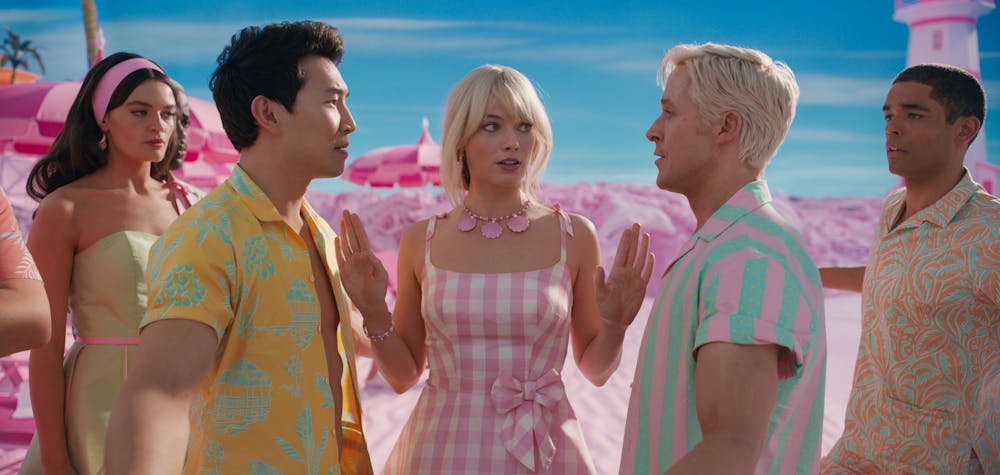 In the Barbie film, patriarchy has a negative effect on the Kens, as well as the Barbies.
Warner Bros.
In the Barbie film, patriarchy has a negative effect on the Kens, as well as the Barbies.
Warner Bros.
But it also illustrates that men and boys need alternative narratives to make sense of themselves in the world, and alternative communities for affirmation, before it gets to this stage.
In our report[18], we recommended:
Providing alternative narratives and considering how far-right [or MRA] groups provide men with emotional support networks, with a view to providing better alternatives.
Feminism has consistently been about separating attributes from their gendered associations, breaking down the Barbie/Ken binary. So if there is one thing we can take away from the Barbie movie, it is that hierarchy and rigid gender benefits nobody, and power and social roles have nothing to do with the genitals you are born with.
References
- ^ Barbieland is a matriarchy (theconversation.com)
- ^ research (apo.org.au)
- ^ incel (theconversation.com)
- ^ Epsom crash case (www.nzherald.co.nz)
- ^ manosphere (link.springer.com)
- ^ Men’s Rights Activists (journals.sagepub.com)
- ^ Redpillers (journals.sagepub.com)
- ^ Pick up Artists (repository.upenn.edu)
- ^ Men Going Their Own Way (www.tandfonline.com)
- ^ Life in plastic, it's fantastic? How Barbie reimagines a childhood icon through a feminist lens (theconversation.com)
- ^ friend-zoned (www.merriam-webster.com)
- ^ “Stacy” and the other Ken is an alpha “Chad” (www.abc.net.au)
- ^ our data (apo.org.au)
- ^ hypermasculinity (www.britannica.com)
- ^ Push (youtu.be)
- ^ masculine ideals (www.jstor.org)
- ^ trauma-informed motivational interviewing (www.tandfonline.com)
- ^ our report (apo.org.au)