

Disability royal commissioners disagreed over phasing out 'special schools' – that leaves segregation on the table
- Written by Catherine Smith, Senior lecturer, The University of Melbourne
The Royal Commission into Violence, Abuse, Neglect and Exploitation of People with Disability[1] delivered 222 recommendations on Friday after four and a half years of investigation and deliberation. In its 32 hearings and nearly 8,000 submissions, people with disability shared difficult stories of personal and systemic violence. The commission’s final report[2] showed Australians of all ages with disability continue to experience injustice that must be addressed.
As signatories to the Convention for the Rights of People with Disability[3] and the Convention of the Rights of the Child[4], the commission concluded children and young people have a right to inclusive education.
But the commissioners passed down divided recommendations that will continue education segregation for Australia’s young people for at least a generation and possibly longer.
Read more: The disability royal commission recommendations could fix some of the worst living conditions – but that's just the start[5]
Split on segregation
Many disability advocacy organisations hoped[6] the commission report would call for an end to segregation of people with disability across education, housing and employment. Yet the final report found the commissioners split on this issue.
Commissioners Barbara Bennett, Rhonda Galbally and Alastair McEwin believe[7] “the deliberate and systematic separation of people based on disability constitutes segregation”. The remaining commissioners disagreed.
Two contrasting sets of education recommendations emerged from this split.
One seeks to phase out “special” or segregated education by 2051. Commissioners Galbally and McEwin[8] – who are the only disabled commissioners and have close relationships with the disability community – support this approach, along with Bennett.
This proposal has still come under fire. West Australian senator Jordon Steele-John argues a 30-year phase out process is too long[9]. He says it would mean disabled children entering school today would likely be separated from their age peers for the duration of their school life.
Organisations such as the Australian Coalition for Inclusive Education have previously set out roadmaps[10] to end segregated education within a decade.
The alternative recommendation proposed by commissioners Andrea Mason and John Ryan seeks to maintain special schools but, where practicable, locate these close to mainstream schools. This could create partnerships so students can participate in activities together. Critics of this approach say[11] it does not suggest a time when segregated schooling might cease.
And bringing mainstream and special schools together would not necessarily achieve inclusion. The suggestion of scheduling in partial participation could send a message to students and teachers that not everyone belongs in all learning spaces.
The recommendations did not mention the private education sector, referring only to a future possibility of inclusion within state schooling.
Why inclusive education is important
Education is not just about academic outcomes and future employment. It is about creating tomorrow’s Australian communities, society and citizens.
The disability royal commission’s recommendations represent progress in terms of understanding diversity, listening to the voices of young people, capacity building, leadership and governance, and employment opportunities. But they lack insight into the importance of inclusive education[12] in achieving all of these goals.
The very establishment of the commission was a commitment to addressing the violence and discrimination people with disability experience. But the lack of a firm commitment to a fully inclusive education system denies the opportunity for all young people to grow and understand their diversity of experiences.
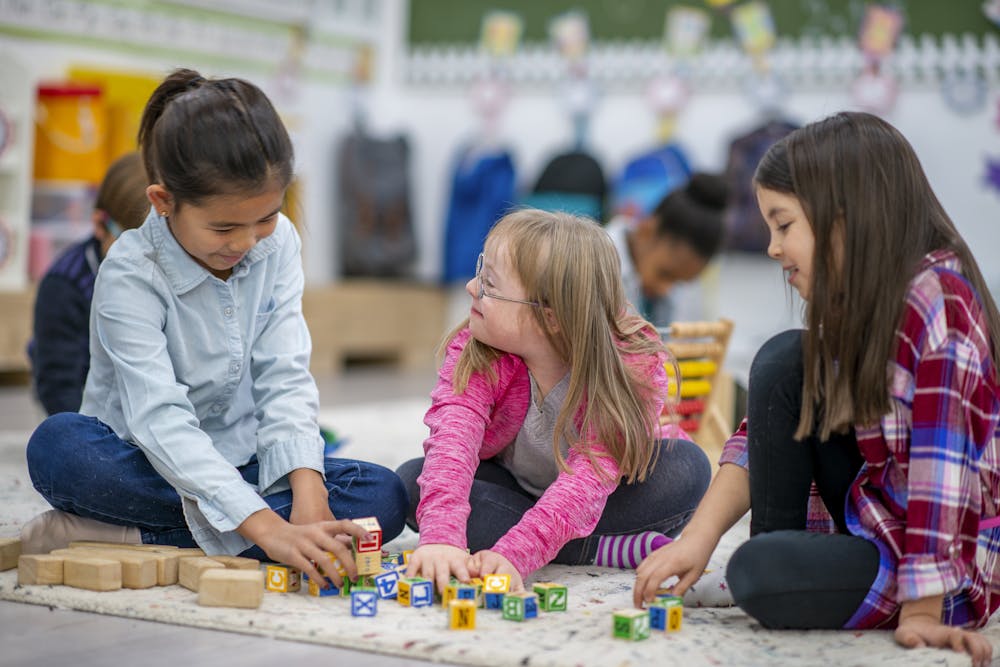
All children[13] and young people in a community need to play, grow and develop together. This means they can learn how to develop social-emotional skills and empathy for each other’s strengths and differences.
Why some see segregated education as necessary
Not everyone within the disability community sees segregated education as problematic. There are a number of reasons why special settings for students with disability have been established and chosen by families and students.
Schools are under-resourced and teachers in mainstream settings are often under-trained[15] for working with students with disability in inclusive ways.
Many schools lack the facilities and adjustments required to keep some students with disability safe and included alongside their peers. There are concerns about bullying and meeting personal needs in some cases. Staff in specialist education settings may be more experienced with these needs.
Read more: The disability royal commission delivers its findings today. We must all listen to end violence, abuse and neglect[16]
The royal commission recommendation that teaching standards should include inclusive education training across the careers of teachers is important. But teachers cannot achieve this without the time or resources to develop the meaningful meetings and planning of Individual Education Plans (IEP) with students, carers and other professionals, including classroom assistants.
Much of the expertise in meeting the needs of students with disability are located in specialist schools, with little opportunity for skill and strategy sharing with mainstream teachers. Continuing to segregate these skills will make inclusive education unachievable.
Where to next?
The commission’s final report identifies the need for better data collection and analysis to make decisions. Existing mechanisms including the Disability Standards for Education, the Australian Curriculum, the Nationally Consistent Collection of Data on School Students with Disability, and an additional monitoring of progress through IEP reporting will be an important step in identifying where additional supports may be required at the school and student level.
Many within the disability community will not be heartened by the disability royal commission’s recommendations because they leave an option for segregation on the table. And this may set up the next generation of disabled children and young people for a life of being excluded from mainstream society.
Read more: Why do students with disability go to 'special schools' when research tells us they do better in the mainstream system?[17]
References
- ^ Royal Commission into Violence, Abuse, Neglect and Exploitation of People with Disability (disability.royalcommission.gov.au)
- ^ final report (disability.royalcommission.gov.au)
- ^ Convention for the Rights of People with Disability (humanrights.gov.au)
- ^ Convention of the Rights of the Child (www.unicef.org.au)
- ^ The disability royal commission recommendations could fix some of the worst living conditions – but that's just the start (theconversation.com)
- ^ hoped (www.dana.org.au)
- ^ believe (disability.royalcommission.gov.au)
- ^ McEwin (www.abc.net.au)
- ^ too long (www.sbs.com.au)
- ^ roadmaps (acie105204494.files.wordpress.com)
- ^ say (www.abc.net.au)
- ^ inclusive education (www.mdpi.com)
- ^ All children (doi.org)
- ^ Getty (media.gettyimages.com)
- ^ under-trained (theconversation.com)
- ^ The disability royal commission delivers its findings today. We must all listen to end violence, abuse and neglect (theconversation.com)
- ^ Why do students with disability go to 'special schools' when research tells us they do better in the mainstream system? (theconversation.com)