a Voice that was 169 years in the making
- Written by: Clare Wright, Professor of History and Professor of Public Engagement, La Trobe University
“The envy of the world.”
That’s how one American journalist described Australia at the turn of the 20th century.
What was the object of global desire, the precious jewel that this very new nation at the bottom of the planet possessed and that the rest of the international community coveted?
Was it sporting prowess? Military valour? Sparkling beaches or a bounty of mineral resources?
It was democracy. In 1902, Australia had become the first country where (white) women were entitled to the same franchise as men: the right to vote and the right to stand for parliament. (Although women in New Zealand were granted the right to vote in 1893, they were not able to stand for parliament until 1919.)
There was a sting in the tail of Australia’s global democratic distinction: the same act of parliament that made Australian women the world’s most enfranchised also deliberately divested all Indigenous Australians, male and female, of their federal franchise rights. It would be another 60 years before First Nations’ people could vote in our national elections.
But it was its leading role in the women’s rights movement that made Australia the world’s “social laboratory”.
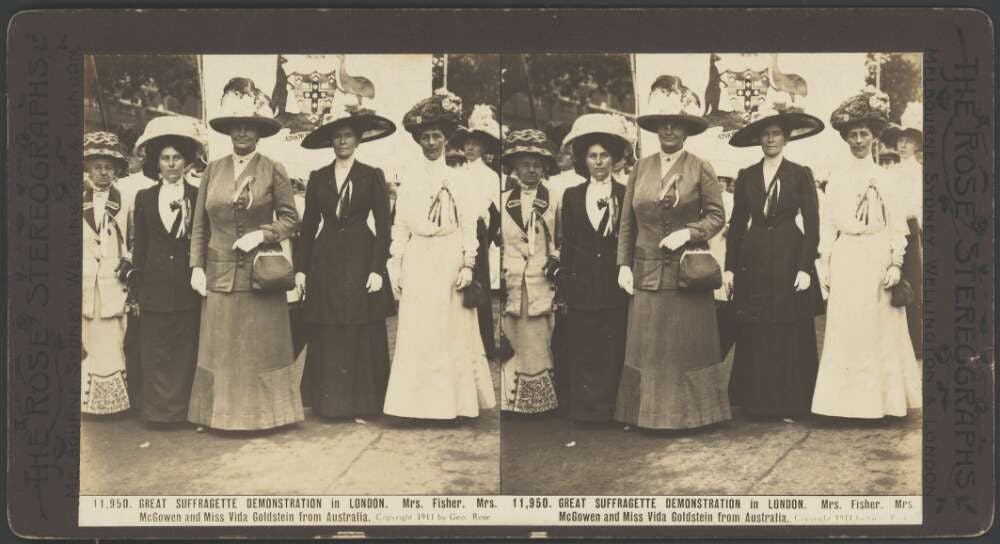
Read more: Birth of a nation: how Australia empowering women taught the world a lesson[2]
Australia led the way
For decades, women from Munich to Melbourne, from Westminster to Washington, had been campaigning for the same thing: a voice. The right to have a say in making the laws and policies that affected their daily lives.
What did the opponents of the idea that half the population might be consulted before legislation was drafted have to say about this wild idea?
It will be divisive.
It will be unfair, effectively giving men two votes.
Most women don’t actually want the vote. All this fuss, the nay-sayers proclaimed, was just the product of a few educated, elite women (“the shrieking sisterhood” they were branded by a febrile anti-suffrage press).
But Australia led the way in the global push for these human rights and the world watched on with curiosity, hope and admiration.
“A splendid object lesson”, President Theodore Roosevelt pronounced Australia’s achievement. (It would take America until 1920 to catch up.)
It wasn’t the first time Australia heeded the call for a voice
Remember the Eureka Stockade? “The birthplace of Australian democracy”, as we learned in school about the Ballarat gold miners of 1854.
The brief battle that came at the grisly end of a lawful community push for direct consultation with the people feeling the pinch of the Victorian colonial government’s tax and land policies.
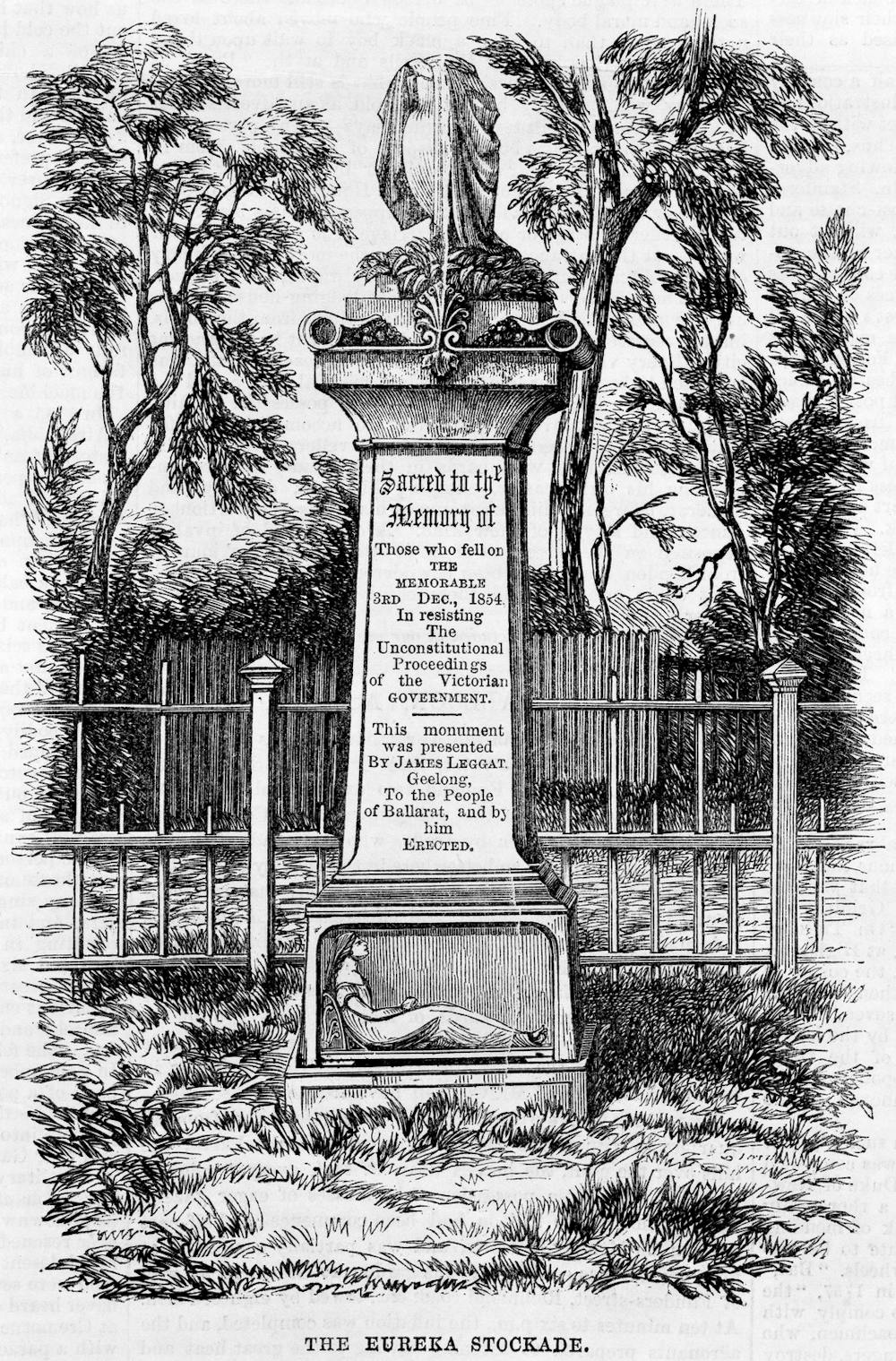 The inscription on this monument reads: Sacred to the Memory of Those who fell on the memorable 3rd Dec, 1854, In resisting The Unconstitutional Proceedings of the Victorian government.
State Library Victoria, Author provided (no reuse)[3]
The inscription on this monument reads: Sacred to the Memory of Those who fell on the memorable 3rd Dec, 1854, In resisting The Unconstitutional Proceedings of the Victorian government.
State Library Victoria, Author provided (no reuse)[3]
These gold rush communities were structurally disadvantaged and discriminated against.
They decried the lack of health and other services on the goldfields, as well as the over-policing and incarceration rates of miners.
Some miners, shopkeepers and their families were looking to a “constitutional” solution: legal recognition of their existence and contribution.
The mining community was united in one thing: they wanted to be consulted in the laws that governed them.
After Eureka, Victoria became the first jurisdiction in the British empire to extend the vote to unpropertied men, rights the mother country would not fully implement until after the first world war. (Up until 1918, only two in four British men had the vote; all women would not get the vote in Britain until 1928.)
1962 and 1967
It would not be until 1962, 60 years after Australia’s white women won the vote, that First Nations people in Australia got the vote federally. (It would take a few more years for Western Australia and Queensland to award state voting rights to its Indigenous population.)
Then, in 1967, a referendum was held to change the Australian Constitution so First Nations’ people could be counted in the census.
It was this act that structurally and symbolically recognised the original occupiers and traditional owners of the land on which the Australian nation was founded, without treaty.
Over 90% of Australians voted to change the Constitution to make this happen. Bipartisan political support ensured this watershed moment in Australia’s democratic history. The Liberal Party’s How to Vote Card imparts a clear direction: “yes”.
Like the paradigm-shifting women’s suffrage era, the global community watched with interest and alarm.
“The eyes of the world are on Australia and her handling of black Australians,” yes activist Faith Bandler noted[4].
Unlike the campaign for women’s right to vote, there were few cynics and trolls in 1967, spreading fear and spinning prophesies of doom.
Australians overwhelming understood – and their party-political leaders accepted, indeed instructed – that recognising the human rights of Australia’s Indigenous people was a positive, forward-looking move for the nation.
Australia did not want to be cast in the same light as apartheid South Africa and deep south America, embroiled in its own civil rights messes.
Today, over 80%[5] of First Nations people still endorse the voice as the first step towards the measure of recognition and respect that will truly take Aboriginal and Torres Strait Islander Australians into account.
Australia’s Brexit moment?
National living treasure, Barry Jones, has argued[6] the 2023 referendum to enshrine an Indigenous Voice to parliament in the Constitution will be Australia’s Brexit moment.
That, should the majority of voters (in the majority of states) return a regressive “no” vote, not only will Australians wake up on the morning after they go to the polls with “buyers’ remorse”, but the global community will also shake its head in disbelief.
How could a country that once promised so much deliver so little? A non-binding advisory body. It’s all they were asking for.
The world is still watching.
Read more: Friday essay: 60 years old, the Yirrkala Bark Petitions are one of our founding documents – so why don't we know more about them?[7]
Correction: An earlier version of this article said New Zealand women would get the right to stand for parliament in 1920. It should have said 1919.
References
- ^ George Rose, The Rose Stereograph Company (1861–1942). Image courtesy National Library of Australia PIC6941 (nla.gov.au)
- ^ Birth of a nation: how Australia empowering women taught the world a lesson (theconversation.com)
- ^ State Library Victoria (viewer.slv.vic.gov.au)
- ^ noted (trove.nla.gov.au)
- ^ 80% (www.unsw.edu.au)
- ^ argued (www.thesaturdaypaper.com.au)
- ^ Friday essay: 60 years old, the Yirrkala Bark Petitions are one of our founding documents – so why don't we know more about them? (theconversation.com)