For generations, killer whales and First Nations hunted whales together. Now we suspect the orca group has gone extinct
- Written by: Isabella Reeves, PhD Candidate, Flinders University
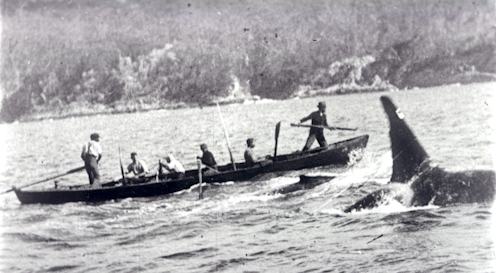
For generations, the Thaua people worked with killer whales to hunt large whales in the water of Twofold Bay, on the southern coast of New South Wales. Killer whales – commonly known as orcas – would herd their giant prey into shallower waters where hunters could spear them. Humans would get the meat, but the killer whales wanted a delicacy – the tongue.
After colonists dispossessed the Thaua, Europeans began capitalising on this longstanding partnership. From around 1844, commercial whalers worked with employed Thaua and killer whales to hunt these giants. The pods of killer whales would find a prized baleen whale[1], herd it closer to shore and signal the whalers, who lived in the town of Eden.
The partnership has no parallel anywhere in the world: the top predator of the oceans working with the top predator on land.
One killer whale, Old Tom, became legendary[2] due to his active role in the hunts for at least three decades. He was seven metres long and weighed six tonnes.
In 1930, he was found dead at a local beach – the last of his group in Eden. You can see his body preserved in Eden’s Killer Whale Museum[3]. But questions have lingered. Do Old Tom’s descendants still roam the oceans, or did they die out?
Our new research[4] suggests these famous killer whales are likely to be extinct.
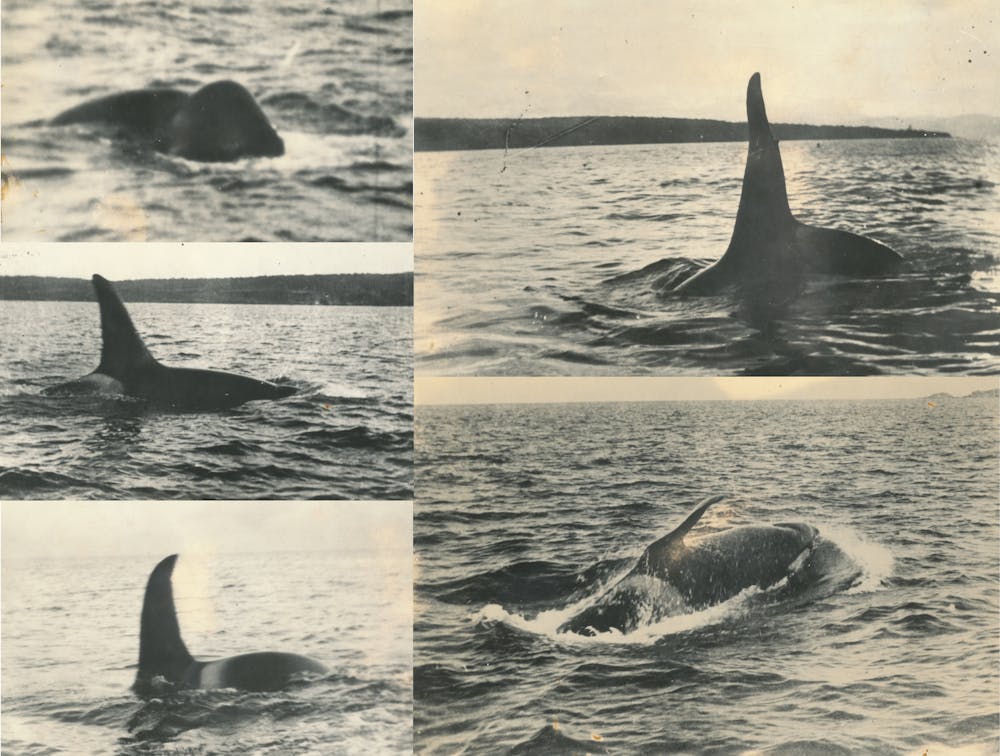
Old Tom’s origins
Adaptability, cultural traditions and female-led societies have made killer whales the ultimate ocean predator. These intelligent marine mammals are the world’s largest dolphin, and the only species known to successfully hunt adult great white sharks[6] and the world’s largest living animal – blue whales[7].
But different groups can live very different lives[8]. Some are constantly on the move, while others stay living in a particular region. Some feed exclusively on one type of prey, while others feed on many. Across the globe, killer whale vocalisations differ greatly, with different dialects and languages unique to families and regions.
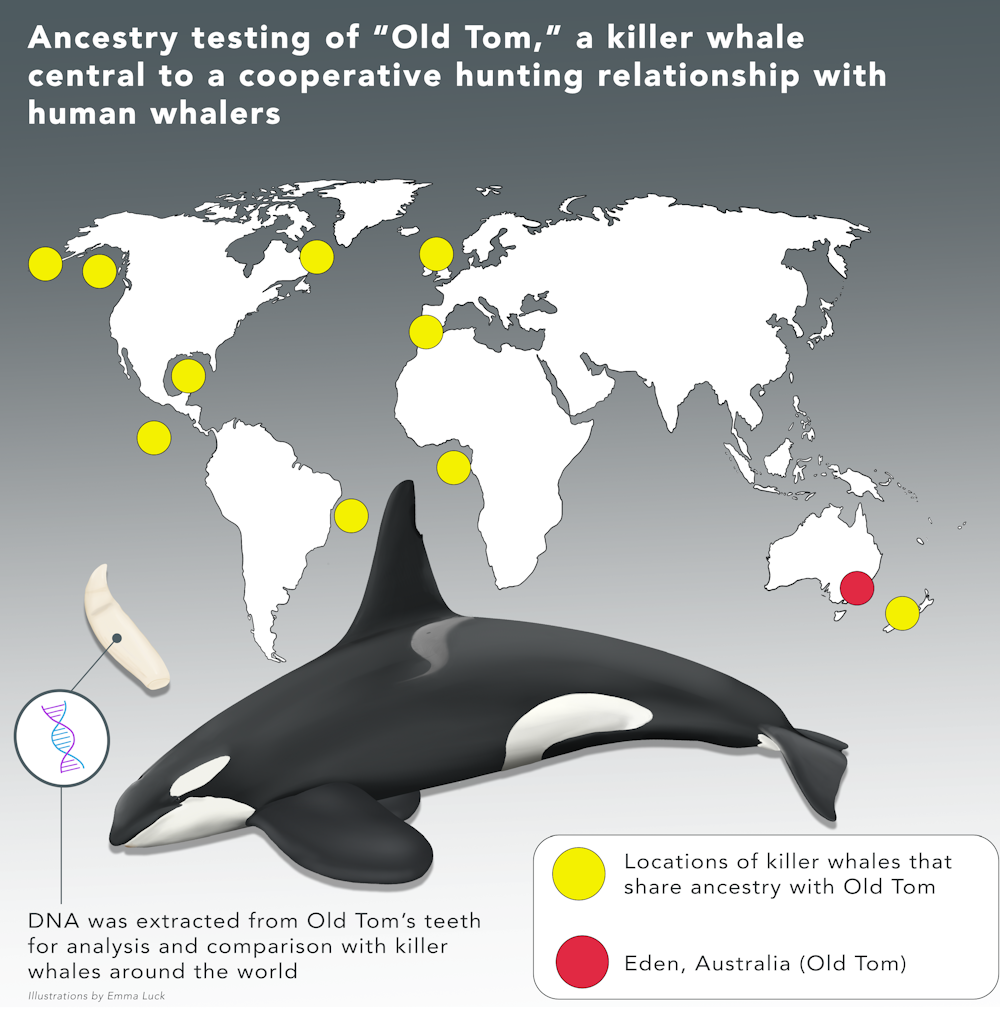
To find out where these killer whales of Eden came from, we drilled into one of Old Tom’s teeth and analysed the resulting powder to sequence his DNA. We used the same methods used to extract DNA from Neanderthal remains and million-year-old mammoths.
When we compared Old Tom’s DNA to a global data set of killer whales, his genome was most similar to those of modern New Zealand killer whales. He shared a most recent common ancestor with killer whales from the northern Pacific, northern Atlantic, and Australasia.
But there was no sign of any recent descendants in our modern killer whales data set. Old Tom’s DNA is mostly distinct from modern populations. That suggests the famous killers of Eden[9] may have died out.
 Emma Luck
Whale brothers
The ancestors of Steven Holmes, a Thaua Traditional Owner, had close ties to both the killer whales and to the colonist whalers. Steven has worked with us to give the Thaua perspective. His advocacy helped change the name[10] of Eden’s Ben Boyd National Park to Beowa, which is Thaua for killer whale. Ben Boyd was a whaler as well as a notorious slaver, forcing Pacific people onto boats and into indentured labour.
Steven told us:
In Twofold Bay, the coastal Thaua people, part of the Yuin nation, had a connection with the killer whales through the Dreaming. Their long relationship was highly valued by the Thaua, who depended on the ocean for food and other resources. They considered the killer whales their brothers. When a Thaua died, they were believed to be reincarnated as killer whales. That way, the Thaua always remained one mob – whether whale or man.
Thaua people used specialised hunting strategies that encouraged killer whales to herd baleen whales, such as humpbacks, closer to shore for them to kill. After a successful kill, the killer whales were rewarded with the tongue while the Thaua got the rest of the carcass. This became known as the “Law of the Tongue”.
After colonisation, white whalers capitalised on this relationship. They hired many skilled First Nations whalers.
When killer whales found a whale, some would slap their tails in front of the whaling station to alert the whalers. Some killer whales would herd the target into shallower water, while others would harry and tire it out. Eventually, the whalers would harpoon the exhausted whale, following it with the killing lance to pierce vital organs.
Old Tom was active in these hunts, reported to grab the lines of the boat to pull the whalers out faster, or tug on the line to drive the harpoon deeper and speed up the whale’s death.
The whalers left the carcass on a buoy for up to two days to allow the killer whales to eat the tongue and lips.
Emma Luck
Whale brothers
The ancestors of Steven Holmes, a Thaua Traditional Owner, had close ties to both the killer whales and to the colonist whalers. Steven has worked with us to give the Thaua perspective. His advocacy helped change the name[10] of Eden’s Ben Boyd National Park to Beowa, which is Thaua for killer whale. Ben Boyd was a whaler as well as a notorious slaver, forcing Pacific people onto boats and into indentured labour.
Steven told us:
In Twofold Bay, the coastal Thaua people, part of the Yuin nation, had a connection with the killer whales through the Dreaming. Their long relationship was highly valued by the Thaua, who depended on the ocean for food and other resources. They considered the killer whales their brothers. When a Thaua died, they were believed to be reincarnated as killer whales. That way, the Thaua always remained one mob – whether whale or man.
Thaua people used specialised hunting strategies that encouraged killer whales to herd baleen whales, such as humpbacks, closer to shore for them to kill. After a successful kill, the killer whales were rewarded with the tongue while the Thaua got the rest of the carcass. This became known as the “Law of the Tongue”.
After colonisation, white whalers capitalised on this relationship. They hired many skilled First Nations whalers.
When killer whales found a whale, some would slap their tails in front of the whaling station to alert the whalers. Some killer whales would herd the target into shallower water, while others would harry and tire it out. Eventually, the whalers would harpoon the exhausted whale, following it with the killing lance to pierce vital organs.
Old Tom was active in these hunts, reported to grab the lines of the boat to pull the whalers out faster, or tug on the line to drive the harpoon deeper and speed up the whale’s death.
The whalers left the carcass on a buoy for up to two days to allow the killer whales to eat the tongue and lips.
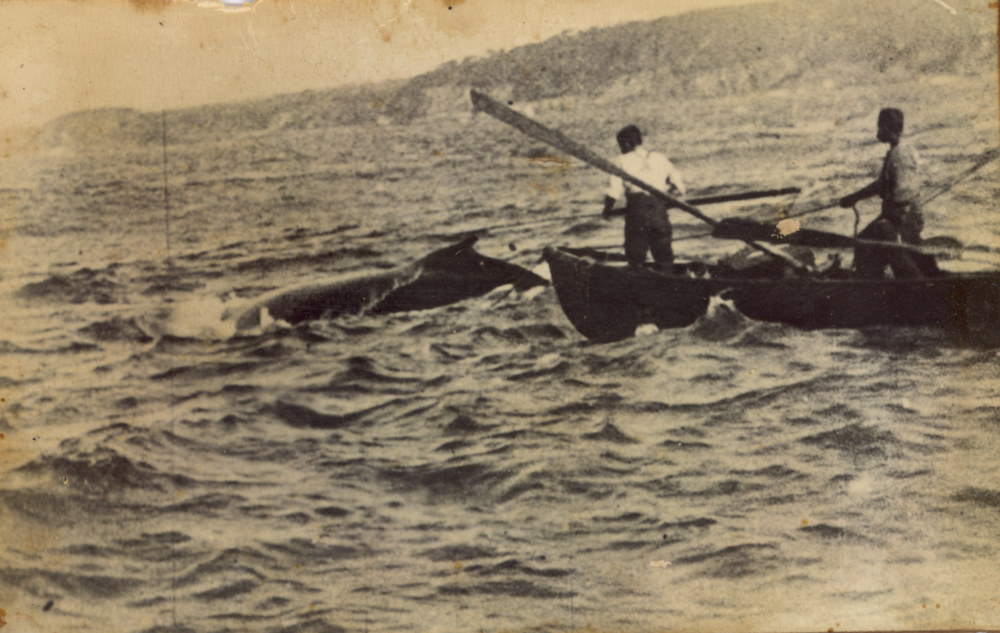 European whalers and killer whales on a hunt towards the end of whaling in Eden, some time between 1910 and 1920.
Eden Killer Whale Museum, CC BY-ND[11]
Where did they go?
Eden’s whaling station did not process any whales after 1928, as whale numbers had plummeted. The killer whales had already begun to vanish.
Why did they leave? We don’t know for sure, but hypotheses include a lack of other food or even a breach of the Law of the Tongue by whalers.
What we do know is the group has never returned, and our new DNA evidence suggests, that Old Tom’s group does not have any descendants in our oceans today.
Since they left, there have been only a handful[12] of killer whale sightings off Eden.
While they are gone, they are not forgotten. The legacy of the killer whales of Eden lives on among Thaua people and local communities.
References^ baleen whale (au.whales.org)^ became legendary (blogs.scientificamerican.com)^ Killer Whale Museum (killerwhalemuseum.com.au)^ new research (academic.oup.com)^ CC BY-ND (creativecommons.org)^ great white sharks (esajournals.onlinelibrary.wiley.com)^ blue whales (onlinelibrary.wiley.com)^ very different lives (www.norwegianorcasurvey.no)^ killers of Eden (danielleclode.com.au)^ change the name (www.theguardian.com)^ CC BY-ND (creativecommons.org)^ only a handful (www.abc.net.au)
European whalers and killer whales on a hunt towards the end of whaling in Eden, some time between 1910 and 1920.
Eden Killer Whale Museum, CC BY-ND[11]
Where did they go?
Eden’s whaling station did not process any whales after 1928, as whale numbers had plummeted. The killer whales had already begun to vanish.
Why did they leave? We don’t know for sure, but hypotheses include a lack of other food or even a breach of the Law of the Tongue by whalers.
What we do know is the group has never returned, and our new DNA evidence suggests, that Old Tom’s group does not have any descendants in our oceans today.
Since they left, there have been only a handful[12] of killer whale sightings off Eden.
While they are gone, they are not forgotten. The legacy of the killer whales of Eden lives on among Thaua people and local communities.
References^ baleen whale (au.whales.org)^ became legendary (blogs.scientificamerican.com)^ Killer Whale Museum (killerwhalemuseum.com.au)^ new research (academic.oup.com)^ CC BY-ND (creativecommons.org)^ great white sharks (esajournals.onlinelibrary.wiley.com)^ blue whales (onlinelibrary.wiley.com)^ very different lives (www.norwegianorcasurvey.no)^ killers of Eden (danielleclode.com.au)^ change the name (www.theguardian.com)^ CC BY-ND (creativecommons.org)^ only a handful (www.abc.net.au)