Worried economists call for a carbon price, a tax on coal exports, and 'green tariffs' to get Australia on the path to net zero
- Written by: Peter Martin, Visiting Fellow, Crawford School of Public Policy, Australian National University
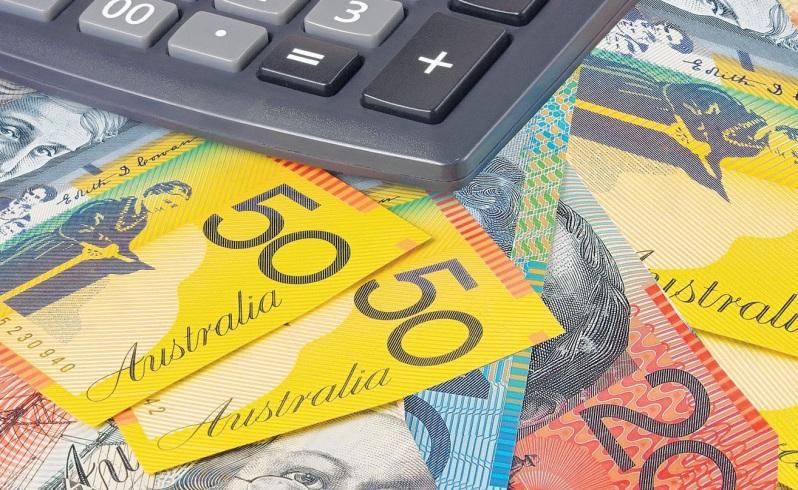
Australia’s top economists have overwhelmingly backed the reintroduction of the carbon price that helped cut Australia’s emissions between 2012 and 2014.
The government concedes that achieving its legislated emissions reduction target of 43% below 2005 levels[1] by 2030 and net zero by 2050 will be difficult[2]. With official forecasts showing Australia falling short[3], the Economic Society of Australia asked 50 leading Australian economists what should be done to speed things up.
Offered a choice that included nuclear energy, accelerated investment in large-scale batteries, and a rapid phase-out of traditionally fuelled vehicles, 30 of the 50 picked a carbon price[4] of the kind introduced by the Gillard Labor government in 2012 and abolished by the Abbott Coalition government in 2014.
Another five said they supported an economy-wide carbon price, but wouldn’t nominate it in the survey because it would face “significant political hurdles” and would not be “politically feasible”.
The Department of Climate Change told the government in December it was on track to fall short of its 2030 target of a 43% cut on 2005 levels, but that with “additional measures” it could get to 40%[5].
In October this year, Climate Change and Energy Minister Chris Bowen described the 43% target as “ambitious” and a “difficult task[6]”.
The scheme the economists were asked about was a “cap and trade[7]” scheme, of the type common in much of the world[8]. In these schemes, the government sets a cap on the total number of emission permits produced each year and allows users to trade them with one another to set a price.
A carbon price by another name
The Gillard government’s scheme was initially a fixed charge[9] per tonne of carbon emitted by big polluters. It was set to switch to a cap and trade scheme after three years, but ended up being abolished after two.
In its place, the Abbott government created a “safeguard mechanism[10]” that currently applies only to the 219 biggest polluting facilities in Australia. It requires each to keep emissions below a government-set baseline, and allows them to trade emissions reductions with one another.
The economists were asked about expanding the mechanism to make it mimic an economy-wide carbon price. In response, 42% said they wanted to boost the number of facilities it covered, and 26% wanted to tighten the baselines to push up the price.
All but seven of the 50 economists wanted either an economy-wide carbon price or an expanded safeguard mechanism that would act as one.
Independent economist Hugh Sibly said it might well be that nuclear, hydrogen or other sources of energy were the most efficient ways of decarbonising the economy, but it would be impossible to know until Australia started charging for emitting carbon and allowed the market to work out the cheapest way of coping.
Half of those surveyed wanted to expedite the building of new transmission lines to link places where electricity was being produced with places where it would be needed. One-third wanted expedited investment in large battery storage.
Economists including Macquarie University’s Lisa Magnani justified this by saying it was necessary for the government to move in ahead of the private sector to provide the infrastructure the private sector would need in order to decarbonise “within the time left to act seriously”.
No new mines, taxes on exports from existing mines
Many experts surveyed wanted bolder measures than those proposed by the Economic Society of Australia.
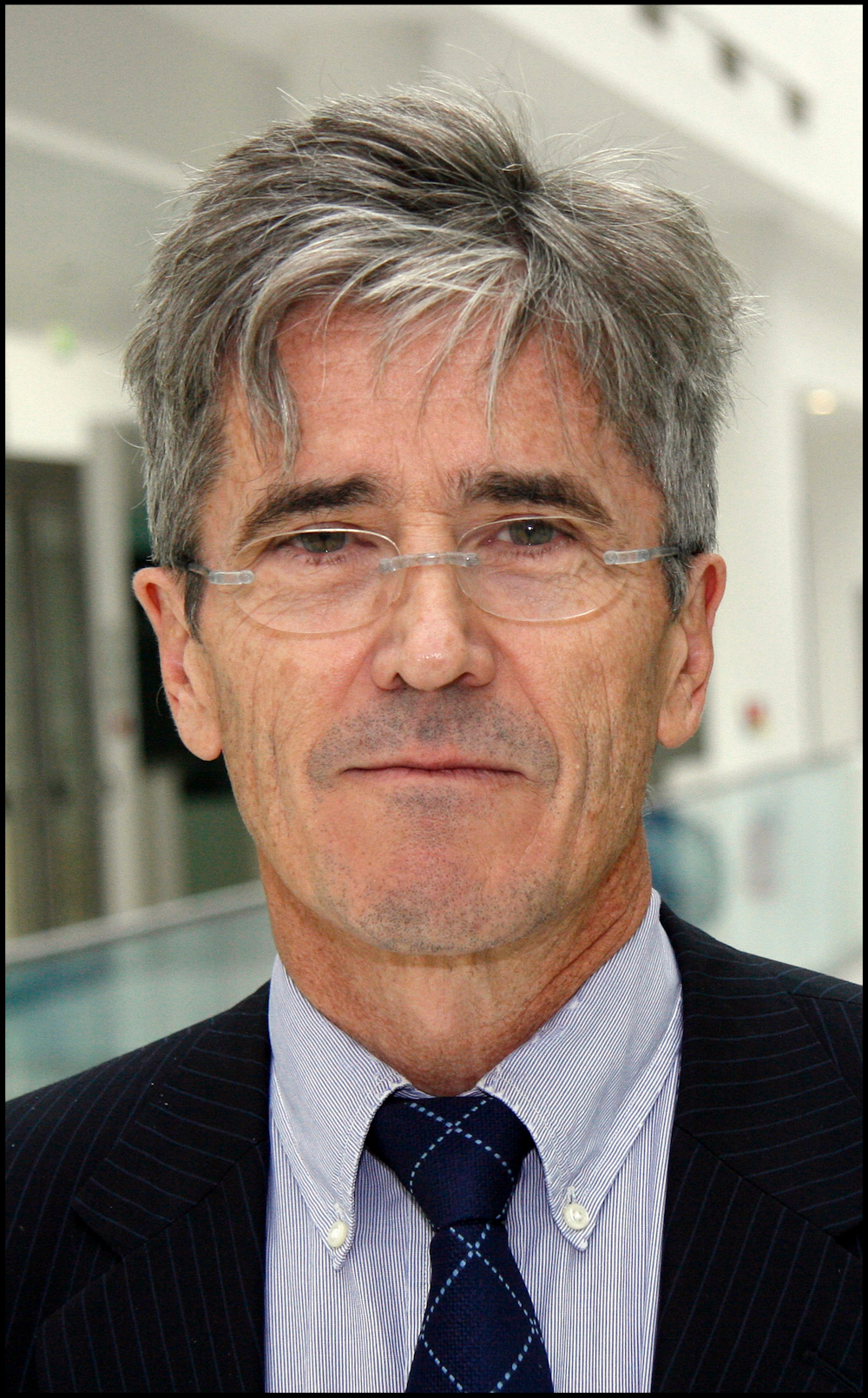
Former OECD official Adrian Blundell-Wignall said Australia’s coal exports create almost two and a half times the emissions Australians produce domestically.
“What is the point of moving to net zero on the latter while we do nothing on coal exports?” he asked.
His proposal, aired in the Australian Financial Review[13], is for Australia to tax exports of the metallurgical coal used to make steel, forcing up the price and reducing global demand. Australia has 55% of the market.
If higher prices brought in more tax and resulted in less burning of metallurgical coal, it would be a win-win for Australia and the world.
Mark Cully, a former chief economist at the Australian industry department, said Australia should follow the lead of France, Denmark and Sweden and ban new fossil fuel projects.
The supply restriction would push up the relative price of fossil fuels and encourage a faster global take-up of renewable energy.
Impose green tariffs on dirty imports
Australia should also join the European Union in implementing a green tariff, the so-called Carbon Border Adjustment Mechanism[14] that imposed an emissions tax on imported goods whose emissions were not taxed in the country in which they were produced.
Cully said too much of Australia’s concern was directed to energy, a sector where emissions are genuinely beginning to fall. In other sectors, emissions have plateaued or are even rising, making it “inconceivable that Australia can meet its 43% reduction target by 2030, let alone net zero by 2050, without other high-volume emissions sectors contributing”.
Frank Jotzo, director of the Centre for Climate Economics at the Australian National University, said carbon pricing has to be complemented by targeted measures aimed at industries such as transport, building, agriculture and reforestation.
He said Australia will soon need to back measures that suck carbon dioxide back out of the atmosphere, acknowledging that many emissions will continue and will therefore need to be offset in order to get to net zero.
Critical opportunity, but critical challenge
University of Tasmania economist Joaquin Vespignani said state and federal governments should “invest” in the production of the so-called critical minerals[15] that will be needed for decarbonisation via tax deductions.
Australia has more than 20% of the proven global reserves of minerals such as lithium[16] that are essential for clean energy production and storage.
Michael Knox of Morgans Financial noted the International Agency believed the world would need to ramp up its production of critical minerals to three times[17] its present level by 2030.
Energy investment would need to double[18], and electricity transmission grids would need to roll out an extra two million kilometres of wire per year.
The Agency described the task as Herculean[19]. Knox said it was far from certain to be achieved.
Individual responses. Click to open:
References
- ^ 43% below 2005 levels (www.legislation.gov.au)
- ^ difficult (minister.dcceew.gov.au)
- ^ falling short (www.dcceew.gov.au)
- ^ carbon price (www.cleanenergyregulator.gov.au)
- ^ get to 40% (www.dcceew.gov.au)
- ^ difficult task (minister.dcceew.gov.au)
- ^ cap and trade (www.investopedia.com)
- ^ much of the world (openknowledge.worldbank.org)
- ^ fixed charge (webarchive.nla.gov.au)
- ^ safeguard mechanism (www.cleanenergyregulator.gov.au)
- ^ OECD (www.oecd.org)
- ^ CC BY-NC-SA (creativecommons.org)
- ^ Australian Financial Review (www.afr.com)
- ^ Carbon Border Adjustment Mechanism (www.weforum.org)
- ^ critical minerals (www.industry.gov.au)
- ^ lithium (www.minister.industry.gov.au)
- ^ three times (www.iea.org)
- ^ double (www.iea.org)
- ^ Herculean (www.collinsdictionary.com)