When the heat hits, inland waters look inviting. Here's how we can help people swim safely at natural swimming spots
- Written by: Nicky Morrison, Professor of Planning and Director of Urban Transformations Research Centre, Western Sydney University
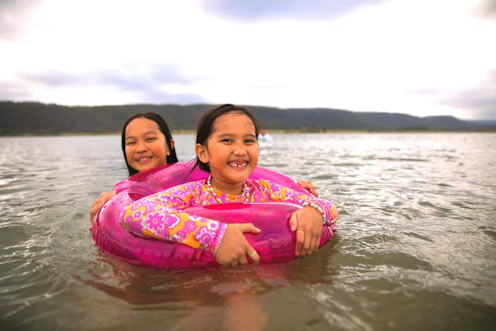
People love to hang out around water, especially on hot summer days. And, for those who aren’t near the ocean, Australia is blessed with beautiful inland waterways. In New South Wales, the government wants to increase access to these “blue” natural environments, especially for people living far from the coast.
One of these swimming sites is Penrith Beach[1], which has just opened to the public for the summer. This new site in the heart of Western Sydney is part of the state government’s Places to Swim[2] program. It’s likely to be an important refuge for locals to seek relief from intense summer heat[3].
Our recently published research[4] informed the government’s new Places to Swim guide[5]. Now out for public consultation, the draft guide aims to help anyone involved in establishing or managing a swim site.
A new public beach has been opened at Penrith in Western Sydney.Read more: Olympic swimming in the Seine highlights efforts to clean up city rivers worldwide[6]
People want natural swimming spots, but are they safe?
The Places to Swim[7] program responds to two government surveys, covering Greater Sydney[8] and regional NSW[9]. These showed:
people see access to water as very important – about half enjoy outdoor water recreation activities at least once a week
swimming in natural areas is growing in popularity
demand for access points and storage facilities for activities such as kayaking and paddle-boarding is increasing.
But are natural waterways safe to use? Recreation involving waterways inherently entails risks like exposure to waterborne contaminants[10] and potential for injury and drowning. As new swim sites are opened, the risks need to be identified, monitored and managed.
Read more: It’s hot, and your local river looks enticing. But is too germy for swimming?[11]
Time spent in ‘blue’ nature has many benefits
Our report, prepared by the Urban Transformations Research Centre[12], outlined the benefits of opening swim sites across the state.
Spending time in “blue” nature has many physical[13] and mental[14] benefits. Other social, cultural, economic and ecological spin-offs are equally valuable.
These natural sites are freely available to all (and pleasingly chemical-free). People come together at these places, which strengthens sense of community and belonging.
Economic multipliers arise from the increase in visitors to an area.
An increased public focus on ensuring the water is clean also benefits the wider ecosystems that depend on it.
We also provided a checklist of things to consider when setting up or managing a swim site. These include:
the need to assess upfront, and then continually monitor, water quality[15]
equitable physical access[16] and transport points
risks and hazards in what can be physically tricky sites
environmental considerations, including any critical habitats, in what might otherwise be an undisturbed natural environment
any required planning processes and formal approvals
ongoing governance arrangements, which might involve more than one body.
Read more: Why do we love the great outdoors? New research shows part of the answer is in our genes[17]
Learning from the best
Our report[18] also offered six case studies of projects in Australia and New Zealand, Canada and Europe. These provide good examples of how to proceed.
The case study from New Zealand’s Can I swim here?[19] program has an interactive map[20] to help people find the best places to swim across the country. This public advice, provided by the Land, Air, Water Aotearoa[21] partnership, includes weekly water quality test results.
In Canada, Toronto on Lake Ontario[22] showcases innovative water-quality monitoring that directly involves the community. It’s done by volunteer “citizen scientists” co-ordinated by a government-funded charity, Swim Drink Fish.
As confirmed by research on biophilia[23] – our innate affinity with nature – bringing people closer to nature is not just about direct benefits to individuals. It also encourages us to look after the natural ecosystems on which we ultimately depend.
Read more: Many urban waterways were once waste dumps. Restoration efforts have made great strides – but there's more to do to bring nature back[24]
Recognition of the benefits of spending time in “blue” nature will continue to grow. We therefore need to put more effort into designing water-based activities as part of life in our cities and towns. It’s especially important for those without ready access to coastal beaches.
It’s time to get more active in promoting and improving these great water resources. These facilities will also need to be closely monitored and managed. The investment is worth it.
References
- ^ Penrith Beach (www.nsw.gov.au)
- ^ Places to Swim (www.planning.nsw.gov.au)
- ^ intense summer heat (www.news.com.au)
- ^ research (researchdirect.westernsydney.edu.au)
- ^ Places to Swim guide (www.planning.nsw.gov.au)
- ^ Olympic swimming in the Seine highlights efforts to clean up city rivers worldwide (theconversation.com)
- ^ Places to Swim (www.planning.nsw.gov.au)
- ^ Greater Sydney (www.planning.nsw.gov.au)
- ^ regional NSW (www.planning.nsw.gov.au)
- ^ exposure to waterborne contaminants (theconversation.com)
- ^ It’s hot, and your local river looks enticing. But is too germy for swimming? (theconversation.com)
- ^ Urban Transformations Research Centre (www.westernsydney.edu.au)
- ^ physical (theconversation.com)
- ^ mental (theconversation.com)
- ^ water quality (theconversation.com)
- ^ equitable physical access (theconversation.com)
- ^ Why do we love the great outdoors? New research shows part of the answer is in our genes (theconversation.com)
- ^ Our report (researchdirect.westernsydney.edu.au)
- ^ Can I swim here? (www.lawa.org.nz)
- ^ interactive map (www.lawa.org.nz)
- ^ Land, Air, Water Aotearoa (www.lawa.org.nz)
- ^ Toronto on Lake Ontario (greatlakes.guide)
- ^ biophilia (theconversation.com)
- ^ Many urban waterways were once waste dumps. Restoration efforts have made great strides – but there's more to do to bring nature back (theconversation.com)