Amid allegations of price gouging, it's time for big supermarkets to come clean on how they price their products
- Written by: Sanjoy Paul, Associate Professor, UTS Business School, University of Technology Sydney
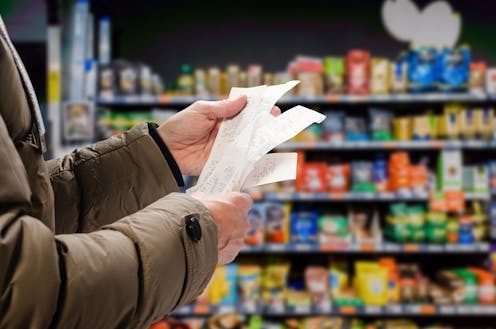
With inflation driving up the cost of living, many are dreading not just the hassle of a big grocery shop, but also the bruising cost.
But while Australians struggle with their budget and spending, several major supermarkets made large profits in 2022–23. Coles and Woolworths, for example, made net profits of A$1.1 billion and A$1.62 billion[1], respectively.
Allegations of price gouging[2] by Australian supermarkets have even led to a Senate inquiry[3] into supermarket pricing.
Coles chief executive Leah Weckert has promised[4] to appear at the inquiry, saying the company “works hard to keep prices affordable for Australian households […]” and is ready to “engage in an informed discussion on the factors that influence supermarket pricing.”
Woolworths Group chief executive Brad Banducci, meanwhile, said[5] he welcomes the chance to explain to the Senate “how we are working to balance the needs of our customers, our team and our suppliers in the context of economy-wide inflationary pressure”.
But why wait until a Senate inquiry to explain all that? There’s an opportunity now for the big supermarkets to be more transparent about how they decide what prices to put on products.
Read more: Feeling lonely? Too many of us are. Here's what our supermarkets can do to help[6]
Allegations of price gouging
It’s not just politicians[7] and customers[8] complaining about supermarket prices.
Australian farmers have also accused Coles and Woolworths of price gouging for fruits and vegetables[9], claiming supermarkets profit too much from their crops.
The National Farmers’ Federation has called[10] for greater transparency from the supermarkets on how they decide prices.
A recent survey[11] by AUSVEG (the peak industry body for the Australian vegetable and potato industries) found 34% of vegetable growers are considering leaving the industry in the next 12 months as they struggle[12] to turn a profit.
When asked about calls for more transparent pricing, a Woolworths spokesperson told The Conversation:
We publish both our average gross margin and EBIT (earnings before interest and taxes) margin transparently in our public financial reports.
Supply chain costs are different for every product and they are constantly fluctuating, as are our buying costs in the case of fresh food like fruit and vegetables.
Shoppers are very savvy. We operate in a highly competitive industry and we know our customers will – and do – shop around to find the best value.
As we start to see the rate of inflation ease, we will continue to focus on delivering savings to our customers.
Coles was also contacted for comment but did not reply before publication deadline.
Factoring in many costs
When a retailer buys products from their suppliers, it involves a supply chain that includes supply, manufacturing, transportation and distribution, warehouse and storage.
There are several costs – such as product costs, transportation fees, labour, rent, inventory and more – involved at every step of the process.
The supermarket must factor in all costs, as well as its profit margin, when it sets the selling price for a product.
Organisations usually have these cost breakdowns as part of their internal decision-making – but they don’t typically disclose these calculations to their customers.
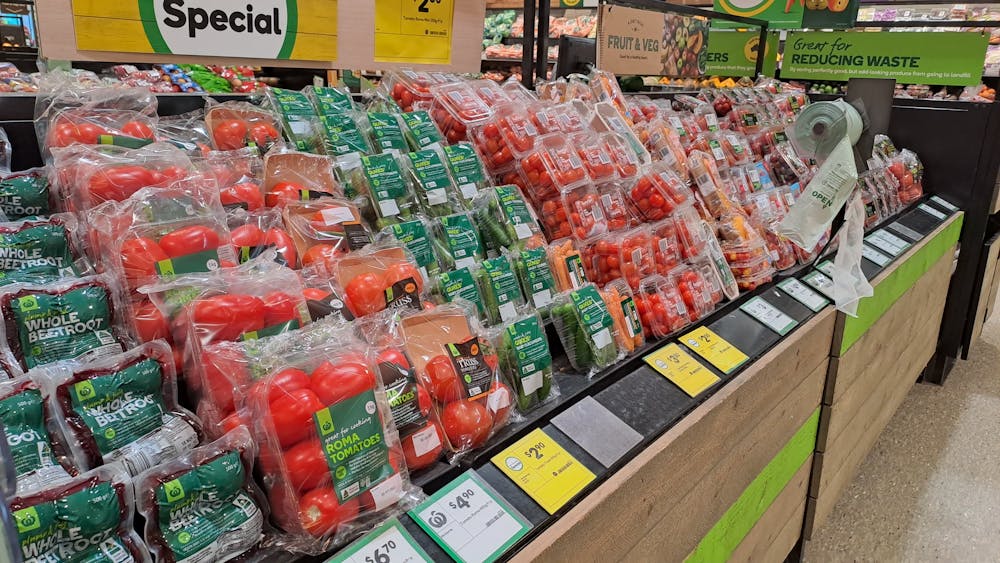
Not disclosing the cost breakdowns
The problem for supermarkets is that when they don’t disclose details such as their buying price or supply chain costs, it can contribute to anger among customers and suppliers.
Apple and Pear Australia Limited – the national peak industry body for apple and pear growers – has called for[14] retailers to demonstrate greater price transparency, saying, “frustration at the behaviour of the major retailers has again angered many growers”.
Of course, supermarkets use several pricing strategies to win customer support – such as locking in prices for a certain period of time, everyday low prices on key products, specials, price-matching and discounts.
Supermarkets spend millions of dollars on these price-related advertisements, but perhaps they would get more community support by simply disclosing cost breakdowns on their websites and in-store to show their commitment to transparent and fair pricing.
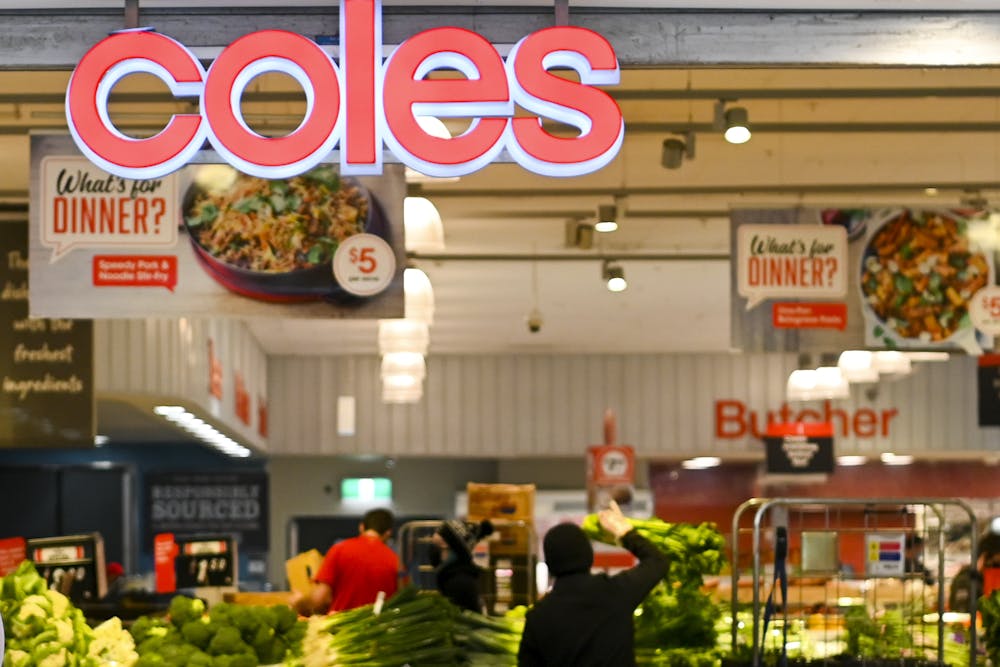 The supermarket must factor in all costs, as well as their profit margin, when it sets the selling price.
AAP Image/Lukas Coch[15]
The supermarket must factor in all costs, as well as their profit margin, when it sets the selling price.
AAP Image/Lukas Coch[15]
Transparent and fair pricing
Research shows price transparency helps businesses build trust with their customers[16].
Many major retailers already have this information for internal decision-making, so could display this online and in stores.
Yes, prices change constantly due to factors outside their control – such as fuel prices, shipping problems or even supply chain issues linked to global conflict. But being more open with customers about these issues could help repair relationships and their public image.
Perhaps there may even be a role for government, which could collaborate with supermarkets and retailers to develop policies for transparent and fair pricing.
Everyday Australians deserve to be treated fairly and given the information they need about how major supermarkets price their products, so they can make informed decisions at the checkout.
Read more: 'A weird dinging sound that everyone dreads': what rapid deliveries mean for supermarket workers[17]
References
- ^ A$1.1 billion and A$1.62 billion (www.theguardian.com)
- ^ Allegations of price gouging (www.news.com.au)
- ^ Senate inquiry (www.abc.net.au)
- ^ promised (www.colesgroup.com.au)
- ^ said (www.woolworthsgroup.com.au)
- ^ Feeling lonely? Too many of us are. Here's what our supermarkets can do to help (theconversation.com)
- ^ politicians (www.abc.net.au)
- ^ customers (au.finance.yahoo.com)
- ^ fruits and vegetables (www.news.com.au)
- ^ called (www.freshplaza.com)
- ^ survey (www.freshplaza.com)
- ^ struggle (www.news.com.au)
- ^ AAP Image/Supplied by Australian Marine Conservation Society (photos.aap.com.au)
- ^ called for (apal.org.au)
- ^ AAP Image/Lukas Coch (photos.aap.com.au)
- ^ customers (fastercapital.com)
- ^ 'A weird dinging sound that everyone dreads': what rapid deliveries mean for supermarket workers (theconversation.com)