The Times Australia
Google AI
The Times World News

.

Wintering’s grotesque widows reveal the ‘monstrous’ woman as wise and progressive

  • Written by Martine Kropkowski, PhD Candidate and Casual Academic, The University of Queensland
Wintering’s grotesque widows reveal the ‘monstrous’ woman as wise and progressive

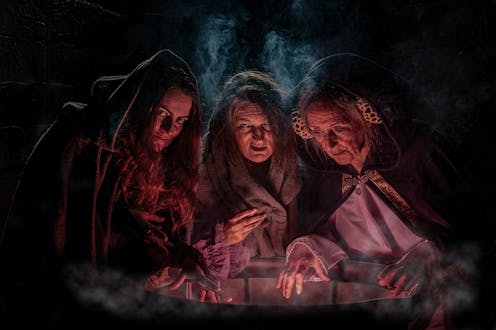
A coven of faces. All women, all weathered. Old, middle-aged, younger; one teenager among them. […] They sat and breathed in each other’s stale exhalations. Breath like the grave. Jessica couldn’t help thinking that they were rotting inside. And now she was one of them. She had started to decompose.

The widows are foul, unwashed, rank. They gather at an old farmstead with peeling wooden boards and “holes in the veranda you could put a fist though”. They give off a “urinous fug of sweat and unwashed clothing”. A woman in “a brown shapeless dress, sweat-stained at the armpits” grows long, dark hairs from her upper lip and neck. Their partners have all disappeared. And so has Jessica’s.
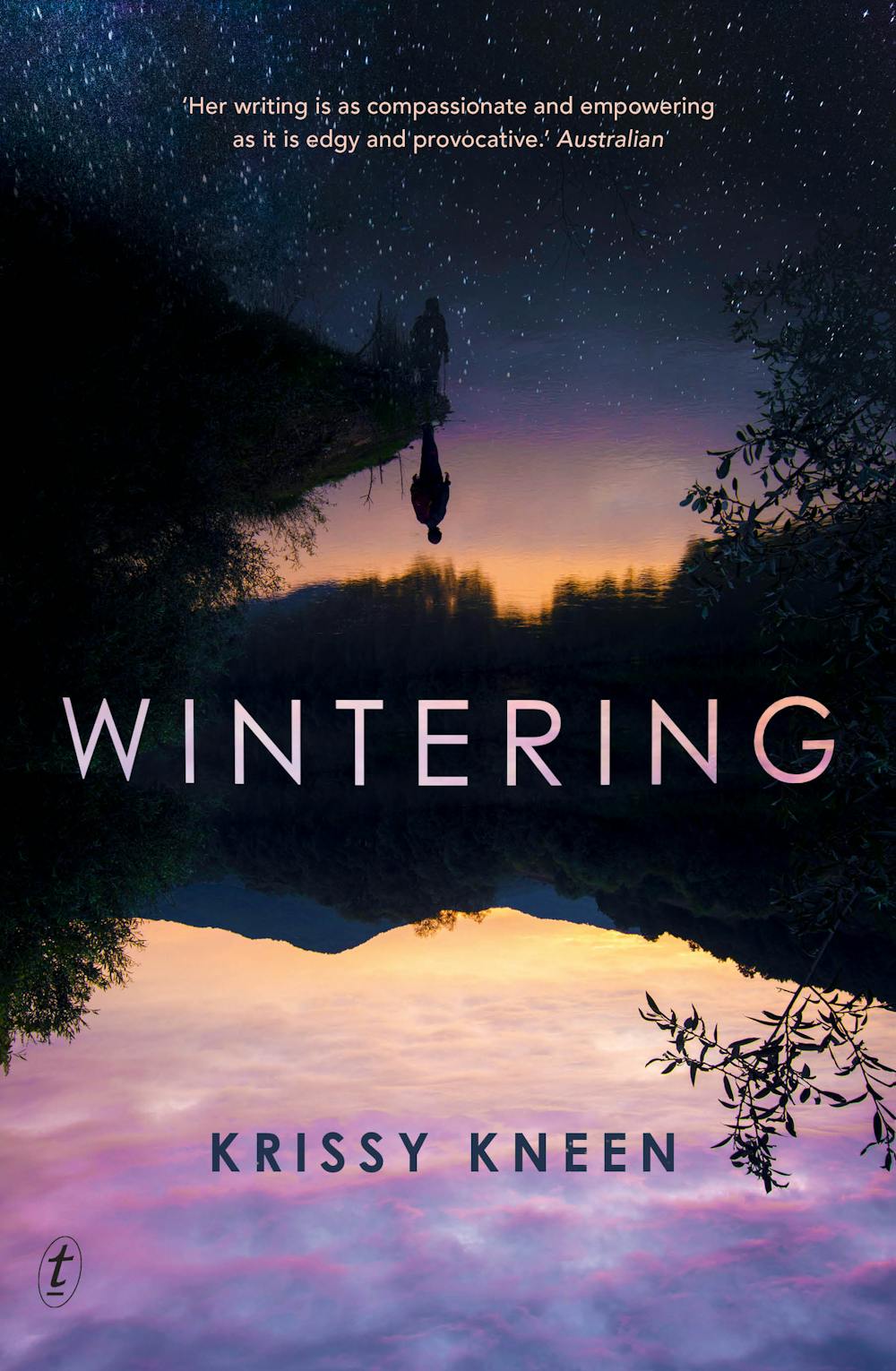
These women are from Kris Kneen’s novel Wintering[1], which includes one of my favourite depictions of monstrosity – a man–thylacine hybrid, a type of werewolf, that stalks remote southern Tasmania, turning people into monsters (in a recognisable gothic tradition[2]). But it’s not the man–thylacine monster that has stayed with me all these years. It’s the second type of (metaphorical) monster, the widows, who speak to me far more profoundly. Initially, the stories these widows tell – about monster hunting – are easy for the novel’s protagonist, Jessica, to reject. They’re the kind of ramblings she might hear from people she’d stand next to at the liquor store and joke about afterwards. But there’s more to their monstrosity than the grotesque. The widows present as a collection of disparate elements — a Frankenstein’s creature composed of fragments. They are a collective aberration, in a society bent on advancing women who meet social expectations while rejecting those who do not. What monsters mean Monsters – millennia old – continue to populate our imaginations. The gothic novels of the 18th and 19th centuries, such as Mary Shelley’s Frankenstein and Bram Stoker’s Dracula, have menaced shelves for hundreds of years. Kris Kneen’s novel depicts a man-thylacine hybrid. David Fleay/Queen Victoria Museum and Art Gallery/AAP More recently and closer to home, Lisa Fuller’s Ghost Bird[3] and First Nations anthology This All Come Back Now[4] (edited by Mykaela Saunders) depict monsters from Indigenous perspectives, while novels such as Trent Jamieson’s Day Boy[5], which inventively reimagines the vampire, breathe new life into gothic monsters. As American philosopher and cultural theorist Noel Carroll points out[6], monsters are not just physically threatening – they threaten and challenge our ways of thinking, too. And in this way, Kneen’s mismatched collection of othered women prompts me to reflect on our assumptions about women and the social norms we’ve constructed for them. Monsters represent the ‘other’ I’m fascinated by the many ways we interpret monsters. Dracula represents concerns about racial otherness and imperial decline[7]. No, it’s about fears of AIDS infection and supernatural surveillance[8] – no, it’s about homoerotic desire[9]. Zombies illuminate[10] rampant consumerism, slave labour and, by pushing them to their limits, the intricate workings of human communities. (If you’ve read or watched The Walking Dead, this last one will be familiar to you.) These readings attempt to project and inscribe a specific cultural meaning, belonging to a particular time and place, onto a monstrous creature. “The monstrous body is pure culture,” writes Jeffrey Jerome Cohen, who researches the cultural function of monsters[11]. It “exists only to be read”. And maybe this is why monsters preoccupy me. Monsters often depict the so-called “other”: the outside, the beyond and all that we perceive as distant and distinct from us … but actually comes from within. Monsters, after all, always require a creator. They exist only because we design them, constructing them from our deepest fears. Monsters exist because we design them – constructing them from our deepest fears. Monsters reveal how societies define – and decide how to punish – difference and deviance. And by doing so, they also call into question the very social structures[12] on which those decisions are based. By creating monsters, we police[13] social boundaries and define community norms. In Wintering, Jessica does this by rejecting the widows. Initially, she sees them as something other: something to be avoided, something lesser. At the same time, though, Kneen’s widows subvert and challenge – even reappropriate – their categorisation as “other”. They are women who don’t meet conventional beauty standards, who flout social expectations. They are women who are older, single, who are sole parents. In short, they’re characters who transgress ideas of traditional womanhood[14] – a transgression traditionally punished by derision and exclusion. But Jessica’s initial repulsion gradually shifts into acceptance and eventually respect. Later, she’ll view widow elder Marijam as a window onto her future self: […] she felt dizzy, seeing her future staring into her eyes. And it wasn’t so bad really. Tough, solitary, self-sufficient. Wise? Maybe. Read more: Bram Stoker's Dracula: bats, garlic, disturbing sexualities and a declining empire[15] Reframing ‘monstrous’ women as wise Literature is a powerful vehicle for revealing and naturalising different ways of thinking. I first read Wintering after having children, when I was experiencing a newfound respect for the wisdom and strength of my own mother – and by extension, all those who have carried, lost, terminated, delivered or nurtured babies. It was a time when I really started to unpack monstrous tropes for what I think they are – particularly those of the female monster, so often maligned for their reproductive experiences[16]. Maybe this is why Kneen’s creation spoke to me so profoundly (especially Marijam, the wise, wrinkled old lady, who’s quick on a walking stick and slick on a monster hunt). Kneen’s reframing of the widows contributes to our ongoing process of dismantling internalised misogyny. It alerts me to a different view of those women society might have us trivialise or ignore. Certainly, this is the journey Jessica takes in the novel, eventually viewing herself as a member of the widows. “Well,” the old lady said, her smile, unbelievably, wrinkling her face even more. “We are glad you are with us, love.” Wintering’s widows leave me thinking about the women in my own life – about my own coven – and how they’re strong and wise in ways not always recognised or endorsed by the mainstream. These covens have seen me through. They have decimated the idea we’re all write-offs to some degree, depending on how near or far we are from meeting “ideal” social expectations. They have shown me that together, we can be monstrously powerful. And they’ve shown me it’s my job to pass this knowledge forward: the way Marijam passes hers to Jessica. Read more: The Clearing's investigation of The Family invites us to ask: what's the appeal – and risk – of crime stories based on real events?[17] More work to do Unpicking harmful tropes, of course, is an unfinished task. We have more work to do, especially for women whose identities include further marginalisation surrounding disability, race, class and gender. Monsters are particularly well equipped to help us do this. Wiradjuri writer Jeanine Leane, for instance, writes about how Indigenous speculative fiction[18] – including fiction containing monsters – “unwrites settler control and knowing of the future and the present and the past” and re-establishes First Nations ways of knowing, being and telling. There’s another, more literal, monster in Wintering – the man–thylacine werewolf – which skilfully picks at the threads of coercive control, domestic abuse and violence. It deserves its own analysis. But it’s the monstrous widows who have remained with me, long after finishing the novel. They’ve invited me to reject the label of “monstrous” woman as an indication of shame or exclusion – and to reassign it as a symbol of progress. References^ Wintering (www.textpublishing.com.au)^ gothic tradition (www.euppublishing.com)^ Ghost Bird (www.uqp.com.au)^ This All Come Back Now (www.uqp.com.au)^ Day Boy (www.textpublishing.com.au)^ Noel Carroll points out (www.jstor.org)^ racial otherness and imperial decline (www.jstor.org)^ AIDS infection and supernatural surveillance (www.researchgate.net)^ homoerotic desire (www.jstor.org)^ illuminate (www.jstor.org)^ researches the cultural function of monsters (www.jstor.org)^ the very social structures (www.routledge.com)^ we police (www.cambridge.org)^ transgress ideas of traditional womanhood (www.abc.net.au)^ Bram Stoker's Dracula: bats, garlic, disturbing sexualities and a declining empire (theconversation.com)^ maligned for their reproductive experiences (www.taylorfrancis.com)^ The Clearing's investigation of The Family invites us to ask: what's the appeal – and risk – of crime stories based on real events? (theconversation.com)^ how Indigenous speculative fiction (sydneyreviewofbooks.com)

Read more https://theconversation.com/my-favourite-fictional-character-winterings-grotesque-widows-reveal-the-monstrous-woman-as-wise-and-progressive-218591

Times Magazine

Worried AI means you won’t get a job when you graduate? Here’s what the research says

The head of the International Monetary Fund, Kristalina Georgieva, has warned[1] young people ...

How Managed IT Support Improves Security, Uptime, And Productivity

Managed IT support is a comprehensive, subscription model approach to running and protecting your ...

AI is failing ‘Humanity’s Last Exam’. So what does that mean for machine intelligence?

How do you translate ancient Palmyrene script from a Roman tombstone? How many paired tendons ...

Does Cloud Accounting Provide Adequate Security for Australian Businesses?

Today, many Australian businesses rely on cloud accounting platforms to manage their finances. Bec...

Freak Weather Spikes ‘Allergic Disease’ and Eczema As Temperatures Dip

“Allergic disease” and eczema cases are spiking due to the current freak weather as the Bureau o...

IPECS Phone System in 2026: The Future of Smart Business Communication

By 2026, business communication is no longer just about making and receiving calls. It’s about speed...

The Times Features

Parks Victoria launches major statewide recruitment drive

The search is on for Victoria's next generation of rangers, with outdoor enthusiasts encouraged ...

Labour crunch to deepen in 2026 as regional skills crisis escalates

A leading talent acquisition expert is warning Australian businesses are facing an unprecedented r...

Technical SEO Fundamentals Every Small Business Website Must Fix in 2026

Technical SEO Fundamentals often sound intimidating to small business owners. Many Melbourne busin...

Most Older Australians Want to Stay in Their Homes Despite Pressure to Downsize

Retirees need credible alternatives to downsizing that respect their preferences The national con...

The past year saw three quarters of struggling households in NSW & ACT experience food insecurity for the first time – yet the wealth of…

Everyday Australians are struggling to make ends meet, with the cost-of-living crisis the major ca...

The Week That Was in Federal Parliament Politics: Will We Have an Effective Opposition Soon?

Federal Parliament returned this week to a familiar rhythm: government ministers defending the p...

Why Pictures Help To Add Colour & Life To The Inside Of Your Australian Property

Many Australian homeowners complain that their home is still missing something, even though they hav...

What the RBA wants Australians to do next to fight inflation – or risk more rate hikes

When the Reserve Bank of Australia (RBA) board voted unanimously[1] to lift the cash rate to 3.8...

Do You Need a Building & Pest Inspection for New Homes in Melbourne?

Many buyers assume that a brand-new home does not need an inspection. After all, everything is new...