are whitegoods disability supports? Here’s what proposed NDIS reforms say
- Written by: Helen Dickinson, Professor, Public Service Research, UNSW Sydney

Many Australians with disability feel on the edge of a precipice right now. Recommendations from the disability royal commission and the NDIS review were released late last year. Now a draft NDIS reform bill has been tabled. In this series, experts examine what new proposals could mean for people with disability.
The government’s recently introduced bill[1] aims to get the National Disability Insurance Scheme (NDIS) “back on track”. Against a backdrop of concerns over the scheme’s cost[2], it sets out changes that should substantially reform the NDIS over the next few years.
There is a promised transformation in terms of how NDIS support packages are calculated[3]. The new approach will prioritise evidence-based supports and hopefully allow more flexibility to participants in how they spend their budgets.
But the bill also introduces a definition of what constitutes an NDIS support. Holidays, groceries, payment of utility bills, online gambling, perfume, cosmetics, standard household appliances and whitegoods will not be funded, the bill’s explanatory notes[4] specify.
Such exclusions could prove shortsighted, creating more inefficiencies within the scheme and mean disabled people lose opportunities for independence.
Read more: Draft NDIS bill is the first step to reform – but some details have disability advocates worried[5]
Changes to assessment and spending
The changes outlined in the bill[6] will move the NDIS towards a needs-based assessment.
This will be supported by the use of functional assessment tools, removing some need for people to collect evidence from medical professionals.
“Your needs assessment will look at your support needs as a whole,” NDIS minister Bill Shorten said on the day the bill was tabled. “And we won’t distinguish between primary and secondary disabilities any longer.”
At the moment plans are made up of a number of categories of funding and line items that set out how plans should be spent. The NDIS review[7] noted this process is often confusing for people and limits how they can spend funds. So the changes offer more spending flexibility.
But the bill’s new definition of NDIS support, aims to[8]:
narrow the scope of […] constitutionally valid supports to those that are appropriately funded by the NDIS.
Whitegoods are one of the exclusions listed to clarify guidance on what supports people with disability can access through the NDIS.
At the moment, what an NDIS support is isn’t defined[9]. Provided something is deemed reasonable and necessary and related to disability, it can be funded.
At first glance, whitegoods might not seem like important disability supports – and therefore a category ripe for constraining costs. But banning these NDIS supports will likely increase costs and could reduce independence for NDIS participants.
Read more: From glasses to mobility scooters, 'assistive technology' isn't always high-tech. A WHO roadmap could help 2 million Australians get theirs[10]
Whitegoods are not just appliances
People with disability have long been at the cutting edge of technology, seeking to use different products and applications to support them in everyday tasks[11] that many of us take for granted.
In modern terms, an example could be a person with a physical impairment that means they find it difficult to lift heavy items. This may mean they struggle to lift wet washing out of a machine or to hang it on a washing line.
So, a combination washer-dryer appliance could mean they are able to independently do their laundry. The alternative option would be to have a support worker to take clothes from the washing machine, hang them on a line and bring them in again once dry.
Having such an appliance allows a person to independently achieve household tasks their disability could prevent or make more difficult or dangerous.
It is also likely to be more cost-effective over the long term. The hourly rate for a support worker employed on weekdays is typically[12] between A$40–$50 per hour. It doesn’t take many hours of support-worker time before purchasing a whitegood becomes more cost-effective.
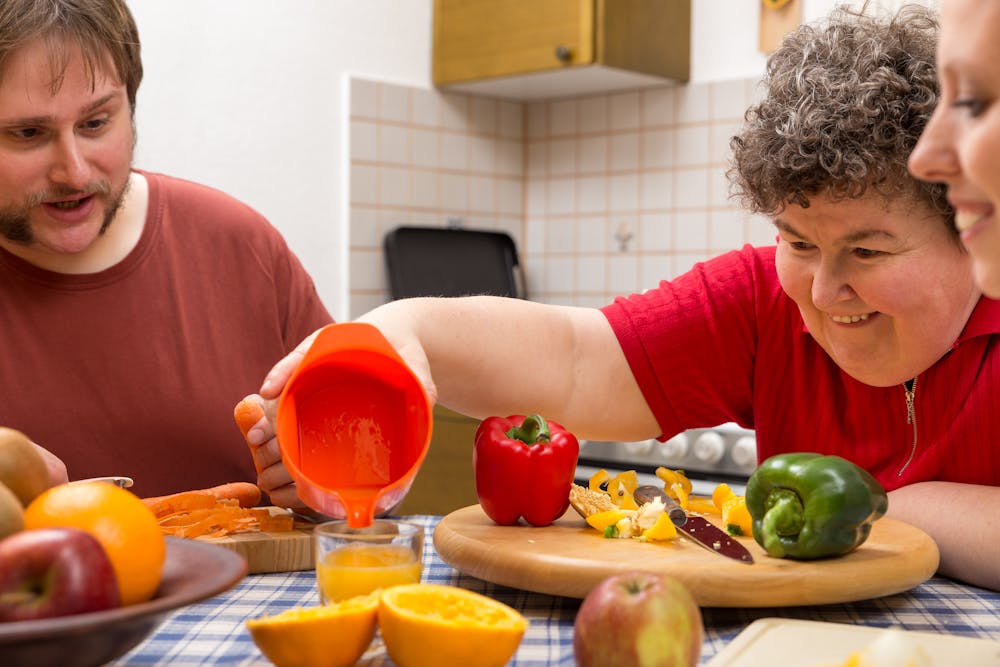
For some people who struggle to navigate a kitchen and cook safely, a device like a Thermomix[14] multicooker (that can chop, mix and cook) can mean they are able to independently prepare meals.
These are expensive at around $2,000. But again, this expense can be justified when compared with the cost of hiring a support worker to prepare meals. The Administrative Appeals Tribunal has previously overturned[15] decisions by the National Disability Insurance Agency (which administers the NDIS) not to fund technologies like this on the basis these are disability related expenses.
Read more: States agreed to share foundational support costs. So why the backlash against NDIS reforms now?[16]
The importance of early investment for independence
The NDIS was introduced in response to the deficiencies of the previous system. It is is meant to take a lifelong view[17] of disability funding.
Unlike the previous crisis-driven system, the idea of the NDIS is to invest money in the short term to save money in the longer term. Investment in disability care improves social and economic participation[18] and independence.
Narrowly defining disability supports could serve to reduce innovation within the scheme and result in poorer care outcomes. That would only add to cost pressures over the longer term.
Read more: There is overwhelming gender bias in the NDIS – and the review doesn't address it[19]
References
- ^ introduced bill (theconversation.com)
- ^ concerns over the scheme’s cost (www.abc.net.au)
- ^ how NDIS support packages are calculated (www.linkedin.com)
- ^ explanatory notes (parlinfo.aph.gov.au)
- ^ Draft NDIS bill is the first step to reform – but some details have disability advocates worried (theconversation.com)
- ^ changes outlined in the bill (www.linkedin.com)
- ^ NDIS review (www.ndisreview.gov.au)
- ^ aims to (parlinfo.aph.gov.au)
- ^ isn’t defined (ourguidelines.ndis.gov.au)
- ^ From glasses to mobility scooters, 'assistive technology' isn't always high-tech. A WHO roadmap could help 2 million Australians get theirs (theconversation.com)
- ^ support them in everyday tasks (theconversation.com)
- ^ typically (hireup.com.au)
- ^ Shutterstock/Miriam Doerr Martin Frommherz (www.shutterstock.com)
- ^ Thermomix (www.ethicalcaringgroup.com.au)
- ^ overturned (www.austlii.edu.au)
- ^ States agreed to share foundational support costs. So why the backlash against NDIS reforms now? (theconversation.com)
- ^ lifelong view (theconversation.com)
- ^ economic participation (www.smh.com.au)
- ^ There is overwhelming gender bias in the NDIS – and the review doesn't address it (theconversation.com)