


Restoring coastal habitat boosts wildlife numbers by 61% – but puzzling failures mean we can still do better
- Written by: Michael Sievers, Research Fellow, Global Wetlands Project, Australia Rivers Institute, Griffith University
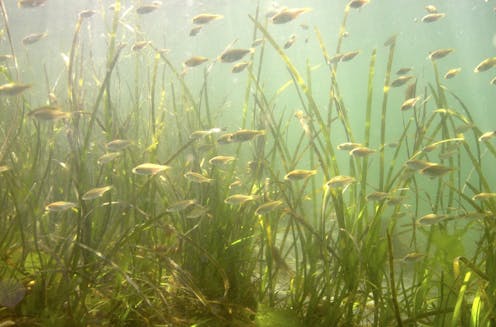
Humans love the coast. But we love it to death, so much so we’ve destroyed valuable coastal habitat – in the case of some types of habitat, most of it has gone.
Pollution, coastal development, climate change and many other human impacts have degraded or destroyed swathes of mangrove forests, saltmarshes, seagrass meadows, macroalgae (seaweed) forests and coral and shellfish reefs. We’ve lost a staggering 85% of shellfish reefs[1] around the world and coral is bleaching[2] globally[3].
When healthy, these coastal habitats help feed the world by supporting fisheries[4]. They are home to more than 100 species[5] of charismatic marine megafauna, ranging from sharks to dugongs. They sequester carbon, thus helping to slow climate change[6]. The list goes on.
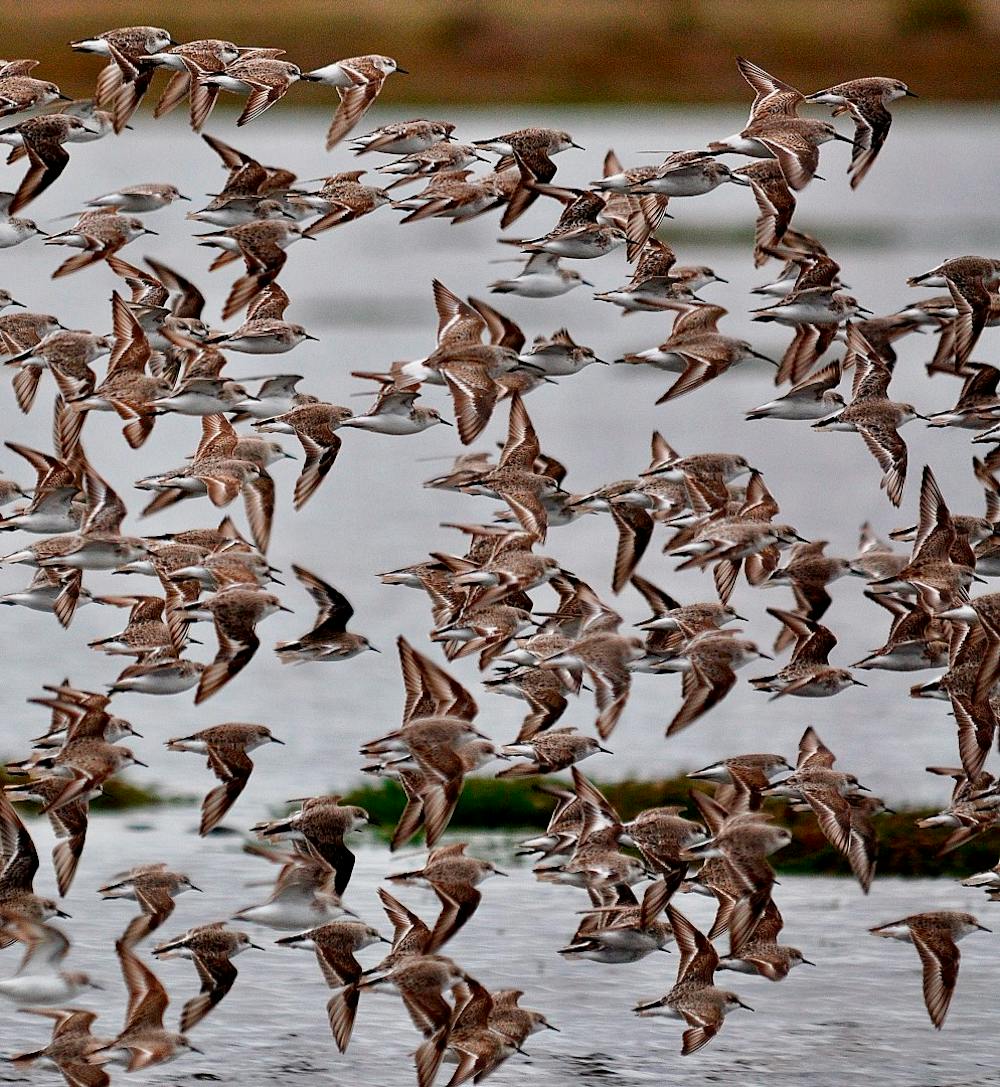
Healthy coastal habitats are the gift that keeps on giving. We need them back, so there’s a lot of enthusiasm for restoring these habitats. For example, we can plant mangroves, build new shellfish reefs and reduce pollution to help seagrass grow back.
But we want to recover more than just the habitats. We want the animals they support too. We need to know if restoration is helping animals.
We analysed restoration projects[7] around the world to assess how animals are benefitting. Compared to degraded sites, restored habitats have much larger and more diverse animal populations. Overall, animal numbers and the types of animals in restored habitats are similar to those in natural habitats.
So restoration works. But outcomes for animals vary from project to project. Not all projects deliver the goods. As a result, resources are wasted and humanity misses out on the huge benefits of healthy coastal habitats.
Read more: Global coral bleaching caused by global warming demands a global response[8]
Animals can respond well to restoration
We collated over 5,000 data points from 160 studies of coastal restoration projects around the world.
Excitingly, animal populations and communities were remarkably similar to those in comparable undisturbed natural sites. For example, restoring seagrass off Adelaide’s coast brought back invertebrates[9], which are food for many fish species Australians love to catch, such as Australasian snapper. Invertebrate numbers here were comparable to nearby natural seagrass meadows.
Restored seagrass habitat along Adelaide’s coast supports populations of invertebrates that provide food for fish.Read more: From sharks in seagrass to manatees in mangroves, we've found large marine species in some surprising places[10]
Overall, our review found animal populations in restored coastal habitats were 61% larger and 35% more diverse than in unrestored, degraded sites. So restoration produces serious benefits.
Some projects recorded dramatic increases. For instance, after oyster reefs were restored in Pumicestone Passage, Queensland, fish numbers increased[11] by more than ten times. The number of fish species increased almost fourfold.
And animals can occupy newly restored sites surprisingly quickly. Fish and invertebrate numbers in restored seagrass[12] and mangroves[13] can match those in natural sites within a year or two. This happens even though the vegetation is far sparser in restored areas.
Our study shows that efforts to restore coastal habitat certainly can help animals thrive.
Read more: Once the fish factories and ‘kidneys’ of colder seas, Australia’s decimated shellfish reefs are coming back[14]
Results are not guaranteed
Although restoration generally helped animals, good outcomes are not guaranteed. We found many projects where animal numbers or diversity barely increased. It was not clear why some projects were great for animals and others had lacklustre results.
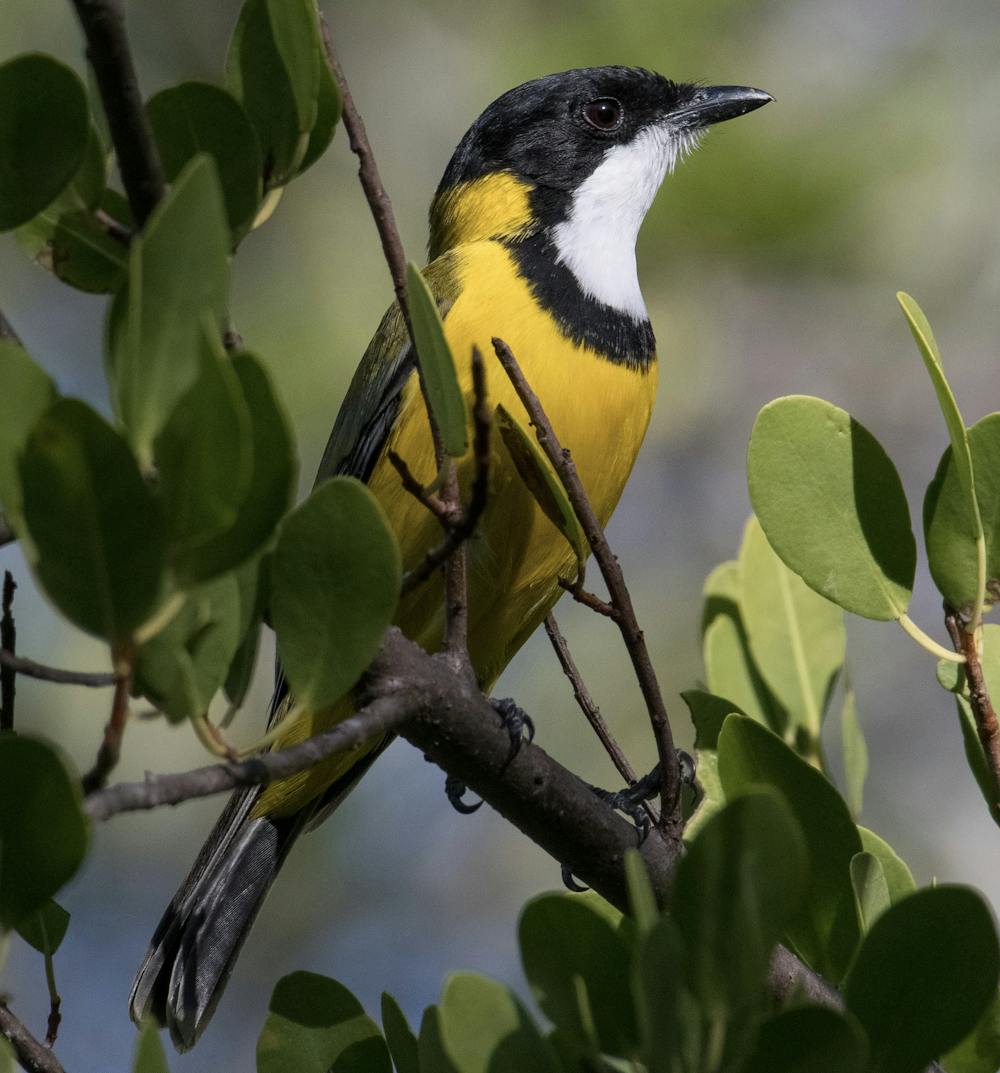 The mangrove golden whistler depends on mangroves, but much of its habitat has been degraded or lost.
Michael Brown
The mangrove golden whistler depends on mangroves, but much of its habitat has been degraded or lost.
Michael Brown
Some restoration sites could be in places where animals cannot easily find them.
In other cases, actions to restore the habitat may simply not work. Despite our best efforts, we failed to create suitable environments.
It could be that animals are returning to restored habitats, but we’re not capturing them with our monitoring.
We sorely need more consistent restoration outcomes. We may lose community support for restoration if, for example, it doesn’t deliver on promises of improved fisheries.
We are still working out how to restore coastlines effectively. Clearly, more work is needed to improve techniques and the monitoring of animal numbers.
Global alliances and groups are developing standardised frameworks[15] to guide restoration practice and to report on project designs and outcomes. Such strategies and co-ordination promise to deliver more consistent benefits.
Read more: If we protect mangroves, we protect our fisheries, our towns and ourselves[16]
New technologies can improve monitoring
Monitoring animals and restoration outcomes in coastal habitats is challenging. These aquatic habitats are structurally complex, often impenetrable and hard to navigate, and can be dangerous.
New technologies, such as artificial intelligence (AI) and environmental DNA (eDNA[17]), allow us to collect more and better data on which animals are present and how they use these habitats. We’re rapidly becoming less reliant on hauling in nets or diving down to count animals.
Artificial intelligence (AI) can be used, for example, to extract information from underwater cameras. We can monitor animals more often, in more places, for less cost.
AI algorithms were recently used to automatically identify, size and count fish[18] in videos taken on restored oyster reefs in Port Phillip Bay, Melbourne. These data were then used to calculate increased fish productivity due to restoration efforts. And what an increase it was – over 6,000 kilograms of fish per hectare per year!
Combining underwater videos with automated data extraction provides a new, reliable and cost-effective method for surveying animals ethically and efficiently.
Restoring shellfish reefs greatly increased fish numbers in Port Phillip Bay, Melbourne.Read more: It sounds like science fiction. But we can now sample water to find the DNA of every species living there[19]
We still face major barriers to scaling up restoration to even get close to reversing our environmental impact on the coasts. Key concerns include ongoing climate change and policies and laws that hamper restoration efforts. It can be difficult, for example, to get permits to restore habitat, with complex systems involving multiple organisations and arms of government.
Still, our synthesis shows some light at the end of the tunnel. Coastal restoration efforts are having substantial benefits for animals around the world. The evidence supports ambitious restoration targets[20] and action.
References
- ^ 85% of shellfish reefs (academic.oup.com)
- ^ coral is bleaching (theconversation.com)
- ^ globally (theconversation.com)
- ^ supporting fisheries (www.sciencedirect.com)
- ^ more than 100 species (theconversation.com)
- ^ slow climate change (royalsocietypublishing.org)
- ^ analysed restoration projects (www.cell.com)
- ^ Global coral bleaching caused by global warming demands a global response (theconversation.com)
- ^ brought back invertebrates (onlinelibrary.wiley.com)
- ^ From sharks in seagrass to manatees in mangroves, we've found large marine species in some surprising places (theconversation.com)
- ^ numbers increased (onlinelibrary.wiley.com)
- ^ seagrass (onlinelibrary.wiley.com)
- ^ mangroves (onlinelibrary.wiley.com)
- ^ Once the fish factories and ‘kidneys’ of colder seas, Australia’s decimated shellfish reefs are coming back (theconversation.com)
- ^ standardised frameworks (www.mangrovealliance.org)
- ^ If we protect mangroves, we protect our fisheries, our towns and ourselves (theconversation.com)
- ^ eDNA (research.csiro.au)
- ^ identify, size and count fish (besjournals.onlinelibrary.wiley.com)
- ^ It sounds like science fiction. But we can now sample water to find the DNA of every species living there (theconversation.com)
- ^ ambitious restoration targets (www.sciencedirect.com)










