Sugar gums have a reputation as risky branch-droppers but they’re important to bees, parrots and possums
- Written by: Gregory Moore, Senior Research Associate, School of Ecosystem and Forest Sciences, The University of Melbourne
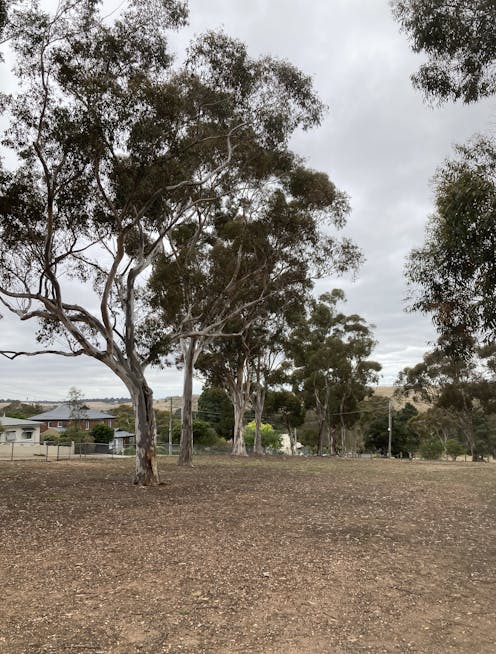
I had the good fortune to care for the sugar gum at The University of Melbourne’s Burnley Gardens in Victoria where I worked for many decades. It was a fine tree – tall and dominating. Less than a year after my retirement, it shed a couple of major limbs and was removed. I had been its custodian for over 20 years and took my responsibility seriously, extending its useful life.
I loved that tree. But not everyone feels the same way about sugar gums (Eucalyptus cladocalyx), thanks to the fact many have multiple spindly trunks or branches that sometimes drop when they haven’t been managed well.
The truth is, Eucalyptus cladocalyx is a hardy and versatile native tree of South Australia which grows very nicely in other parts of the country. They were once widely planted across south-eastern Australia and they have grown in Western Australia too. In many places they defined the roadside vegetation of the region.
Many are gone now; lost to storms, old age, road works and safety concerns as agricultural land becomes treeless outer suburbs. It’s a shame, because there is much to appreciate and admire about the sugar gum.
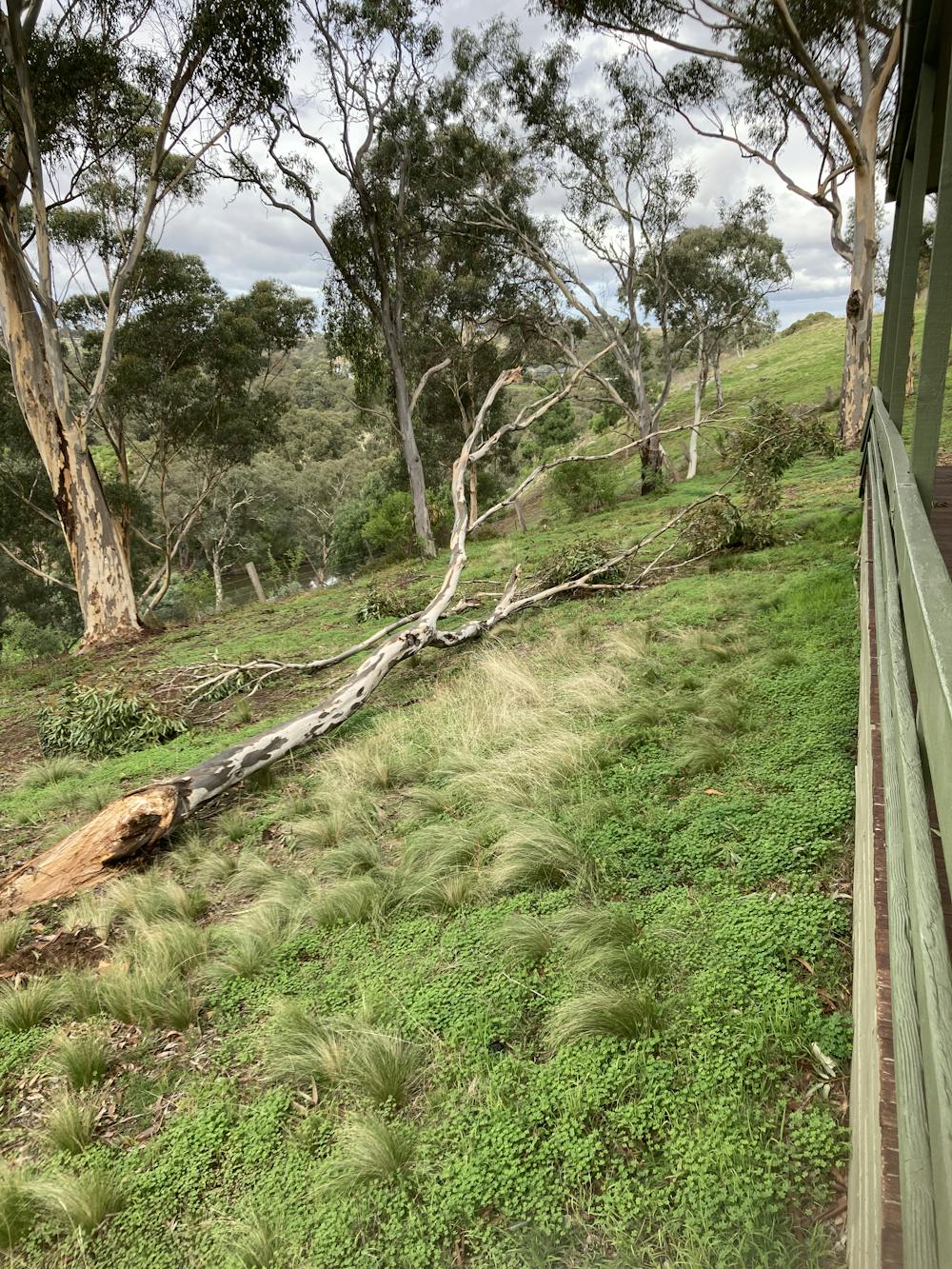
Read more: Hard to kill: here's why eucalypts are survival experts[1]
A hardy and impressive tree
In its natural habitat in the Flinders Ranges, sugar gum can be an impressive single-trunked tree. It can grow up to 35 metres or more in height, with a girth of up to four and a half metres (although those on the Eyre Peninsula and Kangaroo Island tend to be smaller).
The name “sugar gum” arises from its apparently sweet leaves[2], but benefit from my experience and don’t put it to the test.
I have found the bark can be sweet – but I can’t say I recommend trying that for yourself, either. The sap of cider gum, Eucalyptus gunnii, on the other hand, is sweet and can be fermented[3].
Like many eucalypts, sugar gum is a hardy tree with plenty of dormant buds (epicormic buds) under its smooth yellow, grey bark.
When the tree is damaged by fire or stressed, these buds may become active and produce lots of new shoots. This is how some trees renew themselves after damage from fire, grazing, flooding, storms or poor pruning.
Sugar gums can become weeds[4] not only in Western Australia, Africa and California, but in their native South Australia. They can outcompete and displace native species.
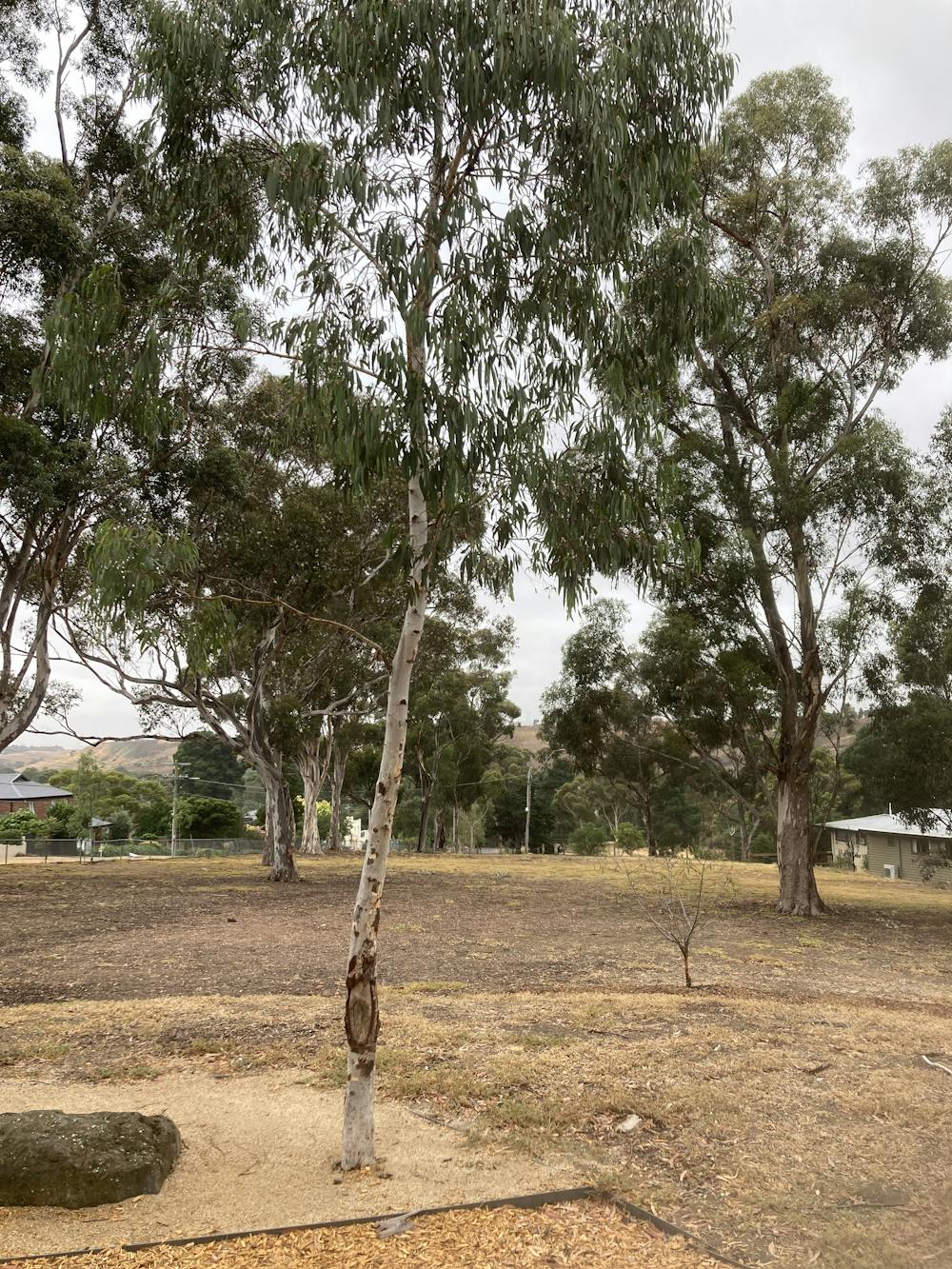 Sugar gums can become weeds.
Gregory Moore
Sugar gums can become weeds.
Gregory Moore
A tree that leaves a lasting impression
I have been familiar with sugar gums since boyhood. Coming from the western suburbs of Melbourne, I remember lots of them in rows at the intriguing Albion Explosive Factory.
These trees left a lasting impression. I jumped at the chance to visit the site a couple of decades ago to inspect some of the trees before the factory closed. I still pass these trees as I travel along the Ring Road or Ballarat Road.
The site of the old Albion Explosive Factory is now largely the Melbourne suburb of Cairnlea[5]. The last small parcels of land are about to be developed[6] by the responsible state government agency.
Locals[7] have fought a plan to remove sugar gum trees there. More broadly, though, many in the wider Australian community still see sugar gums only as risky trees that drop dangerous branches.
Lopping and topping
European farmers planted Eucalyptus cladocalyx in the early days of colonial farming, often in rows. It grew fast and formed good windbreaks.
These trees are capable of growth in heavy clay soils, drought tolerant and efficient water users. They were a tree that more or less looked after themselves in tough conditions.
The timber was also very useful for firewood, fence posts, and even furniture or building. It is a hard timber, though, and not easily worked[8] even by skilled craftsmen.
Because it was used as a windbreak tree, sugar gum was often lopped or topped (removing the top of the tree) somewhere between two and four metres above the ground so the tree would branch out or bush up.
Some were regularly pruned at a lower height to encourage growth for the rapid production of firewood or fence posts. Even in city streets and suburban gardens, the practice was to top these trees so they would be bushy and shady.
But when you stopped lopping and topping, the shoots grew quickly. You ended up with the familiar long and spindly, multi-trunked trees so many of us know.
Quite often these long shoots just peel off from the tree or are blown off in a storm. This gives rise to the impression all sugar gums are structurally unsound and pose a risk from falling branches.
But this risk comes mostly from trees that are heavily branched, and multi-stemmed, which arises from being planted in poor soils[9] and from intervention by humans. Left alone, they usually develop well[10].
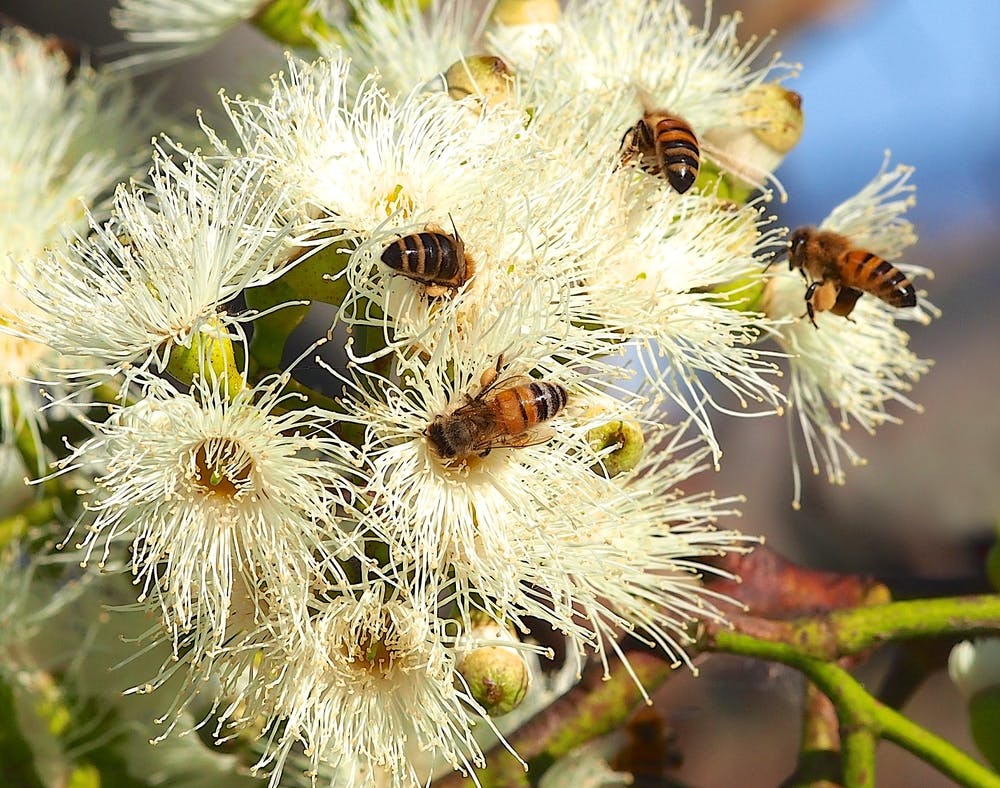 Bees love the pollen from sugar gum blossoms.
Catzatsea/Shutterstock[11]
Bees love the pollen from sugar gum blossoms.
Catzatsea/Shutterstock[11]
A haven for native animals
Many sugar gums feature hollows and cavities, which become a haven for native fauna. These provide a home for a possum or two, but it is perhaps parrots that benefit most.
At certain times of year, there is a deafening din around sugar gums as sulphur-crested cockatoos, corellas and lorikeets jostle for nesting sites. It is an important breeding habitat[12] for the endangered yellow tailed black cockatoo.
At other times, it is the quiet hum of bees[13] collecting pollen from their small white flowers that draws attention .
This is what I think of when I see rows of old sugar gums in outer suburbs in small isolated parks. They remain as habitat refuges, when so many older trees have been removed for unimaginative land development.
Read more: Early heat and insect strike are stressing urban trees – even as canopy cover drops[14]
References
- ^ Hard to kill: here's why eucalypts are survival experts (theconversation.com)
- ^ sweet leaves (www.wyndham.vic.gov.au)
- ^ fermented (www.nature.com)
- ^ weeds (www.cabi.org)
- ^ Cairnlea (www.development.vic.gov.au)
- ^ developed (www.development.vic.gov.au)
- ^ Locals (brimbanknorthwest.starweekly.com.au)
- ^ not easily worked (theconversation.com)
- ^ poor soils (www.cabidigitallibrary.org)
- ^ well (apps.lucidcentral.org)
- ^ Catzatsea/Shutterstock (www.shutterstock.com)
- ^ habitat (plantselector.botanicgardens.sa.gov.au)
- ^ hum of bees (theconversation.com)
- ^ Early heat and insect strike are stressing urban trees – even as canopy cover drops (theconversation.com)