Our housing system is broken and the poorest Australians are being hardest hit
- Written by: Rachel Ong ViforJ, ARC Future Fellow & Professor of Economics, Curtin University
Just when we think the price of rentals could not get any worse, this week’s Rental Affordability Snapshot[1] by Anglicare has revealed low-income Australians are facing a housing crisis like never before.
In fact, if you rely on the Youth Allowance[2], there is not a single rental property across Australia you can afford this week.
How did rental affordability get this bad?
Several post-COVID factors have been blamed, including our preference for more space, the return of international migrants[3], and rising interest rates[4].
However, the rental affordability crisis pre-dates COVID.
Affordability has been steadily declining for decades, as successive governments have failed to make shelter more affordable for low-to-moderate income Australians.
The market is getting squeezed at both ends
At the lower end of the rental sector, the growth in the supply of social housing persistently lags behind demand, trending at under one-third[5] the rate of population growth.
This has forced growing numbers of low-income Australians to seek shelter in the private rental sector, where they face intense competition from higher-income renters.
At the upper end, more and more aspiring home buyers are getting locked out[6] of home ownership.
Read more: Many Australians face losing their homes right now. Here's how the government should help[7]
A recent study[8] found more households with higher incomes are now renting.
Households earning $140,000[9] a year or more (in 2021 dollars) accounted for just 8% of private renters in 1996. By 2021, this tripled to 24%. No doubt, this crowds out lower-income households who are now facing a shortage of affordable homes to rent.
Why current policies are not working
Worsening affordability in the private rental sector highlights a housing system that is broken. Current policies just aren’t working.
While current policies focus on supply, more work is needed including fixing labour shortages[10] and providing greater stock diversity[11].
The planning system plays a critical role and zoning rules[12] can be reformed to support the supply of more affordable options.
However, the housing affordability challenge is not solely a supply problem. There is also a need to respond to the super-charged demand[14] in the property market.
An overheated market will undoubtedly place intense pressure on the rental sector because aspiring first home buyers are forced to rent for longer, as house prices soar at a rate unmatched by their wages.
Yet, governments continue to resist calls for winding back the generous tax concessions[15] enjoyed by multi-property owners.
The main help available to low-income private renters - the Commonwealth Rent Assistance scheme - is poorly targeted[16] with nearly one in five low-income renters deemed ineligible, while another one in four receive it despite not being in rental stress.
Can affordable housing occur naturally?
Some commentators support the theory of filtering[17] - a market-based process by which the supply of new dwellings in more expensive segments creates additional supply of dwellings for low-income households as high-income earners vacate their former dwellings.
Proponents of filtering argue building more housing anywhere - even in wealthier ends of the property market - will eventually improve affordability across the board because lower priced housing will trickle down to the poorest households.
However, the persistent affordability crisis low-income households face and the rise in homelessness are crucial signs filtering does not work well[18] and cannot be relied upon[19] to produce lower cost housing.
Location, location, location
Location does matter, if we expect building new housing to work for low-income individuals.
What is needed is a steady increase of affordable, quality housing in areas offering low-income renters the same access to jobs and amenities as higher-income households.
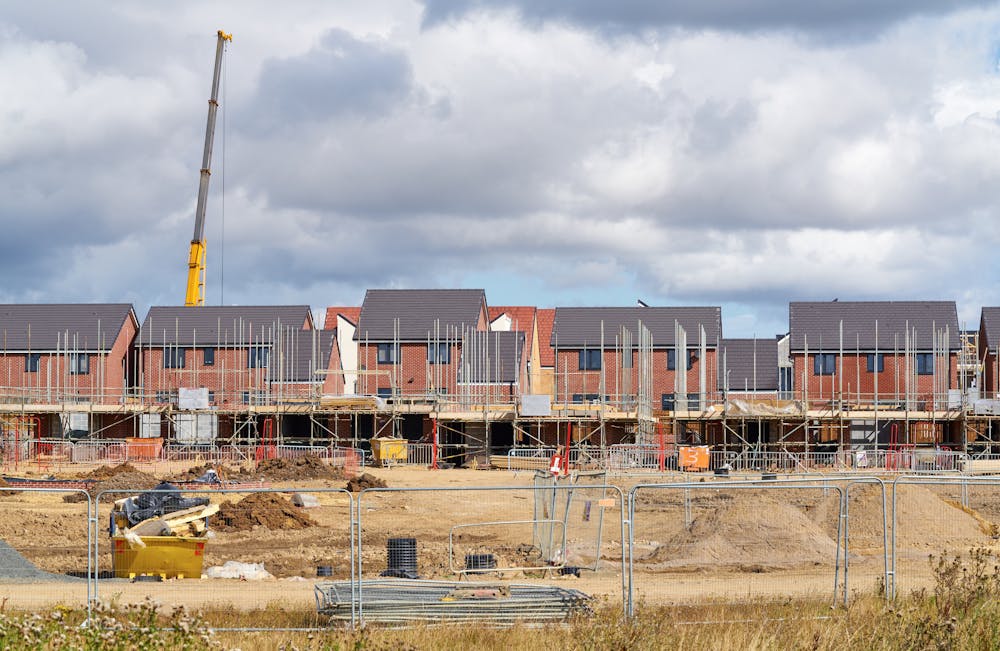 Any new housing needs to be well located as well as reasonably priced.
Duncan Andison/Shutterstock[20]
Any new housing needs to be well located as well as reasonably priced.
Duncan Andison/Shutterstock[20]
The National Housing Accord[21] aims to deliver 1.2 million new dwellings over five years from mid-2024. But it must ensure these are “well-located” for people who need affordable housing, as suggested in the accord.
Recent modelling[22] shows unaffordable housing and poor neighbourhoods both negatively affect mental health, reinforcing the need to provide both affordable and well-located housing.
The upcoming budget
While the 15% increase[23] in the maximum rent assistance rate was welcomed in the last budget, the program is long overdue for a major restructure to target those in rental stress.
Also, tax concessions on second properties should be wound back to reduce competition for those struggling to buy their first home. This would eventually help ease affordability pressures on low-income renters as more higher-income renters shift into homeownership[24].
Read more: A prefab building revolution can help resolve both the climate and housing crises[25]
The potential negative impacts on rental supply can be mitigated by careful design of tax and other changes that guard against market destabilisation concerns.
Overall, housing affordability solutions have to be multi-faceted. The housing system is badly broken and meaningful repair cannot be achieved unless policymakers are willing to confront both supply and demand challenges.
References
- ^ Rental Affordability Snapshot (www.anglicare.asn.au)
- ^ Youth Allowance (www.servicesaustralia.gov.au)
- ^ more space, the return of international migrants (www.rba.gov.au)
- ^ rising interest rates (www.corelogic.com.au)
- ^ one-third (povertyandinequality.acoss.org.au)
- ^ locked out (www.tandfonline.com)
- ^ Many Australians face losing their homes right now. Here's how the government should help (theconversation.com)
- ^ study (www.ahuri.edu.au)
- ^ $140,000 (www.ahuri.edu.au)
- ^ labour shortages (theconversation.com)
- ^ stock diversity (theconversation.com)
- ^ zoning rules (theconversation.com)
- ^ doublelee/Shutterstock (www.shutterstock.com)
- ^ super-charged demand (theconversation.com)
- ^ generous tax concessions (www.abc.net.au)
- ^ poorly targeted (theconversation.com)
- ^ filtering (www.ahuri.edu.au)
- ^ does not work well (cloud.3dissue.com)
- ^ cannot be relied upon (www.ahuri.edu.au)
- ^ Duncan Andison/Shutterstock (www.shutterstock.com)
- ^ National Housing Accord (treasury.gov.au)
- ^ modelling (www.tandfonline.com)
- ^ 15% increase (www.dss.gov.au)
- ^ shift into homeownership (onlinelibrary.wiley.com)
- ^ A prefab building revolution can help resolve both the climate and housing crises (theconversation.com)