The Times Australia
Google AI
The Times World News

.

Alexis Wright becomes the first to win the Stella Prize twice, with her ‘hyper real’ novel of Aboriginal sovereignty and survival

  • Written by Julieanne Lamond, Associate Professor of English, Australian National University
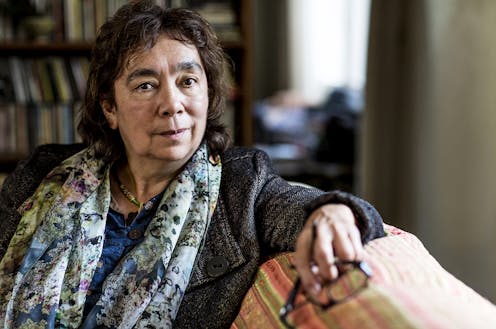
Alexis Wright becomes the first to win the Stella Prize twice, with her ‘hyper real’ novel of Aboriginal sovereignty and survival

Acclaimed Waanyi writer Alexis Wright has made Australian literary history by being the first author to win the Stella Prize twice. This time, it’s for Praiseworthy, her fourth novel – her first in more than a decade.

The Stella Prize was established out of an activist aim to redress the lack of women writers (and from 2019, non-binary writers too) on the shortlists of Australia’s major literary awards. It has often been idiosyncratic in its choices, steering clear of “big” books by established, “major” authors. Here, the Stella judging panel has awarded a book that is big in every sense –  and a writer who is widely acclaimed.

When looking for words to describe this novel, critics have reached for “epic”, “monumental”, “mighty”. This isn’t just shorthand for “736 pages long” – Praiseworthy is a novel of substantial ambition and cultural, literary and political heft.

Beejay Silcox, chair of the judging panel, called it “mighty in every way” and “not only a great Australian novel – perhaps the great Australian novel”.

In awarding the prize to Wright and Praiseworthy, the judges are sticking with the core role of the literary prize in Australia’s ecosystem: to recognise achievement, especially in works that might not find easy success in the market.

Alexis Wright’s work has been much-awarded. Carpentaria[1] (2006) – in many ways the precursor and companion to Praiseworthy in the sweep of its ambition and its focus on Gulf Country – won a slew of awards, including the nation’s most prestigious, the Miles Franklin.

In addition to the A$60,000 Stella Prize, Praiseworthy has won the Queensland Literary Awards Fiction Book Award, and has been shortlisted for the International Dublin Literary Award.

‘Like being in a mosh pit’

In this novel, the remote town of Praiseworthy is covered in an ancestral haze that carries the uncertain metaphorical weight of everything wrong with the town. The narrative follows the lives of four members of the Steel family.

The father, Cause Man Steel, is driving the town (and his wife) crazy with his plan to ensure the survival of his people through a scheme to harness the transport energy of the country’s millions of feral donkeys when the fossil fuel runs out. Roaring across Country in his falling-apart Falcon, with a cranky ancestral donkey strapped into the back seat, Cause Man Steel is a combination of Mad Max[2], Don Quixote[3], Tracker Tilmouth (the activist subject of Wright’s first Stella Prize-winning book[4]), Odysseus and his own madcap self. Reading this novel is a bit like being in a mosh pit, or a choppy ocean: it can be hard to find your feet, and just when you think you have some solid ground, something happens to sweep you up and plonk you down where you have to take your bearings all over again. A large part of this is the complex tonal mix. There is no doubt Praiseworthy is working in the mode of satire, with colonialism and assimilation as the targets. But as in all good satire, the sharpness, disgust and pity point in several directions. Youngest son Tommyhawk Steel is the victim of worldviews he inhales from his addiction to watching the white news on the internet. He is repeatedly described by his father as a fascist. His conviction that he lives in a town of paedophiles leads him to turn on his brother, Aboriginal Sovereignty, and the question of what happens to him as a consequence develops into a doomed love story that is also a wild ride: the characters themselves are confused about whether to read his loss as allegorical, if indeed he is lost at all. Declan Fry describes[5] the novel’s narrative strategy as “anti-realist”, but as Mykaela Saunders argues[6] in her review, it is telling stories that are manifestly true. The pace of the narrative slows to a sudden focus when it comes to its grimly matter-of-fact depictions of the suicide of children and violence of police against them. Wright draws a causal link between these suicides and the Intervention and the deficit discourse that underpinned it, which continues to be the norm in much Australian media. Wright herself describes her approach[7] to fiction as “hyper real”. This goes some way to explaining the temporality of this novel, which speaks specifically to its purported setting in 2008 and the context of the Northern Territory Intervention[8], as concrete details like the Basics Card[9] float in the broader metaphorical waters of the novel. But it also breaks free of this setting –  and is intent on connecting all times, including the present and future. Twitter, climate change and the pandemic are folded into the catastrophic background to the Steel family’s story. Questions of survival Wright’s work has long had the ability to speak to history as it unfolds into the future. Reading Praiseworthy in the wake of the failed referendum[10] on an Indigenous Voice to Parliament[11], these looping, tragicomic accounts of searching and mourning for Aboriginal Sovereignty feel both forceful and urgent. Praiseworthy is about so many things, but what I was most strongly left with was the question of survival. The members of the Steel family practise different methods of surviving ongoing catastrophe and all of these strategies – perhaps especially those of Dance, the mother – are guided in complicated ways by Country and ancestors. While it is important for “activist” awards like the Stella Prize to continue to draw attention to lesser-known works and authors, it is also taking its role seriously in recognising and awarding women’s literary achievement. And Alexis Wright’s achievement with Praiseworthy – in world-building, in illuminating what is happening in this country, and in doing something entirely new with the form of the novel – is significant indeed. Read more: Enraged, tragic and hopeful: Alexis Wright's new novel Praiseworthy explores Aboriginal sovereignty in the shadow of the anthropocene[12] References^ Carpentaria (giramondopublishing.com)^ Mad Max (theconversation.com)^ Don Quixote (theconversation.com)^ Wright’s first Stella Prize-winning book (theconversation.com)^ Declan Fry describes (www.theguardian.com)^ Mykaela Saunders argues (sydneyreviewofbooks.com)^ Wright herself describes her approach (www.nytimes.com)^ Northern Territory Intervention (theconversation.com)^ Basics Card (www.aph.gov.au)^ failed referendum (theconversation.com)^ Voice to Parliament (theconversation.com)^ Enraged, tragic and hopeful: Alexis Wright's new novel Praiseworthy explores Aboriginal sovereignty in the shadow of the anthropocene (theconversation.com)

Read more https://theconversation.com/alexis-wright-becomes-the-first-to-win-the-stella-prize-twice-with-her-hyper-real-novel-of-aboriginal-sovereignty-and-survival-229020

Times Magazine

Governance Models for Headless CMS in Large Organizations

Where headless CMS is adopted by large enterprises, governance is the single most crucial factor d...

Narwal Freo Z Ultra Robotic Vacuum and Mop Cleaner

Rating: ★★★★☆ (4.4/5)Category: Premium Robot Vacuum & Mop ComboBest for: Busy households, ha...

Shark launches SteamSpot - the shortcut for everyday floor mess

Shark introduces the Shark SteamSpot Steam Mop, a lightweight steam mop designed to make everyda...

Game Together, Stay Together: Logitech G Reveals Gaming Couples Enjoy Higher Relationship Satisfaction

With Valentine’s Day right around the corner, many lovebirds across Australia are planning for the m...

AI threatens to eat business software – and it could change the way we work

In recent weeks, a range of large “software-as-a-service” companies, including Salesforce[1], Se...

Worried AI means you won’t get a job when you graduate? Here’s what the research says

The head of the International Monetary Fund, Kristalina Georgieva, has warned[1] young people ...

The Times Features

Oztent RV tent range. Buy with caution

A review of the Oztent RV "30 second tent" range. Three years ago we bought an RV-4 from BCF Mack...

Essential Upgrades for a Smarter, Safer Australian Home

As we settle into 2026, the concept of the "dream home" has fundamentally shifted. The focus has m...

How To Modernise Your Home Without Overcapitalising

For many Australian homeowners, the dream of a "Grand Designs" transformation is often checked by ...

The Art of the Big Trip: Planning a Seamless Multi-Generational Getaway in Tropical North Queensland

There is a unique magic to the multi-generational holiday. It is a rare opportunity where gr...

Love Without Borders: ‘Second Marriage At First Sight’ Opens Casting Call for Melbourne Singles Willing to Relocate for Romance

Fans of Married At First Sight UK and Married At First Sight Australia are about to see the expe...

Macca’s is bringing pub-style vibes to the menu with the new Bistro Béarnaise Angus range

Two indulgent Aussie Angus burgers – plus the arrival of Kirks Lemon, Lime & Bitters – the  ...

What are your options if you can’t afford to repay your mortgage?

After just three rate cuts in 2025, interest rates have risen again[1] in Australia this year. I...

Small, realistic increases in physical activity shown to significantly reduce risk of early death

Just Five Minutes More a Day Could Prevent Thousands of Deaths, Landmark Study Finds Small, rea...

Inside One Global resorts: The Sydney Stay Hosting This Season of MAFS Australia

As Married At First Sight returns to Australian screens in 2026, viewers are once again getting a ...