Future Made in Australia will boost sustainable growth and create jobs as far as it goes, but it doesn’t go far enough
- Written by: Sanjoy Paul, Associate Professor, UTS Business School, University of Technology Sydney
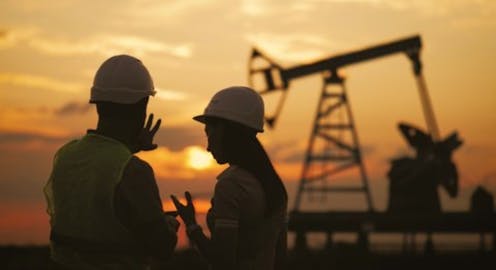
The shift towards net zero emissions and greater international competition have created new opportunities for clean energy industries – poised to shape the global economy in the coming decades.
To harness these opportunities, the government has developed a long-term strategic initiative called the Future made in Australia[1] program.
This program, first flagged by the government last month[2] with a total $22.7 billion investment over the next decade, aims to attract private investment into priority areas while supporting a net zero policy.
The government has identified five priority industries[3] – renewable hydrogen, critical minerals processing, green metals, low carbon liquid fuels and clean energy manufacturing.
It has targeted these sectors, which will receive tax incentives and other benefits, to become a global leader in the move to net zero, boosting the broader economy and industrial sectors.
Major challenges
Despite the positive intentions, there are major challenges.
These include ongoing implementation, bringing in new local and global partners and gaining local community support to build essential infrastructure such as wind turbine and power transmission lines[4].
Other challenges include complex mining operations of critical minerals in remote areas, huge upfront capital costs, problems transporting hydrogen and cost competitiveness of alternative manufacturing locations.
The current budget allocation to be spent over the next decade for the five critical sectors is significant. However, to achieve the intended outcome, the program needs to be expanded.
Expanding priorities
While the critical mineral sector is already a priority, expanding the program to create a large-scale battery supply chain where critical minerals such as lithium, nickel, and cobalt are essential, would make Australia more competitive.
A sovereign battery supply chain would help secure a renewable energy storage system and contribute to producing electric vehicles.
In line with this, the government has developed a National Battery Strategy[5]. However, the focus of this should be extended to include exports and installation at residential and business premises.
Given concerns about supply chain disruption, especially at a time of increased global tensions, other sectors including the health product manufacturing and food processing sectors should also be prioritised.
Developing these industries, which are highly vulnerable to disruption, is important for community well being and economic security.
Becoming more self-sufficient
Since the COVID pandemic, Australia has been experiencing dire shortages[7] of critical medicines including blood thinners, antibiotics and hormone replacement therapy medication[8].
By extending the Future Made program to health products, Australia could boost its domestic production of critical medicines and protect against future shortages. This would also increase Australia’s export opportunities.
Australia could step up exports to Asia[9] by using its free trade agreements with China, Japan, Korea and other countries in the region.
Developing the local food manufacturing and processing industry should also be a priority to protect against supply disruptions already experienced as a result of the Russia/Ukraine war, climate-fuelled weather disasters and the pandemic.
The food industry accounts for the bulk of Australia’s manufacturing jobs[10], highlighting its importance in the economic resilience of the country.
With the correct government policies, the food and grocery sector could be doubled by 2050, increasing employment by 54% to 427,000 people[11].
Reducing emissions
Agriculture should also be included in the priority list. This sector alone was responsible for 16.8% of the country’s total greenhouse gas emissions in 2020-21[12].
It is therefore necessary to ensure freight transport and manufacturing of farm inputs, such as energy and water, are sustainable to achieve the net zero target. Green technologies should replace the existing carbon-generated equipment and machinery in the agriculture sector.
The sector could also be carbon neutralised using microalgae-based technologies[14]. Furthermore, microalgae-based technologies can reduce carbon emissions and pollution for many other manufacturing industries with significant emissions[15].
Therefore, the development and large-scale implementation process of green and microalgae-based technologies should also be included in the program.
The benefits of Future Made in Australia
The Future Made in Australia program’s potential benefits include job creation and skill development, strengthening local industries, securing supply chains and keeping them independent, long term economic growth and cutting carbon emissions.
Under the existing priorities numerous jobs are expected to be created in manufacturing, especially in the renewable energy sector[16]. While job growth will be particularly strong in central and northern Queensland which have been selected for renewable energy and hydrogen hubs[17], jobs will also grow in other parts of the country.
With an allocation[18] of $91 million for developing a clean energy workforce, $55.6 million for building women’s career program and $178.6 million for skills and employment supports for regions in transition, the program is expected to contribute heavily to job creation in clean energy and advanced manufacturing sectors[19].
New investment and tax incentives will help develop new industries and boost existing ones including hydrogen and critical minerals production. The incentives will make hydrogen projects commercial sooner and develop green energy manufacturing capabilities to strengthen the renewable energy sector.
Recent research ranked Australia third in the world for renewable electricity prices in 2030 and 2050, showing its competitiveness in the global arena and potential for economic resilience and growth[20].
Australia is likely to benefit from exporting renewable hydrogen to its international trading partners including Japan, which is planning to import one million tonnes annually, and the European Union which will import 10 million tonnes by 2030.
The exporting cost[21] of various hydrogen carriers to Japan is lowest for Australia compared to its competitors.
Similarly, Australia could leverage its huge capacity to produce iron and bauxite to become one of the world’s cheapest places for green metals.
How Future Made could be even better
The Future Made program targets five priority industries: renewable hydrogen, critical minerals processing, green metals, low carbon liquid fuels and clean energy manufacturing.
Expanding the program to include other critical industries such as agriculture, food processing and health manufacturing and their supply chains will enhance Australia’s economic resilience and security by generating more jobs and ensuring a seamless supply of essential products during future disruptions.
References
- ^ Future made in Australia (www.pm.gov.au)
- ^ government last month (budget.gov.au)
- ^ five priority industries (treasury.gov.au)
- ^ wind turbine and power transmission lines (www.townsvillebulletin.com.au)
- ^ National Battery Strategy (www.industry.gov.au)
- ^ Scharfsinn/Shutterstock (www.shutterstock.com)
- ^ shortages (www.theguardian.com)
- ^ blood thinners, antibiotics and hormone replacement therapy medication (www.smh.com.au)
- ^ Asia (www.austrade.gov.au)
- ^ jobs (www.industrysearch.com.au)
- ^ 54% to 427,000 people (www.afgc.org.au)
- ^ gas emissions in 2020-21 (www.agriculture.gov.au)
- ^ BearFotos/Shutterstock (www.shutterstock.com)
- ^ microalgae-based technologies (www.sciencedirect.com)
- ^ significant emissions (link.springer.com)
- ^ renewable energy sector (theconversation.com)
- ^ renewable energy and hydrogen hubs (www.energyandclimate.qld.gov.au)
- ^ allocation (www.pm.gov.au)
- ^ clean energy and advanced manufacturing sectors (budget.gov.au)
- ^ economic resilience and growth (mssanz.org.au)
- ^ exporting cost (treasury.gov.au)