


Young people may see more than 20 alcohol ads per hour on social media, research finds
- Written by: Brienna Rutherford, PhD Student, National Centre for Youth Substance Use Research, The University of Queensland
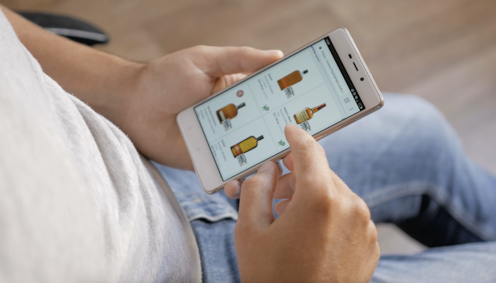
It’s a Friday night and you’re scrolling through Facebook, mindlessly thumbing past photos from friends, when a liquor advertisement catches your eye. It promises one-hour delivery and 30% off, and the next thing you know your Friday night has an entirely different trajectory.
It’s no secret the alcohol industry flocks to social media to promote its products. But to what extent is this really a problem?
Our research published today in Drug and Alcohol Review[1] reveals that, on average, a large proportion of young social media users in Australia are exposed to alcohol ads more than every three minutes.
Regulations? What regulations?
In Australia, alcohol companies are responsible for regulating their own advertising behaviours[2]. But there is no evidence this model[3] successfully protects vulnerable populations, such as minors (under 18) and young adults, from exposure to alcohol ads, nor to potentially harmful messages regarding alcohol consumption.
This has resulted in an abundance of alcohol ads[4] targeting young adults and even minors, without consequences from an overarching regulatory body.
Research has found products advertised using youth-oriented genres[5], reward appeals[6] and stylistic features[7] (such as animations) are more likely to be consumed by underage drinkers[8] than by adults of legal drinking age.
And since social media ads reach millions of viewers[9], it’s no surprise 39% of 12–17-year-olds[10] in Australia report having seen alcohol advertising online. The lack of regulation[11] means there’s growing concern about the effects these ads may have on young people’s attitudes towards drinking.
A number of studies have found correlations between exposure to online alcohol ads and increased youth consumption[12], increased likelihood of drinking at a younger age[13], and the adoption of riskier drinking patterns[14].
One ad every three minutes
We set out to determine how often Australians aged between 17 and 24 were exposed to alcohol-related ads on social media, as well as what advertising qualities were present in these ads.
To do this, we recruited 125 students from the University of Queensland to scroll through Facebook or Instagram for a 30 minutes, screenshotting any alcohol-related ads they encountered.
We found 71 of our participants encountered an alcohol-related ad during this period. Alarmingly, five were under the legal drinking age of 18. In total, our participants came across 796 ads, encountering one ad every two minutes and 43 seconds on average.
These ads often promoted products using sales incentives such as bonus samples, promotional codes, or special offers. They also commonly emphasised the “ease” with which the product could be purchased, such as through a subscription or home delivery service[15].
Almost every ad also included some form of call to action[16], whether that was a link to more information about the product, or to an online storefront to purchase it.
Youth drinking
Globally, we continue to see a gradual decline[17] in drinking among young adults. Nonetheless, the National Drug Strategy Household Survey 2022–2023 found about 42% of people aged 18–24 engaged in risky levels of drinking. This figure was 5.5% for minors aged 14–17.
In this case, “risky” drinking was defined as[18] having either more than ten standard drinks per week (on average) in the previous 12 months, or more than four drinks in a single day, at least once a month, over the previous 12 months.
While it’s hard to quantify the extent to which alcohol ads on social media translate to youth consumption, it’s not a stretch to suggest this content (which promotes the affordability and availability of alcohol) has some kind of impact.
In 2022–23, people aged 18–24 were the most likely to be victims of alcohol-related incidents[19], including physical and verbal abuse. So it’s important we monitor how alcohol is portrayed to this age group.
Thinking forward
Researchers recognise the need to investigate the impact of social media alcohol ads on young people’s drinking behaviours. However, research alone can’t minimise the risks.
In Europe, countries such as Finland, Norway and Sweden[20] have implemented independent statutory bodies to ensure alcohol ads comply with their respective codes. Some have taken this even further, with Lithuania prohibiting alcohol companies from advertising online, and both Finland and Estonia prohibiting alcohol ads on social media.
In Australia, the introduction of an independent alcohol advertising administration[21] would go a long way towards protecting minors and young adults from exposure to marketing that promotes underage or risky drinking.
Or, we could take a page from our neighbour’s book. The Association of New Zealand Advertisers offers a voluntary liquor advertising pre-vetting service[22] to help alcohol companies comply with the country’s advertising code[23]. A similar tool could be useful in Australia if it was mandated. Such a tool could hold both alcohol and social media companies accountable for targeting vulnerable people.
References
- ^ Drug and Alcohol Review (doi.org)
- ^ own advertising behaviours (fare.org.au)
- ^ no evidence this model (onlinelibrary.wiley.com)
- ^ alcohol ads (fare.org.au)
- ^ youth-oriented genres (www.tandfonline.com)
- ^ reward appeals (www.emerald.com)
- ^ stylistic features (www.tandfonline.com)
- ^ consumed by underage drinkers (www.tandfonline.com)
- ^ millions of viewers (datareportal.com)
- ^ 39% of 12–17-year-olds (www.tandfonline.com)
- ^ lack of regulation (fare.org.au)
- ^ increased youth consumption (onlinelibrary.wiley.com)
- ^ drinking at a younger age (onlinelibrary.wiley.com)
- ^ riskier drinking patterns (www.tandfonline.com)
- ^ subscription or home delivery service (doi.org)
- ^ call to action (pubmed.ncbi.nlm.nih.gov)
- ^ gradual decline (www.health.gov.au)
- ^ was defined as (www.aihw.gov.au)
- ^ be victims of alcohol-related incidents (www.aihw.gov.au)
- ^ Finland, Norway and Sweden (www.drugsandalcohol.ie)
- ^ independent alcohol advertising administration (fare.org.au)
- ^ liquor advertising pre-vetting service (www.anza.co.nz)
- ^ advertising code (www.asa.co.nz)










