Athletes have to deal with pressure, stress and often disappointment – what about their coaches?
- Written by: Diarmuid Hurley, Lecturer, Faculty of Health, Southern Cross University
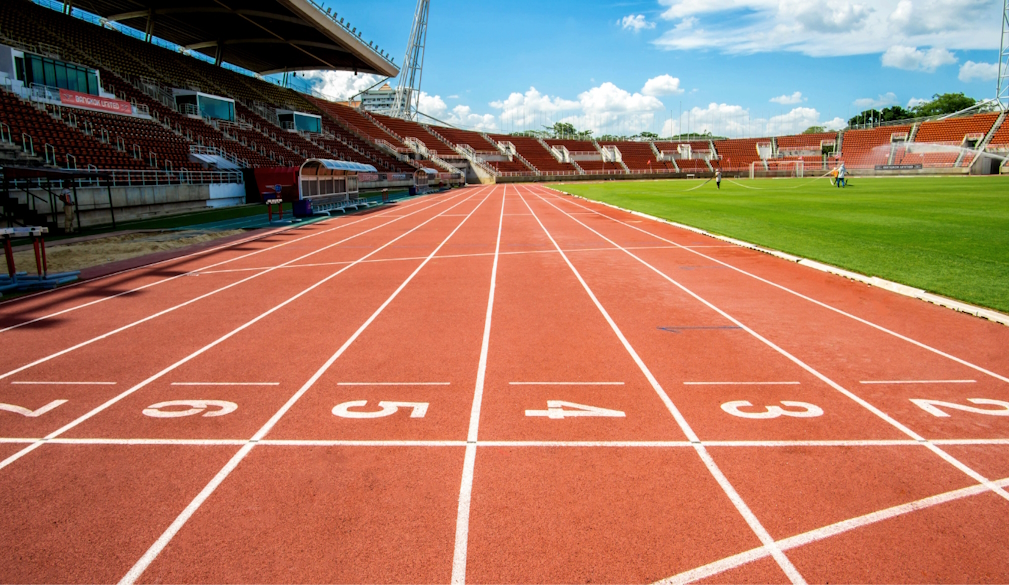
A lifetime of training and dedication. Four years of planning. One moment for athletes to prove themselves to the world.
At the Paris Olympics, elite athletes and their coaches put the finishing touches on four years of meticulous planning and training. In a few weeks, Paralympians and their coaches will do the same.
We tend to focus on athletes – their stories, sacrifices, triumphs and heartbreaks.
But we often pay less attention to the people behind the athletes, including coaches and support teams who, just like fans, share the rollercoaster of highs and lows with athletes.
Many Australians will fondly remember swimming coach Dean Boxall’s outburst of emotion after he watched Ariarne Titmus win a thrilling 400m freestyle final at the Tokyo Olympics.
Dean Boxall went wild after Ariarne Titmus won the 400m freestyle at the Tokyo Olympics.The emotions are real, palpable, exciting … and draining.
Every week, elite coaches ride this stress. They watch in hope that the cumulative effects of training and reflection, then more training and more reflection, will take shape out in the sporting arena.
The highs and lows can be extreme.
The Olympics takes things up a notch
One of the benefits of seasonal sports is the continuity of play. Each week, despite the result, you get another chance to improve on the past performance.
This is not the case for the Olympics.
At the Olympics, an athlete’s age, fitness, skills, and ability to manage stress must all come together in a perfect moment.
Most Olympic athletes all have the same goal: gold. But with so little space at the top, there will be more disappointment than triumph.
After an Olympics, a unique phenomenon labelled the “post Olympic blues[1]” can arise, whereby athletes and coaches experience depressed mood, lack of interest and purpose, anxiety and overall poorer wellbeing after the games finish.
Unfortunately, many coaches under-use or fail to use psychological support services, perhaps not wanting to be seen as vulnerable or weak[2], or uncomfortable with not having all the answers or solutions.
Past research in Australia has indicated that as many as 40% of elite Olympic coaches suffered from mental health issues[3], yet fewer than 6% seek help.
The impact of stress
Stress is a well-explored concept[4], yet it is still largely misunderstood.
One useful way of understanding stress comes from researchers Lazarus and Folkman[5], who suggest stress is the response of an individual to perceived threats or “stressors” in their environment.
Let’s take the example of an athlete in the final of the 100m sprint in front of a packed stadium. How the athlete responds can depend on their level of experience, confidence and training.
Some athletes will successfully implement their pre-race routine to get their mind and body ready[6], while others may succumb to the pressure of the occasion and the nerves they feel.
Lazarus and Folkman argue stress is an inevitable part of being human, but it is an individual’s ability to cope with this stress that makes a big difference.
No matter the level, all coaches face common stressors in their role – forming and handling relationships with athletes, taking on responsibility for others, planning and dealing with the unexpected, a lack of support and of course the disappointment of losing and the need to “bounce back”.
It is important to note, however, that not all stress is bad. Some stress is necessary as it can motivate us[7] to plan, train, and perform to the best of our abilities.
How can coaches of all levels cope with disappointment and stress?
Research[8] can provide a few helpful tips on how to deal with stress in and outside of the sporting arena:
-
Problem-focused coping addresses the root cause of stress by developing plans and taking action to solve problems. You cannot control the weather or the officials but you can be proactive and take back control by developing consistent routines and preparation strategies, as well as plans for when things aren’t going your way.
-
Emotion-focused coping requires managing the emotions related to stress through techniques such as relaxation, seeking social support and reframing negative thoughts. Defeat doesn’t necessarily have to be a negative experience, rather, athletes and coaches can reframe it as a learning experience.
-
Focusing on a mastery mindset rather than a performance environment. A mastery environment focuses on opportunities to improve, problem solve and overcome obstacles. On the other hand, a performance climate is centered on results and winning. Research shows[9] focusing on results can make defeat feel even worse, while focusing on mastery and enjoyment is associated with better coping.
-
Try to avoid “counterfactual thinking”. This concept describes our tendency to focus on what could have been. An interesting example of this comes from the Olympics, when some studies have documented that bronze medal winners were happier than silver medal winners[10]. Why? The bronze medal winners were happy just to get a medal, while the silver medal winners focused on “almost” winning gold.
So next time you’re facing disappointment, try not to focus on what might have been.
Instead, make a plan for next time, explore how you can think differently about what happened, enlist the support and advice of mentors, peers, friends and family, and try to remember why you are doing it in the first place (hint: enjoying it helps!).
References
- ^ post Olympic blues (www.tandfonline.com)
- ^ seen as vulnerable or weak (journals.humankinetics.com)
- ^ 40% of elite Olympic coaches suffered from mental health issues (theconversation.com)
- ^ well-explored concept (www.who.int)
- ^ Lazarus and Folkman (books.google.com.au)
- ^ get their mind and body ready (www.sportskeeda.com)
- ^ it can motivate us (www.healthdirect.gov.au)
- ^ Research (www.researchgate.net)
- ^ Research shows (journals.humankinetics.com)
- ^ bronze medal winners were happier than silver medal winners (theconversation.com)