Is Australia ‘giving away’ its natural resources?
- Written by: Diane Kraal, Adjunct Senior Research Fellow, Business Law and Taxation Dept, Monash Business School, Monash University
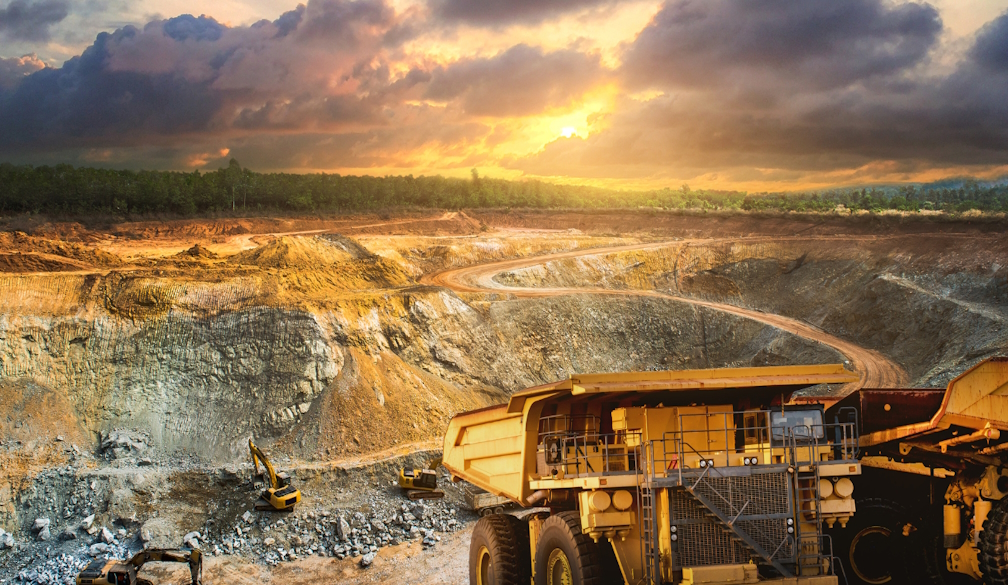
Speaking on ABC’s Q&A[1] on Monday night, Nobel Prize-winning economist Joseph Stiglitz claimed Australia was “giving away its natural resources”, something he found “mind boggling”.
He said that if Australia made the fossil fuel industry pay for the value of the resources it extracts and its fair share of taxes, “you wouldn’t have the problems that you have today”.
Stiglitz appeared to be referring to our profits-based petroleum resource rent tax, also known as the “gas tax”.
Having formally researched[2] and advised specialist forums[3] on this issue for many years, I agree with him that yes – we are giving away our wealth, both to foreign countries and companies owned overseas.
It’s great to see an international heavyweight like Stiglitz pointing out some of the glaring issues with our system. To fix it, the federal government needs to get rid of its profit-based offshore gas tax altogether and revert to the royalties-based system we used to have.
How do we tax gas?
Australia’s petroleum resource rent tax, or gas tax, is a secondary taxation on offshore gas resources. It’s a tax on profits, that is to say, it’s only collected when gas companies’ incomes exceed their expenditures.
Australia now consistently ranks among the top liquefied natural gas exporters in the world. But our tax take from the industry has long been too low.
So low, in fact, it triggered a federal government review[5] in 2017. Former treasury official Michael Callaghan headed up the review as an independent expert.
I recall being quizzed by Callaghan in early 2017 at my Monash office in Melbourne over my submission to the review, which advocated for major reform of existing gas tax concessions.
But at the same time in Canberra, gas industry executives were lobbying hard, insisting there be no change to gas taxing due to “sovereign risk[6]”.
Callaghan ultimately tendered a report[7] recommending tax design reforms. But the changes later implemented[8] by the government were little more than window-dressing, for as the revenue table below shows, gas tax revenues are still too low.
Figures from 2018 show a sizeable gap[9] between Australia’s gas tax revenue of about A$1.1 billion, and that of our nearest competitors. Qatar collected gas royalties that same year of more than $50 billion, and Norway’s special gas tax netted the country $19.5 billion.
It is obvious, even to dispassionate observers like Stiglitz, that Australia’s lack-lustre gas tax legislation results in a gas industry that doesn’t pay its fair share for community-owned natural resources.
Why did we move away from royalties?
We used to tax the offshore gas industry under a system of federal royalties that were based on the market value of petroleum production.
The profits-based tax concept was developed by economists Ross Garnaut and Anthony Clunies Ross in the 1970s, for the oil industry in the newly independent Papua New Guinea[10].
Garnaut was economic advisor to the Hawke-Keating Government, and in 1983 advocated[12] the repeal of federal royalties. The profits-based tax that replaced it was first applied to profits on Australian oil production in 1987, where it raised reasonable revenue.
But it was later applied to offshore gas production, which is less profitable than oil due to costly liquefaction, storage infrastructure, and specialised high-pressure gas transport requirements.
This characteristic low profitability of the gas industry delays the triggering of the gas tax. Companies can operate for years without paying it. In other words, Australia is not being paid for much of its “stock” of gas that is mainly sold for export.
A fair share of taxes
A return to federal royalties on offshore gas production would increase government revenues, and provide a fairer outcome for the community.
Some of us may recall the 2014 repeal of mining’s profits-based Minerals Resource Rent Tax, due to its low revenues. The government repealed the profits-based tax in 2019 for onshore gas, and could easily do the same for offshore gas.
Joseph Stiglitz’s observations on the way we tax our natural resources offer another opportunity for us to reflect. We are missing the opportunity to fairly tax things we can only extract once, to the detriment of our community.
References
- ^ Q&A (www.abc.net.au)
- ^ researched (research.monash.edu)
- ^ advised specialist forums (www.austaxpolicy.com)
- ^ Shutterstock (www.shutterstock.com)
- ^ review (treasury.gov.au)
- ^ sovereign risk (theconversation.com)
- ^ report (treasury.gov.au)
- ^ later implemented (ministers.treasury.gov.au)
- ^ sizeable gap (www.abc.net.au)
- ^ Papua New Guinea (pngnri.org)
- ^ Ian Geraint Jones/Shutterstock (www.shutterstock.com)
- ^ advocated (dx.doi.org)
Read more https://theconversation.com/is-australia-giving-away-its-natural-resources-236784