The death of printed newspapers has long been predicted – but there are still some pleasing signs of life
- Written by: Andrea Carson, 2024 Oxford University visiting research fellow RIJS; Professor of Political Communication., La Trobe University
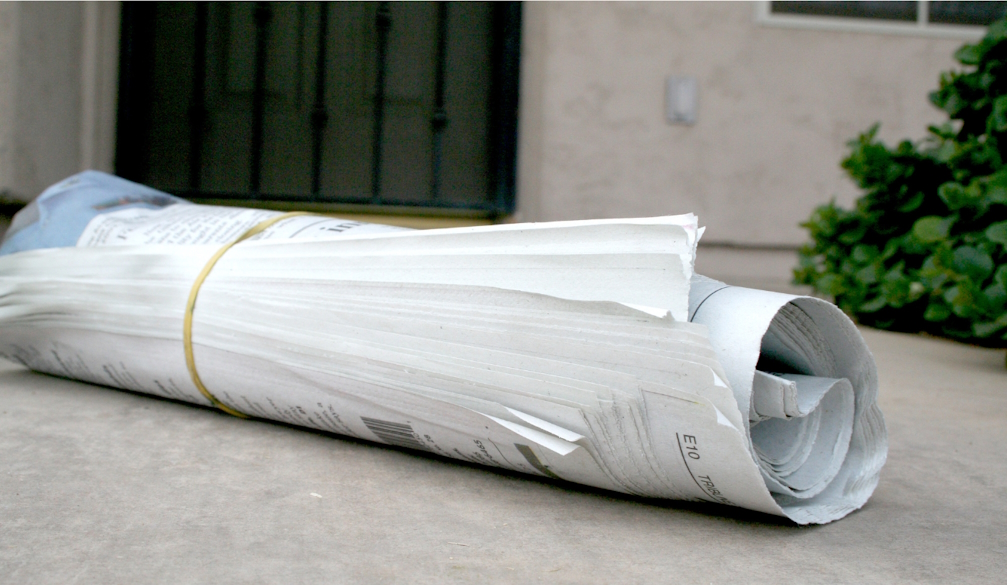
When the Australian newspaper celebrated its 60th anniversary this year, its founder, Rupert Murdoch, foreshadowed the death of print newspapers within 15 years.
“Fifteen years, with a lot of luck,” declared the media mogul and chairman emeritus of News Corp in a Sky interview[2], much to the chagrin of his employees.
It’s an uncomfortable prediction for those in an already struggling industry. In the past month, Australia’s newsrooms have continued to shrink. Big-name journalists have been taking redundancies[3] across metropolitan and regional mastheads.
Workplace discontent is also high, with job cuts following hundreds of Nine journalists striking[4] over pay during the Paris Olympics.
Social media grab the headlines – and the eyeballs
Global trends also show worrying signs for legacy media. In Britain, recent data released by media regulator Ofcom[5] showed a generational shift, with more people getting their news online than from TV for the first time since the 1960s (with the exception of election coverage). The annual survey also showed social media dominating audience share over news publisher websites.
The University of Oxford’s Reuters Institute annual digital news report[6], released in June, paints the same picture. It found that, across 47 countries, news use was fragmenting across platforms and outlets.
Even social media are disrupted. A wave of new online platforms is taking greater audience share from what are now termed “legacy” social media sites. For example, the relatively new kid on the block, TikTok, has overtaken the rebranded Twitter, now X, for news use for the first time.
Meanwhile, the proportion of news consumers (22%) whose main news source is news websites has fallen 10% since 2018. Instead, digital short-form videos and online “news explainers” from influencers are increasingly popular, especially with younger audiences. TikTok and YouTube news use is also increasing, as they are ideal mediums for video content.
In some instances, social media influencers have greater audience trust levels than established mastheads. Media news trust[7] varies by brand, but in a world troubled with misinformation, overall trust in Australia media sits at a worrying 40%.
Ask anyone under 30 when they last read a printed newspaper? For generation Z (18 to 26 years old) two-thirds rely on social media as their main news source. Meta’s Instagram is their preferred platform. For other age groups, one in two[8] (49%) of Australians say they use social media for news, a fraction behind TV (56%).
Newspapers show signs of adapting
Yet, despite the doom and gloom facing newspapers, there are signs they are adapting to a volatile news market and finding ways to profit in the process. Legacy outlets have built followings on TikTok, Instagram and other social media platforms. They are also earning advertising revenue on YouTube.
During the 2023 Voice referendum[9], for example, Murdoch’s Sky Australia posted about 490 Voice-related YouTube videos. These postings earned 9 million views, providing the outlet with influence over public opinion – most were anti-Voice stories – and a new revenue model. Media rival the Guardian Australia posted about 110 Voice videos, attracting about 1.6 million views. As a digital native, the Guardian’s future has never been in print.
Most surviving newspapers have diversified their revenue streams[10], drawing on a mix of:
- print, digital and native advertising
- paywall or voluntary subscriptions
- donations
- philanthropy
- hosting events
- selling data
- grants from digital platforms and governments
- News Media Bargaining Code payments
- taxpayer funding for the public broadcasters (ABC, SBS).
Crisis narratives around newspapers have been constant since advertising shifted to online competitors from the early 2000s. But there have also been funding innovations, most recently the world-first News Media Bargaining Code[11].
Introduced in 2021, the NMBC was initially regarded as a breakthrough model to sustain journalism. Operating as a voluntary code, it resulted in more than $200 million a year flowing from Google and Facebook to news outlets.
But after three years, Facebook has turned its back on the code, and the government, so far, has resisted using its powers to force Facebook back to negotiate.
A decade earlier, the latest innovation was digital paywalls[12] to build subscription revenue. The tipping point in Australia was 2012, when the majority of daily mastheads introduced some form of paywall. But paywalls can be a difficult balancing act and success stories such as that of the New York Times – with 10 million subscribers and digital subscription revenue outstripping advertising – are hard to emulate because most papers do not have similar global brand appeal.
Also, profits are higher from selling print advertising compared to selling digital ads. Papers like America’s Salt Lake Tribune[13] are disbanding their paywall in favour of a nonprofit business model.
But, with only 21% of Australians prepared to pay for news[14], paywalls better suit large metropolitan papers that have loyal audiences and established brands. For start-ups and tabloid-style publications that depend on social media referrals or clickbait to draw in readers and advertisers, paywalls can be an obstacle. Murdoch’s news.com.au is a case in point: it’s free and Australia’s most popular online news site.
AI is the latest innovation. News Corp, Reuters, Time Magazine, Financial Times, Le Monde, Prisa Media and other news outlets have entered into lucrative contracts[15] with generative AI companies to allow their news content to train AI models. In the newsroom, News Corp is reportedly using AI to help produce over 3,000 stories[16] a week.
While the future of printed Australian newspapers is uncertain, it doesn’t spell the end of newspapers – or of a Murdoch’s influence on the news.
References
- ^ here (theconversation.com)
- ^ Sky interview (www.skynews.com.au)
- ^ redundancies (www.crikey.com.au)
- ^ striking (www.abc.net.au)
- ^ Ofcom (www.niemanlab.org)
- ^ digital news report (reutersinstitute.politics.ox.ac.uk)
- ^ Media news trust (www.canberra.edu.au)
- ^ one in two (www.canberra.edu.au)
- ^ During the 2023 Voice referendum (scholar.google.com)
- ^ diversified their revenue streams (www.taylorfrancis.com)
- ^ News Media Bargaining Code (journals.sagepub.com)
- ^ digital paywalls (journals.sagepub.com)
- ^ Salt Lake Tribune (www.niemanlab.org)
- ^ pay for news (www.canberra.edu.au)
- ^ lucrative contracts (investors.newscorp.com)
- ^ 3,000 stories (reutersinstitute.politics.ox.ac.uk)