Will Trump renew ‘maximum pressure’ against Iran – or could there be an opening for dialogue?
- Written by: Ali Mamouri, Research Fellow, Middle East Studies, Deakin University
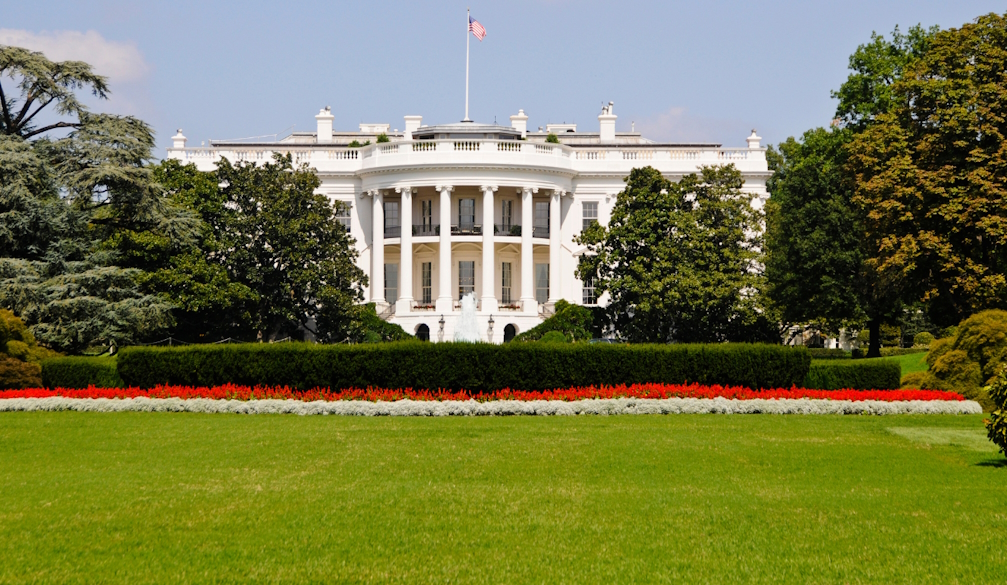
With Donald Trump returning to the White House, the relationship between the US and Iran could change significantly.
Trump’s unconventional foreign policy led to a period of heightened confrontation with Iran during his first term in office. However, the regional dynamics have evolved over the past four years, and Trump’s approach to Iran may shift as a result.
Tensions are running high between the two adversaries. Last Friday, the US Department of Justice unveiled[1] federal charges in what it said was a thwarted Iranian plot to assassinate Trump. Iranian Foreign Minister Abbas Araghchi dismissed[2] the allegations as “fabricated”.
In a report[3] in the Wall Street Journal, Iranian officials also told the US government in a secret exchange last month that the country wouldn’t seek to kill Trump.
So, will these tensions continue in a second Trump term? Or might there be an opportunity for Iran and the US to actually improve relations?
How did the ‘maximum pressure’ policy work?
During his first term, Trump enacted a so-called “maximum pressure” policy[4] aimed at curbing Iran’s growing influence in the Middle East.
Iran had grown much stronger after sanctions were lifted as part of the 2015 nuclear deal known as the Joint Comprehensive Plan of Action (JCPOA), negotiated by the Obama administration.
Trump withdrew from this agreement in 2018. The US re-imposed severe sanctions on Iran and an embargo on its oil exports. This had severe impacts on Iran’s economy and contributed to social unrest within the country.
In January 2020, tensions between the US and Iran culminated in the assassination of Quds Force commander Qassem Soleimani[5] by a US drone strike. This led to reprisal attacks by Iran on a US military base in Iraq.
In response to these mounting pressures, Iran scaled back its adherence[6] to the JCPOA. It barred[7] International Atomic Energy Agency inspectors from monitoring its nuclear program and enriched uranium to near-weapons-grade level[8].
Regional dynamics have changed
Over the past four years, there have been substantial shifts in Iran’s relationships with Arab states in the region.
Most significantly, Iran and its chief rival, Saudi Arabi, resumed diplomatic relations[9] in March 2023, marking a historic end to a long period of hostility.
Relations between the two nations quickly progressed to a level of co-operation unthinkable just years ago. And as Israel’s wars in Gaza and Lebanon have continued, Saudi Arabia has drifted away from Israel and closer to its biggest foe, Iran.
Although some scepticism remains[10], the foreign ministers of both countries met[11] last month in Riyadh, followed by a meeting this week between the general chief of staff of Saudi Arabia’s armed forces and his counterpart in Tehran.
And at a summit of regional leaders in Riyadh this week, Saudi Crown Prince Mohammed bin Salman urged[12] Israel to respect Iranian sovereignty and accused[13] Israel of “collective genocide” in Gaza. The summit resolution[14] also warned of the danger of Israel’s “expansion of aggression” against Iran and other regional countries.
The latest confrontations between Iran and Israel have underscored both nations’ destructive capabilities. A war between them would likely trigger a catastrophic broader conflict that could draw in the United States, Russia and other players. Such a scenario would have profound economic and security repercussions worldwide.
Trump’s stance towards Iran
In his campaign for a second term, Trump has consistently spoken out against prolonged US involvement in wars. He also signalled a more conciliatory approach to Iran[15]. Rejecting the idea of US-driven regime change in Tehran, he remarked:
I would like to see Iran be very successful. The only thing is, they can’t have a nuclear weapon.
He further expressed a hope for improved relations: “I’m not looking to be bad to Iran, we’re going to be friendly, I hope.”
Elon Musk, the tech billionaire closely allied with Trump, also met with Iran’s ambassador to the United Nations earlier this week in a bid to defuse tensions in the next administration, The New York Times reported[16].
However, other reports indicate[17] that Trump’s top advisers are planning to reinstate the “maximum pressure” campaign against Iran. It would include increasing sanctions again and choking off Iran’s oil income by “going after foreign ports and traders who handle Iranian oil”.
Trump’s unpredictable policymaking style suggests it is too early to know what approach he might take.
Iran’s stance toward a second Trump term
Iran is now led by a reformist government (by Iranian standards), whose tenure would overlap with much of Trump’s second term.
President Masoud Pezeshkian’s administration has voiced its desire[18] to improve relations with the West and resume nuclear talks. And contrary to previous reformist governments in Iran, it generally enjoys the support of Supreme Leader Ayatollah Ali Khamenei, who has the ultimate power in the country.
Despite its military strength, Iran faces deep economic challenges, with public dissatisfaction growing. Therefore, Iran may seek to prioritise diplomatic solutions with the new Trump administration, knowing any escalation could destabilise the region.
In a sign of openness towards Trump, Iran’s vice president for strategic affairs, Mohammad Javad Zarif, has urged[19] him to reassess the policy of “maximum pressure”, saying: “Trump must show that he is not following the wrong policies of the past.”
In the same vein, Araghchi, the foreign minister, has sent positive signals[20] to Trump, saying:
The path forward is also a choice. It begins with respect […] Confidence-building is needed from both sides. It is not a one-way street.
He also emphasised that Iran is “NOT after nuclear weapons”.
Iran has yet to respond to Israel’s latest direct attack in late October. Though Iran has launched two direct attacks of its own on Israel this year, it may seek to de‑escalate tensions. In a statement in late October, Iran’s military said[21] a ceasefire in the Gaza and Lebanon conflicts is more important than retaliation against Israel.
If a ceasefire were to occur, the region could enter a period of relative calm after a year of heightened tensions. This would present a valuable opportunity for the US to work with Israel, Arab states and potentially Iran towards a more permanent regional peace framework.
References
- ^ unveiled (edition.cnn.com)
- ^ dismissed (en.mfa.ir)
- ^ report (www.wsj.com)
- ^ “maximum pressure” policy (www.ft.com)
- ^ assassination of Quds Force commander Qassem Soleimani (www.al-monitor.com)
- ^ scaled back its adherence (www.crisisgroup.org)
- ^ barred (apnews.com)
- ^ enriched uranium to near-weapons-grade level (www.armscontrol.org)
- ^ resumed diplomatic relations (carnegieendowment.org)
- ^ some scepticism remains (www.nytimes.com)
- ^ met (www.reuters.com)
- ^ Mohammed bin Salman urged (www.timesofisrael.com)
- ^ accused (edition.cnn.com)
- ^ summit resolution (mofa.gov.pk)
- ^ signalled a more conciliatory approach to Iran (www.newsweek.com)
- ^ reported (www.nytimes.com)
- ^ other reports indicate (www.wsj.com)
- ^ voiced its desire (www.theguardian.com)
- ^ urged (www.voanews.com)
- ^ sent positive signals (en.mfa.ir)
- ^ said (apnews.com)