US tariffs will upend global trade. This is how Australia can respond
- Written by: Felicity Deane, Professor of Trade Law, Taxation and Climate Change, Queensland University of Technology
US President Donald Trump has imposed a range of tariffs[1] on all products entering the US market, with Australian exports set to face a 10% tariff, effective April 5.
These import taxes will be charged by US customs on each imported item. The punitive tariffs on 60 countries range as high as 34% on imports from China and 46% on Vietnam, and exceed the rates agreed between the United States and other global trade partners.
“For decades, our country has been looted, pillaged, raped and plundered by nations near and far, both friend and foe alike,” Trump said.
The impact on Australian industries will be both direct and indirect. The largest Australian export to the US is meat products, totalling A$4 billion in 2024, and our farmers may divert some product to other nations.
Direct and indirect impacts
The larger economic risk is to our regional trading partners.
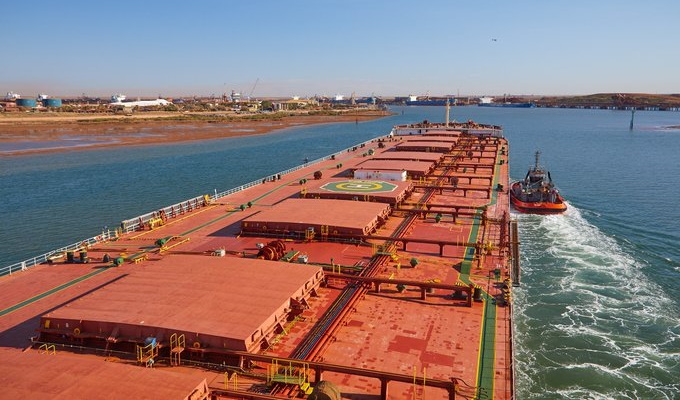
While Australia faces only 10% tariffs, our major trading partners China, Japan and South Korea all face much higher US tariffs under the new regime. So the risk of a manufacturing slowdown in those countries could dampen demand for Australia’s much larger exports – iron ore, coal and gas.
Australian investors reacted swiftly, wiping 2.1% off the main stock market index, the S&P/ASX 200, in the first hour of trade.
Another problem will be the disruption to global supply chains. It is not just finished products impacted. For instance, the 25% automobile tariff will be extended to auto parts[2] on May 3. This means even if a car is entirely built in the US, it will still be more expensive because many components are imported.
Read more: What are tariffs?[3]
What sectors has the US complained about?
On April 1, the US released an annual trade report that identifies what it describes as “foreign trade barriers”. There was a long list of grievances with both tariff and non-tariff[4] barriers identified.
The report identified Australia’s biosecurity restrictions on meat, apples and pears. The Australian biosecurity rules[5] do not directly ban any products, although in practice raw beef products are excluded.
Trump singled out Australian beef in his speech. “They won’t take any of our beef,” he claimed.
In a speech riddled with inaccuracies and falsehoods, this was one of them. Australia take shelf-stable US products, but not raw products for which consumer safety can not be assured[6].
The US cited two other main Australian trade barriers. US drug companies have criticised the Pharmaceutical Benefits Scheme[7] approvals processes. The Albanese government’s plan to strengthen[8] the News Media Bargaining Code that requires tech companies to pay for news published on their platforms was also targeted.
How can Australia respond?
Both Prime Minister Anthony Albanese[9] and Opposition Leader Peter Dutton are in agreement over what we should do in response. They say Australian law and policy is not up for sale. We don’t negotiate on biosecurity, we don’t negotiate on the Pharmaceutical Benefits Scheme process, and our local news media deserves protection from Big Tech.
1. All avenues start with negotiations
The preferred option is for a negotiation with the US to secure an exemption.
A dispute at the World Trade Organization (WTO)[10] sends a strong message to our trading partners and will also mean there’s an expert adjudication on this unprecedented move.
However, the US has sidelined the WTO in recent years and Albanese has ruled out this route.
2. Consultation
The second potential action is to initiate consultations under the Australia–US Free Trade Agreement. There is a formal process[11] identified in the agreement to which Albanese referred, with a threat of “dispute resolution mechanisms”.
Albanese has ruled out imposing “reciprocal tariffs” on US imports, noting this would only push up prices for Australian consumers.
3. Find new markets
Third, we can find other markets. Australian agricultural products are some of the most desirable in the world. Australian producers will have other options. Indeed, the latest data for beef exports[12] showed exports to China jumped 43% from January, to Japan up 27%, and to South Korea up 60% from the previous month.
What has the government said?
Albanese announced a response package[13], including $50 million to help pursue new markets. He said the tariff announcement was “not the act of a friend” and had “no basis in logic”:
It is the American people who will pay the biggest price for these unjustified tariffs. This is why our government will not be seeking to impose reciprocal tariffs.
Albanese’s response contains only one direct trade measure. That is the plan to strengthen anti-dumping[14] provisions on steel, aluminium and other manufacturing. This means countries looking to sell their products too cheaply in Australia will face countervailing duties. It is a measure that aligns with trade rules.
The decision by the US to impose tariffs in this way shows complete disregard for the world trade order established after World War II.
The rules that have existed since this time aimed to limit trade barriers (such as tariffs). They also recognised the importance of supporting developing countries to be part of the world economy.
Some of the biggest US tariffs are to hit some of the lowest-income countries. This will impact their economies badly and disadvantage people already living in poverty.
Read more: Why developing countries must unite to protect the WTO's dispute settlement system[15]
References
- ^ range of tariffs (www.whitehouse.gov)
- ^ extended to auto parts (www.afr.com)
- ^ What are tariffs? (theconversation.com)
- ^ tariff and non-tariff (ustr.gov)
- ^ Australian biosecurity rules (theconversation.com)
- ^ consumer safety can not be assured (nff.org.au)
- ^ criticised the Pharmaceutical Benefits Scheme (theconversation.com)
- ^ plan to strengthen (theconversation.com)
- ^ Anthony Albanese (www.abc.net.au)
- ^ dispute at the World Trade Organization (WTO) (www.abc.net.au)
- ^ formal process (www.abc.net.au)
- ^ latest data for beef exports (www.beefcentral.com)
- ^ announced a response package (theconversation.com)
- ^ anti-dumping (www.industry.gov.au)
- ^ Why developing countries must unite to protect the WTO's dispute settlement system (theconversation.com)