Labor settled the ‘funding wars’ just before the election. Here are 4 big issues schools still face
- Written by: Stewart Riddle, Professor, School of Education, University of Southern Queensland
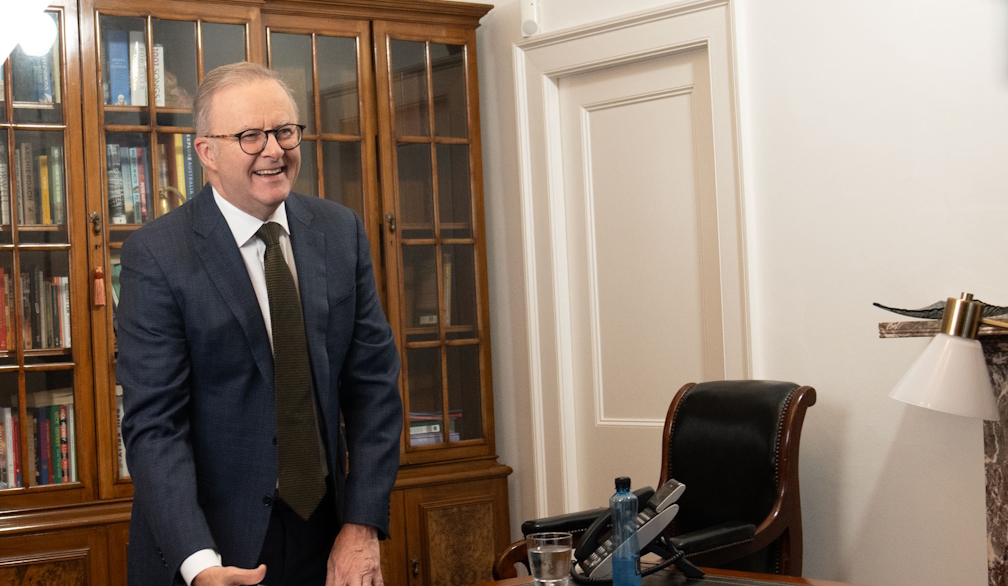
Days before Prime Minister Anthony Albanese called the federal election, the Labor government settled a long-running argument[1] with the states over school funding.
This locked in a new 25%–75% split on federal and state funding for schools. It also committed to “fully funding[2]” public schools by 2034, according to the requirements recommended by the Gonski report in 2011.
But apart from Peter Dutton’s criticism of the curriculum[3] – suggesting students were being “indocrinated” – schools barely figured in the campaign.
In his victory speech, Albanese declared[4] his new government would deliver on the values of “fairness, aspiration and opportunity for all”.
Education is the engine room for all three of these. Now Labor has been returned for a second term, what should the priorities be for schooling?
1. The teacher shortage
Teachers are burning out and leaving the profession[5] at an alarming rate. We are due to have a shortage of 4,100 high school teachers[6] in 2025.
There is a large body of research showing unsustainable workload[7] is a key issue. Teachers have also lost professional autonomy and status[8], while facing increased scrutiny based on standardised test results and accountability metrics.
A study of 65,000 Australian media articles[9] from 1996 to 2020 found overwhelmingly negative portrayals of teachers, who have been blamed for education failures.
There needs to be a national response to the teaching workforce crisis that goes beyond the piecemeal approach of previous plans, such as 2022’s National Teacher Workforce Action Plan[10].
We need a more coordinated and extensive campaign to attract and retain teachers. This will take substantial time and financial investment.
2. Student disengagement
Likewise, we need strategies to support and enable students to participate fully in schooling. Issues around school refusal and attendance are increasing[11] across Australia. A comprehensive response is needed, which addresses the broad range of social, economic, health and wellbeing factors at play.
Simple policy “fixes” such as prepackaged lessons[12], mandated explicit teaching[13] practices, or phonics screening[14] will do little to re-engage marginalised[15] young people.
Schools need to be able to provide inclusive and supportive learning environments, which cater to the diverse needs and interests of their students and communities.
This requires school-specific approaches[16] to the curriculum, teaching methods and school climate (or the quality of school life), rather than further standardisation.
3. Educational inequality
Australia has one of the most unequal schooling systems[17] in the OECD. As the MySchool website notes[18], “there is a substantial body of research evidence that shows the educational performance of students […] is related to certain characteristics of their family […] and school”.
Put another way, there is a persistent link between postcodes and educational access and outcomes for Australian students.
Fully funding public schools in communities facing complex disadvantage is a start, but much more is needed to reverse the policy settings[19] that have entrenched inequality in Australian schooling.
The combined effects of more than two decades of standardisation[20] (including a focus on high-stakes tests) and marketisation[21] (where schools compete for students) have hollowed out public education in Australia.
There needs to be a bold plan to reshape Australian schools as engines of equality.
4. Global uncertainty
Schools need to be places where young people can not only learn about the world, but also how to get along in the world. This need has arguably become even more pressing.
With the re-election of US President Donald Trump, the world has become more uncertain and more complex. We also know Australian students’ civics knowledge is at its lowest[22] since testing began.
Making schools more welcoming and inclusive for students from diverse backgrounds is one way to help build a more democratic future[23] in which difference is celebrated and lasting social bonds are formed.
Giving young people the opportunity to collaborate on problems that matter[24] to their communities (for example, climate change) can also help make them more engaged and critical thinkers.
In collaborating on problems, schools use traditional curriculum resources as well as local knowledge and cultural wisdom, which helps to connect young people to their schools and communities.
The Australian Curriculum already provides the opportunity for schools to do this work, but is often pushed aside[25] in the drive for increased literacy and numeracy test results.
Time for a bold vision
To deliver on Albanese’s promise of “fairness, aspiration and opportunity for all”, the Australian government must do much more than provide extra funding for schools.
Now is the time for a big, bold vision of education for all young Australians. This needs to involve the teaching workforce, students from all backgrounds, and a consideration of the skills and knowledge needed to meet the challenges of a complex and volatile world.
References
- ^ settled a long-running argument (theconversation.com)
- ^ fully funding (theconversation.com)
- ^ of the curriculum (theconversation.com)
- ^ Albanese declared (www.theguardian.com)
- ^ leaving the profession (journals.sagepub.com)
- ^ 4,100 high school teachers (ministers.education.gov.au)
- ^ unsustainable workload (www.tandfonline.com)
- ^ professional autonomy and status (blog.aare.edu.au)
- ^ 65,000 Australian media articles (theconversation.com)
- ^ National Teacher Workforce Action Plan (www.education.gov.au)
- ^ increasing (www.aph.gov.au)
- ^ prepackaged lessons (grattan.edu.au)
- ^ explicit teaching (www.education.vic.gov.au)
- ^ phonics screening (education.nsw.gov.au)
- ^ re-engage marginalised (www.tandfonline.com)
- ^ school-specific approaches (www.tandfonline.com)
- ^ unequal schooling systems (theconversation.com)
- ^ MySchool website notes (myschool.edu.au)
- ^ policy settings (blog.aare.edu.au)
- ^ standardisation (www.routledge.com)
- ^ marketisation (www.theguardian.com)
- ^ is at its lowest (theconversation.com)
- ^ a more democratic future (www.routledge.com)
- ^ problems that matter (www.tandfonline.com)
- ^ pushed aside (www.acu.edu.au)