How should central banks respond to US tariffs? The RBA provides some clues
- Written by: Stella Huangfu, Associate professor, University of Sydney
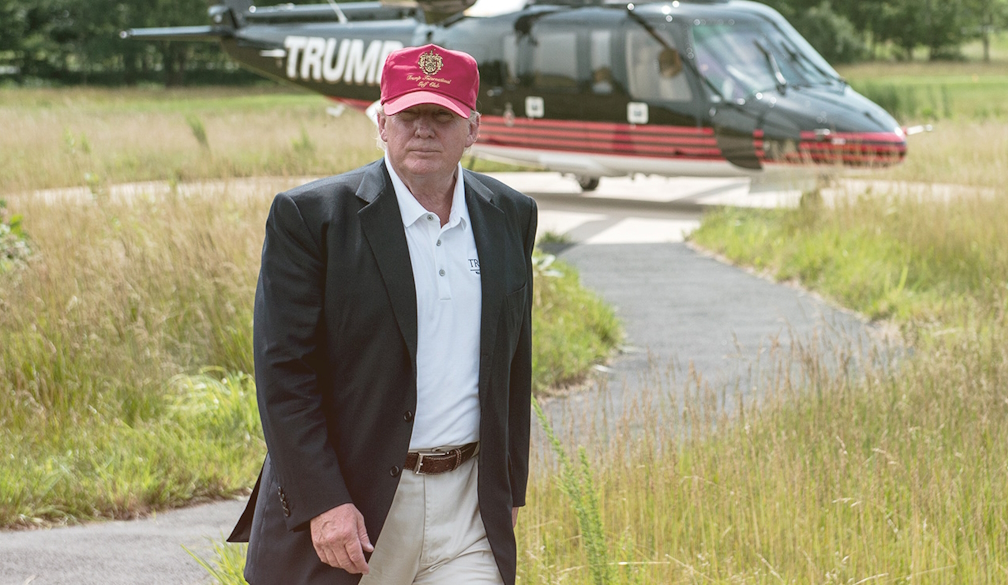
With the return of Donald Trump to the White House, the United States has signalled a return to aggressive tariff policies, upending economic forecasts around the world.
This leaves central banks with a tricky dilemma: how to respond when inflation and global growth are being shaped by political decisions rather than economic fundamentals?
Tariffs lift import prices[1] and disrupt trade, which could lead to higher inflation. But they can also dampen consumer demand and undermine business confidence, which would slow economic growth.
This leaves central banks balancing two opposing forces – do they raise interest rates to control inflation, or cut interest rates to support growth?
Three big shocks in a row
This week, Reserve Bank of Australia (RBA) Governor Michele Bullock addressed this challenge in a press conference[2] after cutting interest rates for the second time this year.
She described the current period as one of “shifting and unusual uncertainty”.
Central banks, she noted, have faced three major shocks in succession: the global financial crisis, the COVID pandemic, and now the fallout from Trump’s trade policies.
Each, she said, is different – this latest one being political in nature and harder to categorise. Bullock stressed the difficulty of judging whether such shocks are supply-driven or demand-driven, or both, and emphasised the need to prepare for a range of outcomes[3].
So, the Reserve Bank took the unusual step of outlining three alternative global scenarios[4] – trade war, trade peace, and a central baseline. Each one has distinct implications for Australian monetary policy.
It’s a clear example of how central banks can remain flexible and forward-looking in a world where the next shock may look nothing like the last.

Looking at three global scenarios
1. Trade war (escalation)
In this scenario[5] laid out in the Reserve Bank’s quarterly statement on monetary policy, the US imposes sweeping new tariffs. That prompts retaliation and a slowdown in global trade. Supply chains are hit and business confidence falls.
Australia would feel the consequences quickly: weaker export demand, rising import prices, and a difficult mix of slower growth and temporary inflation. Here, the Reserve Bank would likely look past short-term price increases and focus on deteriorating demand. A rate cut would become more likely, despite inflation being above target in the short run.
2. Trade peace (de-escalation)
If the US backs away from new tariffs and tensions ease, global confidence improves and trade stabilises. Australia benefits from stronger global demand, a rebound in commodity exports and rising investment.
In this setting, inflation rises gradually due to higher activity – not import price shocks. The Reserve Bank might hold rates steady, or even consider hiking rates if inflation pressures build. But this scenario also carries risk: if the recovery is faster than expected, interest rates may be left low for too long.
3. Baseline scenario
In the bank’s central case, trade tensions persist but do not escalate. Global growth slows moderately and firms adjust to ongoing strain in supply chains.
Australia sees subdued but stable economic growth. Inflation remains within the 2-3% target band in the near term, and the Reserve Bank would stay open to either raising or lowering interest rates, depending on how risks evolve.
Other central banks face similar choices
Australia’s central bank is not alone in navigating these challenges.
At the Bank of England, the decision to cut rates in May showed a divided Monetary Policy Committee[6]. While the majority supported a 0.25% cut, two members – including trade expert Swati Dhingra – called for a larger 0.5% move to better support growth. The split highlights the difficulty of gauging how aggressively to respond in an uncertain environment.
In the US, Federal Reserve Chairman Jerome Powell has warned of the risks posed by Trump’s new tariffs. Speaking in April, Powell said the impact could be “larger than expected[7]”, threatening both growth and inflation.
With trade policy largely out of the Fed’s hands, he noted, the central bank must still monitor developments on tariffs closely because of their potential to disrupt both employment and prices[8].
The road ahead
The re-emergence of US tariffs adds to the complexity facing central banks. As Bullock noted, this is not just another economic shock – it’s a politically driven one, which is harder to model and forecast.
The Reserve Bank’s response offers a practical framework: map out potential scenarios, weigh their implications and stand ready to move. In an uncertain world, monetary policy must be based not just on data, but on judgement, flexibility and contingency planning.
Read more: What are tariffs?[9]
References
- ^ lift import prices (discoveryalert.com.au)
- ^ press conference (www.rba.gov.au)
- ^ prepare for a range of outcomes (www.rba.gov.au)
- ^ alternative global scenarios (www.rba.gov.au)
- ^ this scenario (www.rba.gov.au)
- ^ divided Monetary Policy Committee (www.bankofengland.co.uk)
- ^ larger than expected (www.cnbc.com)
- ^ employment and prices (budgetlab.yale.edu)
- ^ What are tariffs? (theconversation.com)