Most of us will leave behind a large ‘digital legacy’ when we die. Here’s how to plan what happens to it
- Written by: Bjorn Nansen, Associate Professor, School of Computing and Information Systems, The University of Melbourne
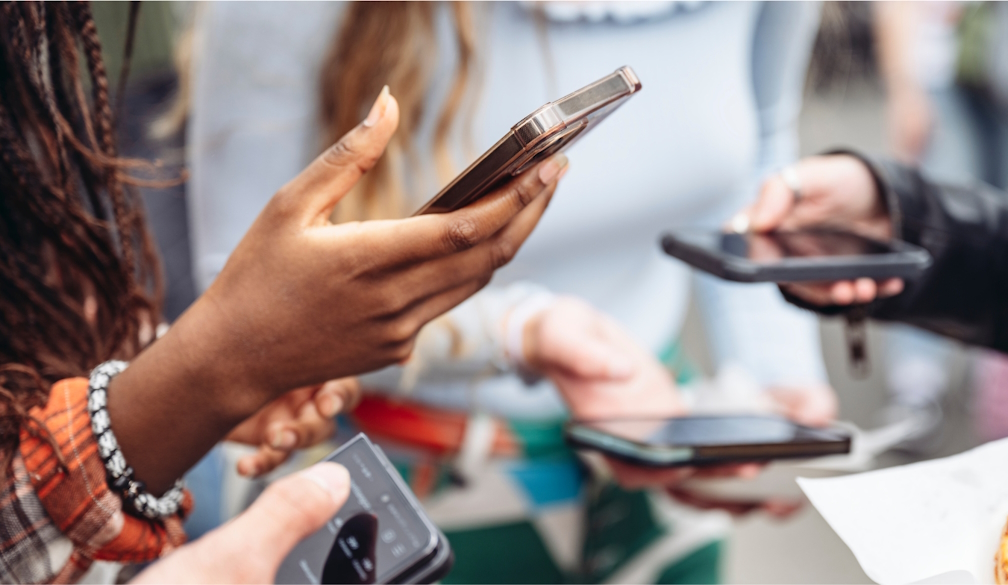
Imagine you are planning the funeral music for a loved one who has died. You can’t remember their favourite song, so you try to login to their Spotify account. Then you realise the account login is inaccessible, and with it has gone their personal history of Spotify playlists, annual “wrapped” analytics, and liked songs curated to reflect their taste, memories, and identity.
We tend to think about inheritance in physical terms: money, property, personal belongings. But the vast volume of digital stuff we accumulate in life and leave behind in death is now just as important – and this “digital legacy[1]” is probably more meaningful.
Digital legacies are increasingly complex and evolving. They include now-familiar items such as social media and banking accounts, along with our stored photos, videos and messages. But they also encompass virtual currencies, behavioural tracking data, and even AI-generated avatars.
This digital data is not only fundamental to our online identities in life, but to our inheritance in death. So how can we properly plan for what happens to it?
A window into our lives
Digital legacy is commonly classified into two categories: digital assets and digital presence[2].
Digital assets include items with economic value. For example, domain names, financial accounts, monetised social media, online businesses, virtual currencies, digital goods, and personal digital IP. Access to these is spread across platforms, hidden behind passwords or restricted by privacy laws.
Digital presence includes content with no monetary value. However, it may have great personal significance. For example, our photos and videos, social media profiles, email or chat threads, and other content archived in cloud or platform services.
There is also data that might not seem like content. It may not even seem to belong to us. This includes analytics data such as health and wellness app tracking data. It also includes behavioural data such as location, search or viewing history collected from platforms such as Google, Netflix and Spotify.
This data reveals patterns in our preferences, passions, and daily life that can hold intimate meaning. For example, knowing the music a loved one listened to on the day they died.
Digital remains now also include scheduled posthumous messages[3] or AI-generated avatars[4].
All of this raises both practical and ethical questions about identity, privacy, and corporate power over our digital afterlives. Who has the right to access, delete, or transform this data?

Planning for your digital remains
Just as we prepare wills for physical possessions, we need to plan for our digital remains. Without clear instructions, important digital data may be lost and inaccessible to our loved ones.
In 2017, I helped develop key recommendations for planning your digital legacy[6]. These include:
- creating an inventory of accounts and assets, recording usernames and login information, and if possible, downloading personal content for local storage
- specifying preferences in writing, noting wishes about what content should be preserved, deleted, or shared – and with whom
- using password managers to securely store and share access to information and legacy preferences
- designating a digital executor[7] who has legal authority to carry out your digital legacy wishes and preferences, ideally with legal advice
- using legacy features on available platforms, such as Facebook’s Legacy Contact[8], Google’s Inactive Account Manager[9], or Apple’s Digital Legacy[10].
What if your loved one left no plan?
These steps may sound uncontroversial. But digital wills remain uncommon. And without them, managing someone’s digital legacy can be fraught with legal and technical barriers.
Platform terms of service and privacy rules often prevent access by anyone other than the account holder. They can also require official documentation such as a death certificate before granting limited access to download or close an account.
In such instances, gaining access will probably only be possible through imperfect workarounds, such as searching online for traces of someone’s digital life, attempting to use account recovery tools, or scouring personal documents for login information.
The need for better standards
Current platform policies have clear limitations for handling digital legacies. For example, policies are inconsistent. They are also typically limited to memorialising or deleting accounts.
With no unified framework, service providers often prioritise data privacy over family access. Current tools prioritise visible content such as profiles or posts. However, they exclude less visible yet equally valuable (and often more meaningful) behavioural data such as listening habits.
Problems can also arise when data is removed from its original platform. For example, photos from Facebook can lose their social and relational meaning without their associated comment threads, reactions, or interactivity.
Meanwhile, emerging uses of posthumous data, especially AI-generated avatars, raise urgent issues about digital personhood, ownership, and possible harms. These “digital remains” may be stored indefinitely on commercial servers without standard protocols for curation or user rights.
The result is a growing tension between personal ownership and corporate control. This makes digital legacy not only a matter of individual concern but one of digital governance.
Standards Australia[11] and the New South Wales Law Reform Commission[12] have recognised this. Both organisations are seeking consultation[13] to develop frameworks that address inconsistencies in platform standards and user access.
Managing our digital legacies demands more than practical foresight. It compels critical reflection on the infrastructures and values that shape our online afterlives.
References
- ^ digital legacy (digitallegacyassociation.org)
- ^ digital assets and digital presence (www.esafety.gov.au)
- ^ posthumous messages (go-paige.com)
- ^ AI-generated avatars (www.hereafter.ai)
- ^ Kaspars Grinvalds/Shutterstock (www.shutterstock.com)
- ^ planning your digital legacy (accan.org.au)
- ^ digital executor (www.tonkinlaw.com)
- ^ Facebook’s Legacy Contact (www.facebook.com)
- ^ Google’s Inactive Account Manager (support.google.com)
- ^ Apple’s Digital Legacy (digital-legacy.apple.com)
- ^ Standards Australia (www.archivists.org.au)
- ^ New South Wales Law Reform Commission (dcj.nsw.gov.au)
- ^ consultation (lawreform.nsw.gov.au)