Israel’s attacks on Iran are already hurting global oil prices, and the impact is set to worsen
- Written by: Joaquin Vespignani, Associate Professor of Economics and Finance, University of Tasmania

The weekend attacks[1] on Iran’s oil facilities – widely seen as part of escalating hostilities between Israel and Iran – represent a dangerous moment for global energy security.
While the physical damage to Iran’s production facilities is still being assessed, the broader strategic implications are already rippling through global oil markets. There is widespread concern about supply security and the inflationary consequences for both advanced and emerging economies.
The global impact
Iran, which holds about 9%[2] of the world’s proven oil reserves, currently exports between 1.5 and 2 million barrels per day, primarily to China, despite long-standing United States sanctions.
While its oil output is not as globally integrated as that of Saudi Arabia or the United Arab Emirates, any disruption to Iranian production or export routes – especially the Strait of Hormuz, through which about 20% of the world’s oil supply flows – poses a systemic risk.
Markets have already reacted. Brent crude[3] prices rose more than US 6%[4], while West Texas Intermediate price increased by over US 5%[5] immediately after the attacks.
These price movements reflect not only short-term supply concerns but also the addition of a geopolitical risk premium due to fears of broader regional conflict.
International oil prices may increase further as the conflict continues. Analysts expect that Australian petrol prices will increase in the next few weeks, as domestic fuel costs respond to international benchmarks with a lag.
Escalation and strategic intentions
There is growing concern this conflict could escalate further. In particular, Israel may intensify its targeting of Iranian oil facilities, as part of a broader strategy to weaken Iran’s economic capacity and deter further proxy activities.
Should this occur, it would put even more upward pressure on global oil prices. Unlike isolated sabotage events, a sustained campaign against Iranian energy infrastructure would likely lead to tighter global supply conditions. This would be a near certainty if Iranian retaliatory actions disrupt shipping routes or neighbouring producers.
Countries most affected
Countries reliant on oil imports – especially in Asia – are the most exposed to such shocks in the short term.
India, Pakistan, Indonesia and Bangladesh rely heavily on Middle Eastern oil and are particularly vulnerable to both supply interruptions and price increases. These economies typically have limited strategic petroleum reserves and face external balance pressures when oil prices rise.
China, despite being Iran’s largest oil customer, has greater insulation due to its diversified suppliers[6] and substantial reserves.
However, sustained instability in the Persian Gulf would raise freight and insurance costs even for Chinese refiners, especially if the Strait of Hormuz [7] becomes a contested zone. The strait, between the Persian Gulf and the Gulf of Oman, provides the only sea access from the Persian Gulf to the open ocean.
Australia’s exposure
Australia does not import oil directly from Iran. Most of its crude and refined products are sourced from[8] countries including South Korea, Malaysia, the United Arab Emirates and Singapore.
However, because Australian fuel prices are pegged to international benchmarks such as Brent and Singapore Mogas[9], domestic prices will rise in response to the global increase in oil prices, regardless of whether Australian refineries process Iranian oil.
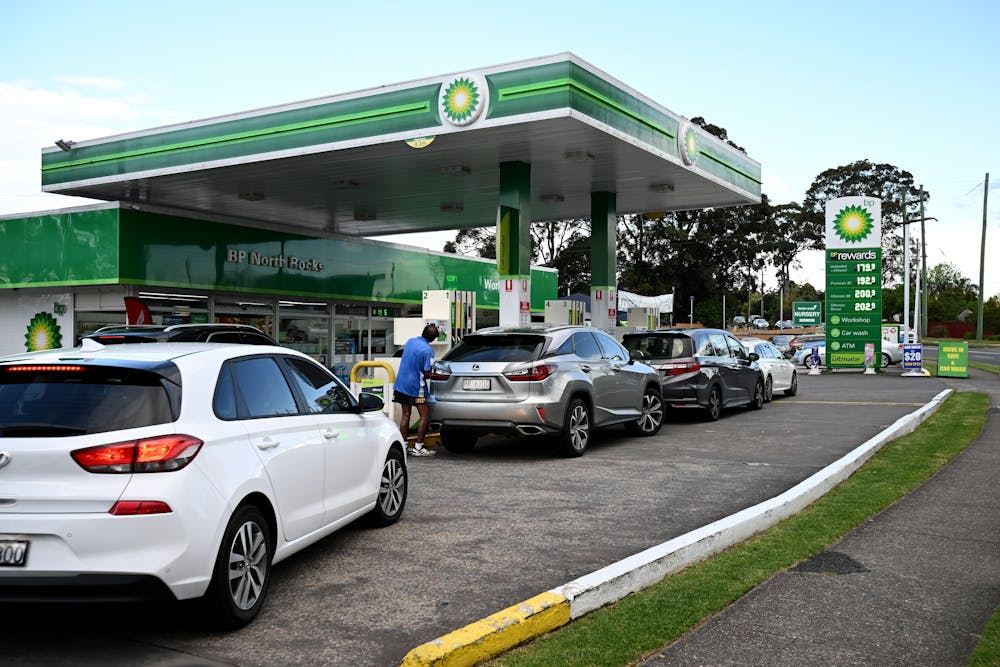
These price increases will have flow-on effects, raising transport and freight costs across the economy. Industries such as agriculture, logistics, aviation and construction will feel the pinch, and higher operating costs are likely to be passed on to consumers.
Broader economic impacts
The conflict could also disrupt global shipping routes, particularly if Iran retaliates through its proxies by targeting vessels in the Red Sea, Arabian Sea, or Hormuz Strait.
Any such disruption could drive up shipping insurance, delay delivery times, and compound existing global supply chain vulnerabilities. More broadly, this supply shock could rekindle inflationary pressures in many countries.
For Australia, it could delay monetary easing by the Reserve Bank of Australia and reduce consumer confidence if household fuel costs rise significantly. Globally, central banks may adopt a more cautious approach to rate cuts if oil-driven inflation proves persistent.
The attacks on Iran’s oil fields, and the likelihood of further escalation, present a renewed threat to global energy stability. Even though Australia does not import Iranian oil, it remains exposed through price transmission, supply chain effects and inflationary pressures.
A sustained campaign targeting Iran’s energy infrastructure by Israel could amplify these risks, leading to a broader energy shock that would affect oil-importing economies worldwide.
Strategic reserve management and diplomatic engagement will be essential to contain the fallout.
References
- ^ weekend attacks (www.aljazeera.com)
- ^ about 9% (www.worldometers.info)
- ^ Brent crude (www.investopedia.com)
- ^ more than US 6% (www.livemint.com)
- ^ by over US 5% (www.forex.com)
- ^ diversified suppliers (www.reuters.com)
- ^ Strait of Hormuz (www.aljazeera.com)
- ^ are sourced from (www.statista.com)
- ^ Singapore Mogas (bulkfuel.com.au)
- ^ Dan Himbrechts/AAP (photos.aap.com.au)